Nasal strips falling off usually means oil, moisturiser, damp skin, sweat or hair under the adhesive, the brands say. Clean, dry, press firmly. For most UK buyers who want skin prep built in, Airlift's Complete includes a prep pad for every night and the 90-Night Airlift Test, a full refund with nothing sent back. Internal dilators skip adhesive entirely.
In short
- For most UK buyers who want skin prep built in, Airlift's Complete and Ultimate include a prep pad for every night and all five clip sizes. If it isn't right for you, you can claim a full refund, including delivery, within 90 days of receiving your order, with nothing sent back (once per customer).
- Breathe Right's FAQ says its strips won't hold on wet, oily or moisturised skin, and Airlift's help page names night cream, facial oil, naturally oily skin and stubble. Most brand advice starts with the skin.
- The routine the brands give is the same. Clean the spot, dry it fully and press the adhesive on firmly. For its magnetic clip, Airlift adds a two to three minute wait before the clip goes on.
- No brand we checked, Airlift included, publishes a test of how well its adhesive holds through sweat or a night's sleep. If nothing sticks, an internal dilator such as Mute uses no adhesive at all.
Why are my nasal strips falling off?
According to the brands' own instructions, nasal strips falling off usually means the adhesive couldn't grip the skin, because there was oil, moisturiser, water, sweat or hair in the way. The fixes are cheap, and most of them happen before the strip goes on.
| What's happening | What the brands say to do | |
|---|---|---|
| Night cream, moisturiser or facial oil | The adhesive can't bond to skin with product on it | Clean it off that patch and dry it fully |
| Naturally oily skin | The same: oil sits between the adhesive and the skin | Wash, or wipe with an alcohol prep pad or oil-free cleanser, then dry |
| Damp skin after a shower | Breathe Right says its strips won't hold on wet skin | Dry fully first |
| Placed and left | Airlift says warmth and pressure are what make its adhesive bond | Press firmly for a few seconds, edges included |
| Clip attached straight away (magnetic systems) | Airlift says its adhesive needs time | Wait two to three minutes before the clip goes on |
| Peeled off and stuck back | Breathe Right says its adhesive isn't made for reuse; Intake says its tabs won't re-stick | Use a fresh one |
| Hair under the adhesive | Airlift says adhesive bonds to hair instead of skin | Keep a sticker-sized patch trimmed close |
| Face pressed into the pillow | Airlift says sustained pressure can knock its clip off the discs, while the stickers usually stay | Sit the clip low across the soft part of the nose, not up on the bridge |
Where those fixes come from: Breathe Right's UK FAQ covers wet, oily and moisturised skin and reuse. Airlift's help page covers skincare, oily skin, pressing, the wait, stubble and sleeping position. On The Nose Co's how-to page suggests an oil-free cleanser or alcohol wipe, and Intake's help article says its tabs won't stick a second time. For pressing, Airlift says a few seconds, Intake's help article says 10 to 15 seconds, and Breathe Right's US how-to page says to press and rub the ends.
Reviews show it both ways. In 37 Amazon UK reviews of Breathe Right rated one to three stars that we read, 16 said the strip wouldn't stay on. In 88 rated four or five stars, 37 said it stayed on all night. Amazon chooses which reviews show at the top, so this isn't a random sample. For other reasons people move away from strips, see our guide to Breathe Right alternatives.
How to put a nasal strip on so it stays
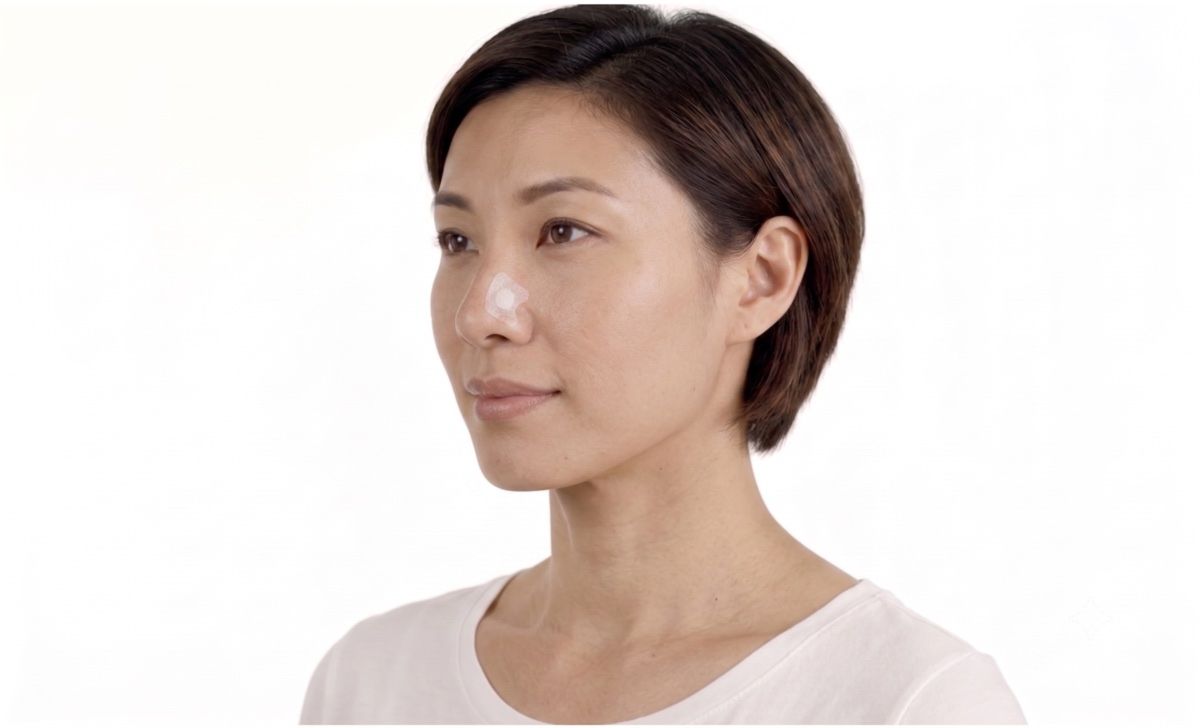
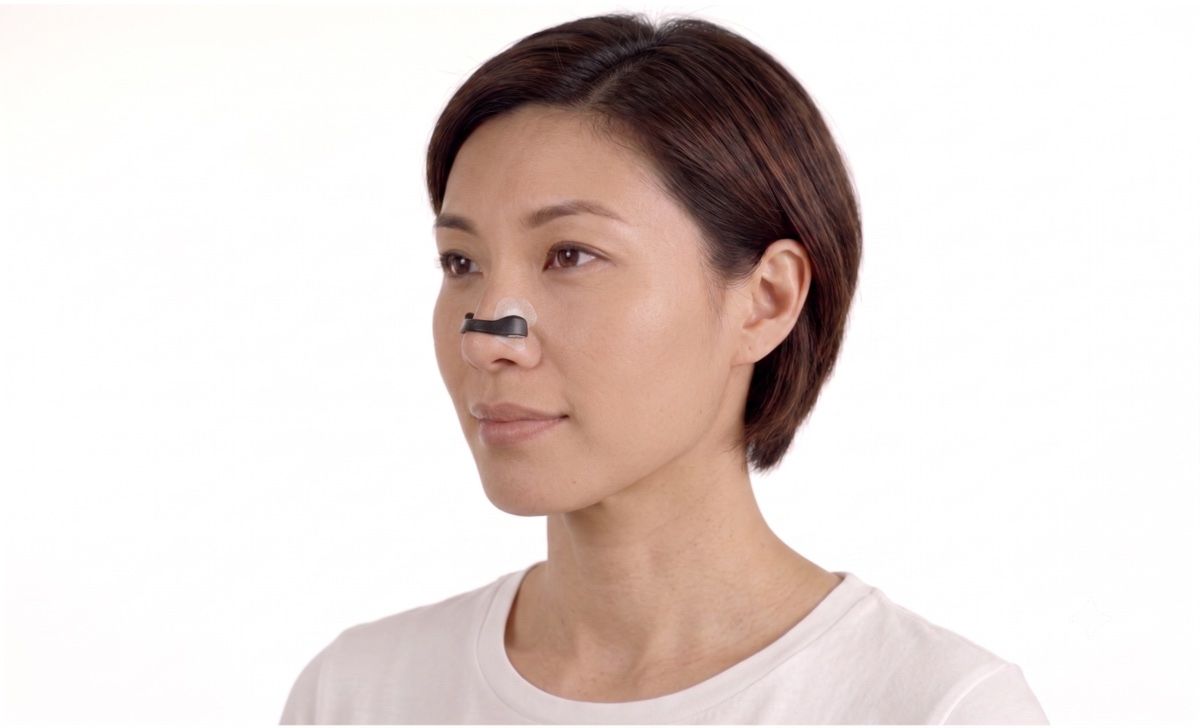
The brands' application steps are much the same, whether it's a strip or a sticker. None of them publishes a test showing the steps make a difference, but they cost nothing to follow.
- Clean the spotBreathe Right says to wash your nose and dry it. Airlift's prep pads are alcohol cleansing pads that clear skin oils before the sticker goes on.
- Dry it fullyAny water left on the skin works against the adhesive, so pat it dry and give it a moment.
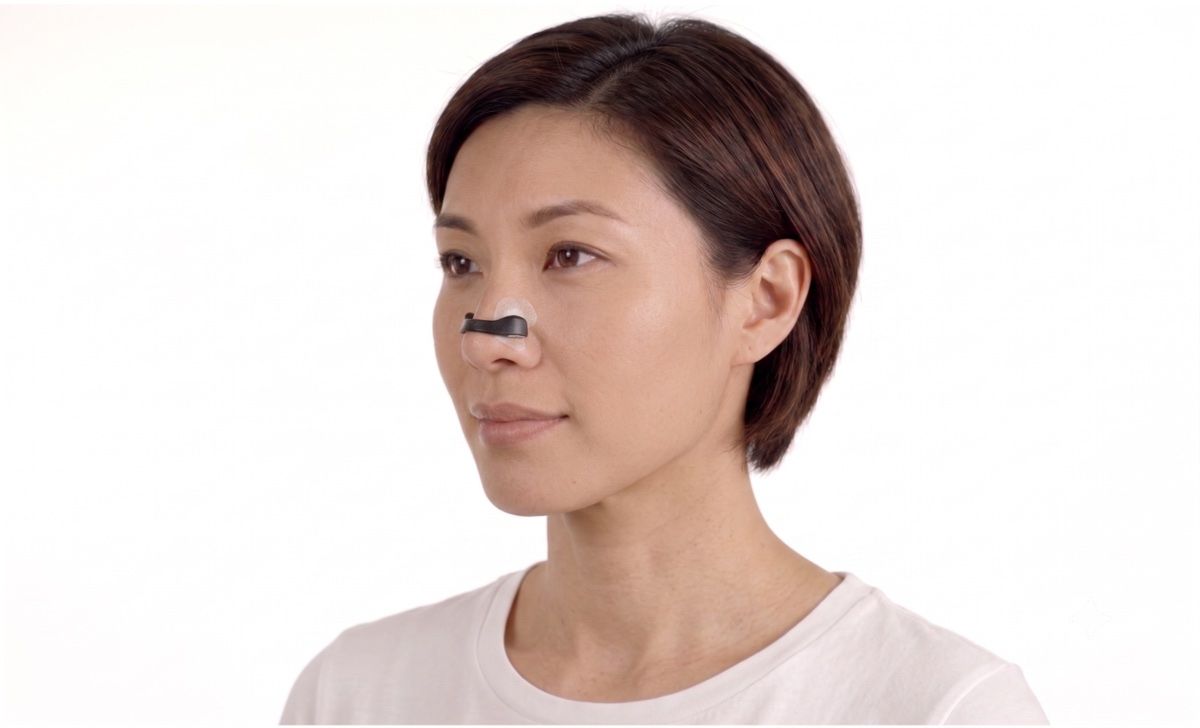
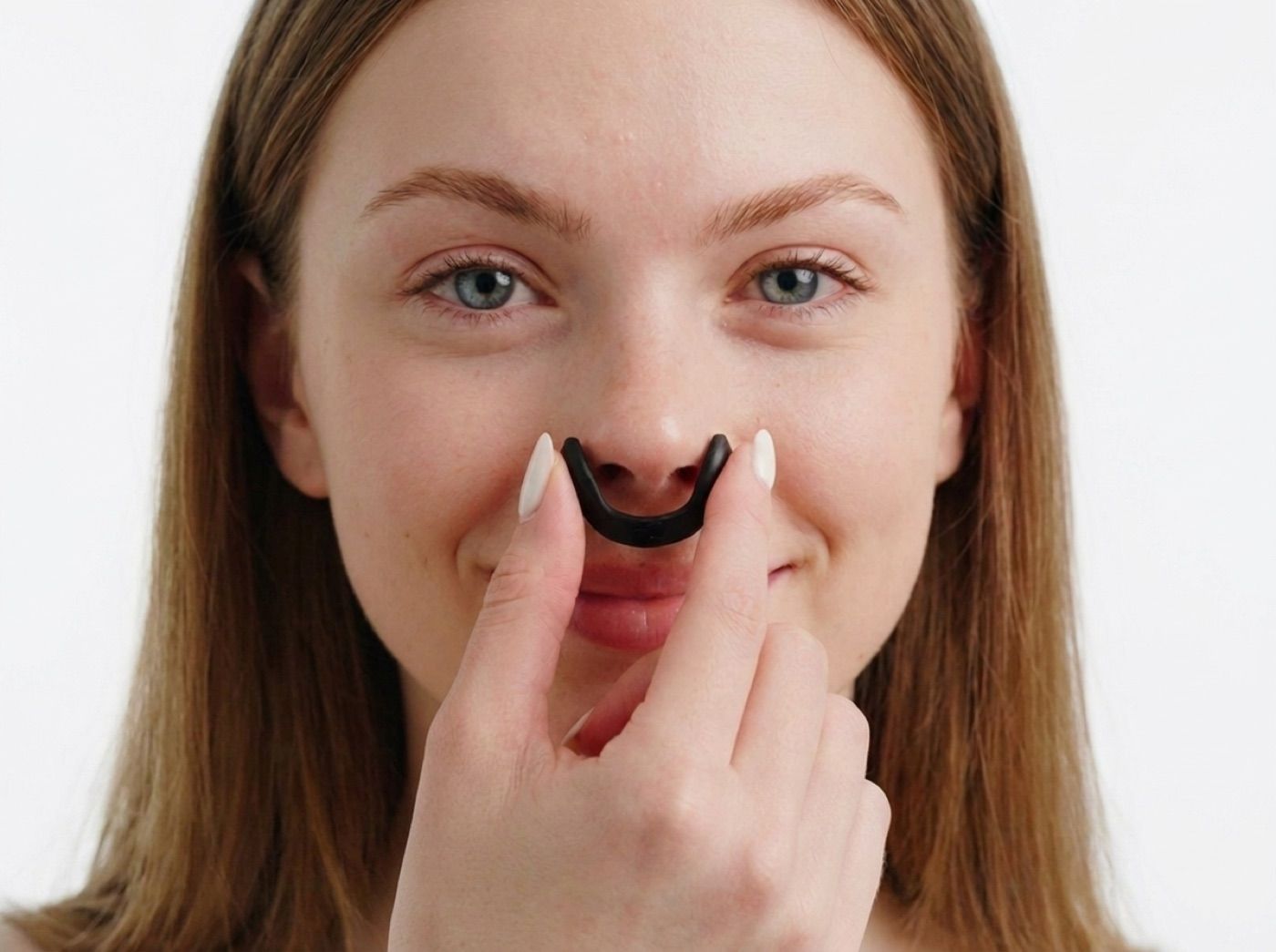
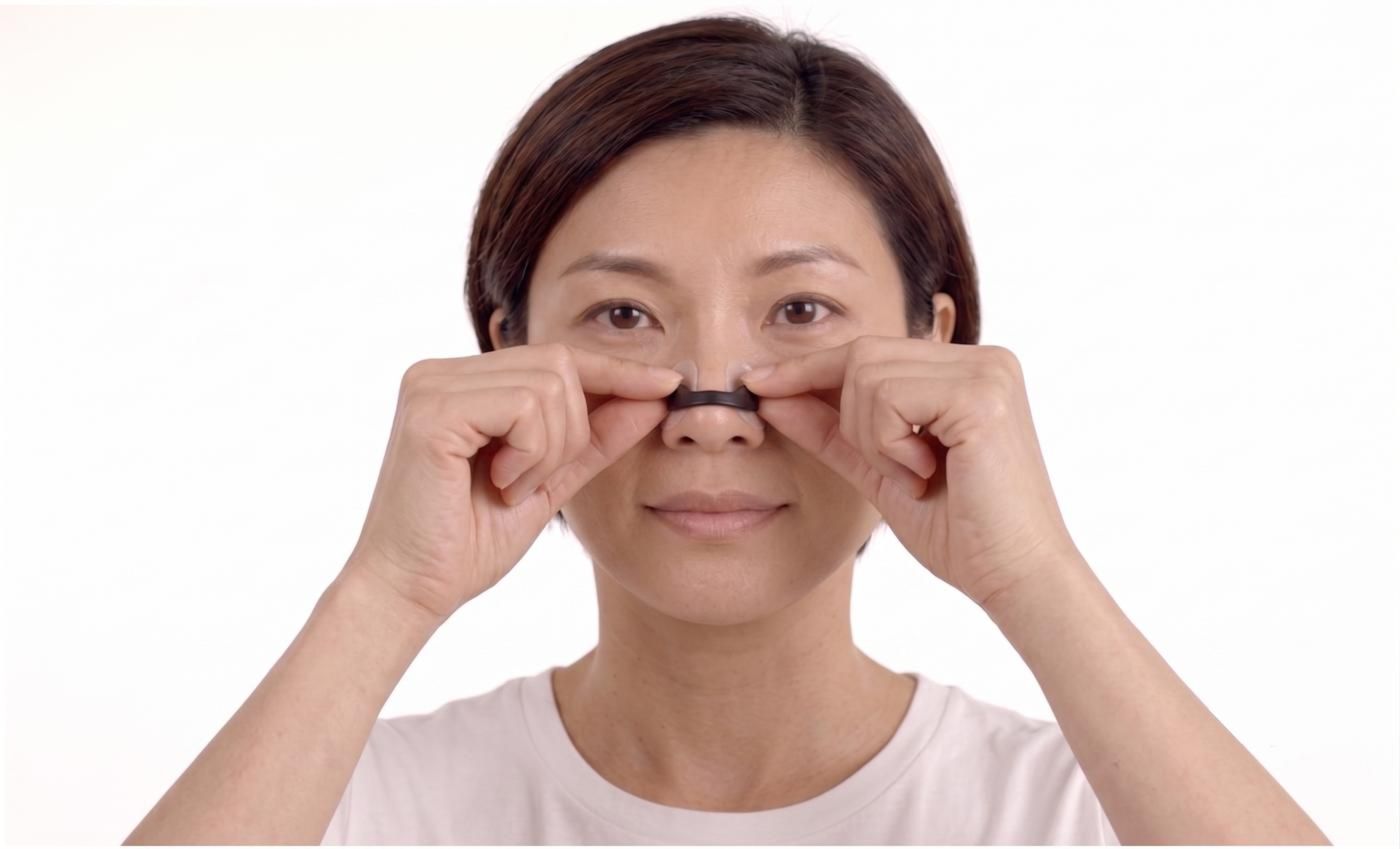
- Place it where the brand saysBreathe Right says just above the flare of the nostrils. Airlift's stickers go on the outside of each nostril, level with each other, using the magnetic applicator.
- Press it on firmlyPress for a few seconds, around the edges as well as the middle. Airlift says to press on the disc too.
- Wait before the clip goes onFor magnetic systems, Airlift says to wait two to three minutes after the stickers go on before you attach the clip.
If you already own an Airlift clip and buy stickers on their own, they come without pads, and Airlift's prep pads are £10 for 30.
Oily skin, beards, sweat and side sleeping
Oily skin and night-time skincare
Clean any night cream, moisturiser or facial oil off the patch where the adhesive goes, then dry it fully. Airlift's help page says all three beat its adhesive, as does naturally oily skin, and Breathe Right's FAQ says its strips won't hold on moisturised skin.
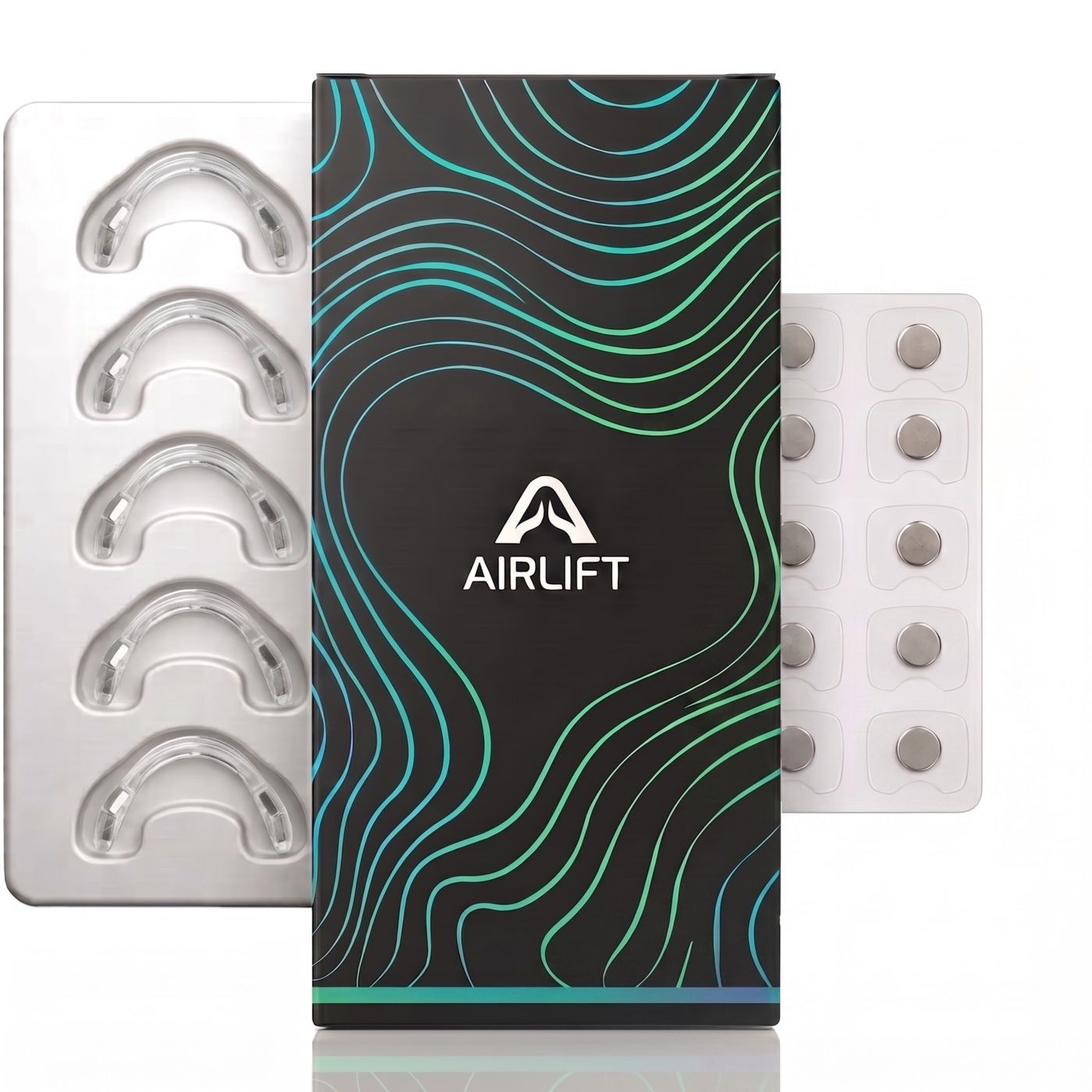
Airlift's Complete and Ultimate come with 30 alcohol cleansing prep pads per 30 nights, every delivery. They're a cleaning step that clears skin oils, and we can't say they make any brand hold better than another. Breathe Right tells you to wash and dry instead. If you own a clip and want pads with your refills, there's stickers and prep pads together.
Beards and stubble
Airlift's help page says a beard on its own rarely gets in the way, and that hair right under the adhesive is the trouble. Its stickers sit on the outside of each nostril, above where most beards grow, and its help page suggests keeping a sticker-sized patch trimmed close if your stubble runs that high. If your beard covers that spot and trimming isn't an option, the help page says adhesion will be a struggle and to let the 90-Night Airlift Test settle it.
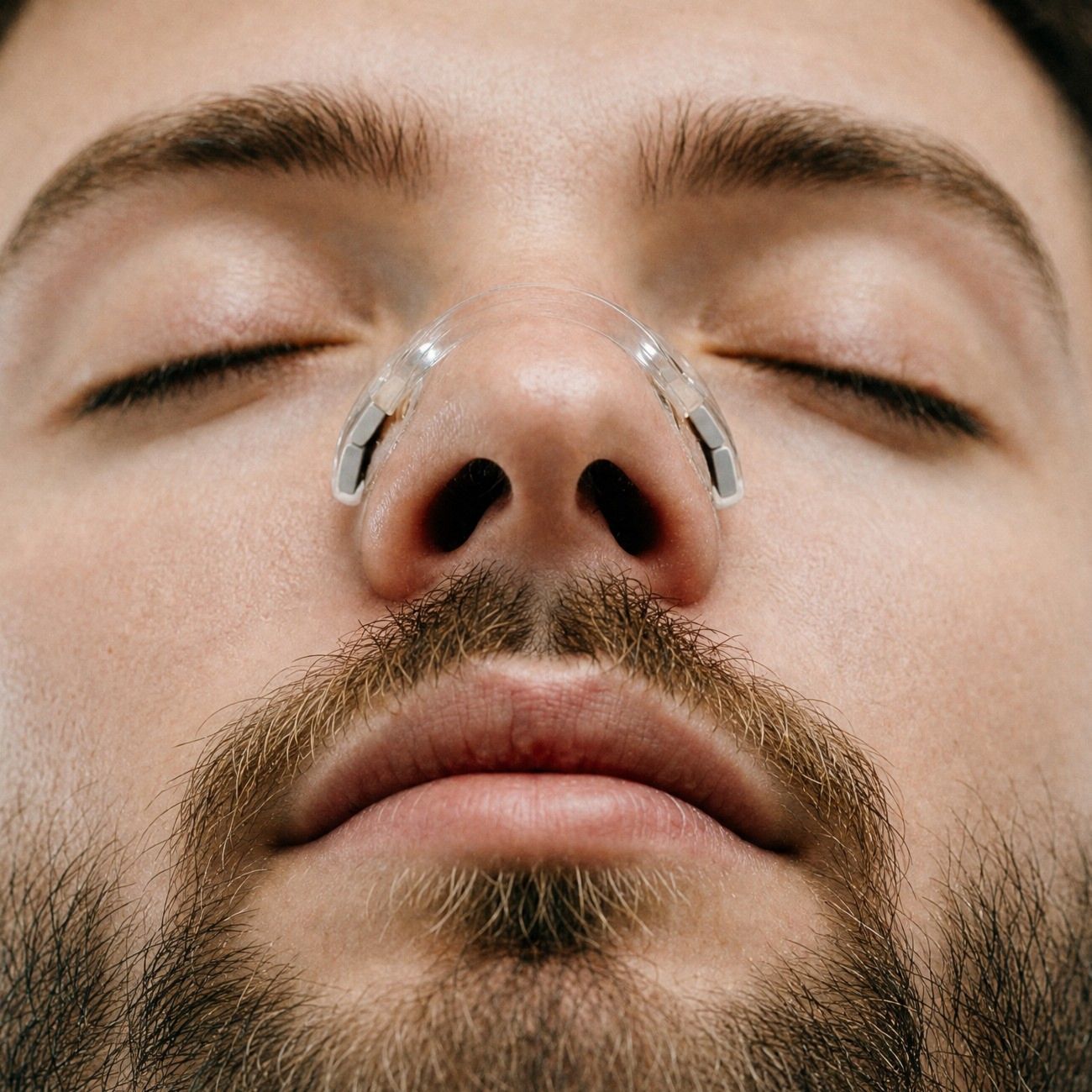
An internal dilator sidesteps the problem, because nothing sticks to your skin. Our Airlift vs Mute comparison covers that choice.
Sweat and exercise
Put it on clean, dry skin before you start sweating. For running in particular, see the best nasal strips for running.

Some products are made for sport, by their makers' description:
- Intake Sport Tabs: Intake describes the adhesive as stronger and puts prep pads in the pack, and says the tabs aren't recommended for sleep. £27.00 for 20 (£1.35 each).
- On The Nose Co's black strips: positioned for workouts and sweat. £18.00 for 30 (£0.60 a strip).
- Turbine: Rhinomed's internal dilator for sport, with no adhesive. Starter £16.99. Rhinomed says it isn't for swimming, water sports or contact sports.
Breathe Right's UK site lists no sport strip, and Airlift has no sport version. None of these brands publishes a sweat test, so "sweat-proof" is a label, not a measurement. There's more on sport and sweat in Breathe Right vs Intake vs Airlift.
Side and face-down sleeping
Airlift's help page says side sleeping is fine for most people. A face pressed firmly into the pillow is different: sustained pressure can knock the clip off the discs, though the stickers usually stay put. Its advice is to sit the clip low across the soft part of the nose rather than up on the bridge, and it suggests your snuggest comfortable size if you sleep face down.

Which nasal strips stay on best?
Nobody can tell you, because no brand here, Airlift included, publishes a hold test you could compare, and we found no published, independent study of how well magnetic or clip dilators stay on. What you can compare is what each option gives you to help it stick, and what happens if it doesn't work for you.
| Format | Skin prep in the box | Sizes | Cost per night | If it won't stay on | |
|---|---|---|---|---|---|
| Airlift Complete | Magnetic clip on two latex-free stickers | 30 prep pads per 30 nights, every delivery | 5 clip sizes, all in the box | £33 starter: £1.10 (£1.27 with £5 delivery). Annual plan £240: £0.67 | The 90-Night Airlift Test: claim within 90 days of receiving your order for a full refund, delivery included. Nothing sent back, once per customer |
| Breathe Right Original | Adhesive strip across the bridge | None; wash and dry | Small/Medium or Large | £13.99 for 30 at Boots: £0.47 | No brand guarantee; the retailer's returns policy |
| Intake Breathing | Magnetic band on single-use tabs | In Sport Tabs packs; the standard starter page lists none | 6 band sizes, 4 in the starter | Sport Tabs £1.35 each; standard prices in our Intake UK review | 90 days from delivery; the band and kit go back; shipping and duties not refunded |
| On The Nose Co | Magnetic kit, or adhesive strips | None; it advises an oil-free cleanser or alcohol wipe | 4 band sizes (names not published) | Strips £18.00 for 30: £0.60. Magnetic kit £19.00, tab count not published | 30 days from delivery; the item goes back and you pay return postage. Its policy says poor adhesion from skin or application isn't a defect |
| Mute (sleep) or Turbine (sport) | Internal dilator, no adhesive | Not needed | S, M and L | Mute Starter £14.99: £0.50 if all three sizes fit (£0.67 with £5 delivery) | Mute: 30 days, on starter products bought direct; return terms not published |
Airlift costs more per night than a Breathe Right 30-pack or On The Nose Co's strips, and its prep pads are a cleaning step, not proof that anything holds better. What it adds is the pads in every delivery, every clip size in the box and a refund you claim without posting anything back. You can start with the Complete starter (£33), or take the Annual plan (£240 for the year) at £0.67 a night. Every subscription order ships free by next-day delivery, with no minimum spend.
Intake's standard prices depend on colour, pack and delivery from its US store, so they're in our Intake Breathing UK review. If you're weighing a strip against a magnetic system in general, see magnetic vs adhesive nasal strips and the magnetic nasal strips sold in the UK.
If nothing sticks, change format or use the trial
If you've cleaned, dried and pressed, and strips or stickers still won't stay, an internal dilator needs no adhesive at all: Mute for sleep, or Turbine for sport. The research leans that way too. A 2026 review by UK surgeons found most research is on adhesive strips such as Breathe Right, and that devices worn inside the nostril tended to perform better than external ones.[1] There's more in the science behind nasal dilators.
If you'd rather try a magnetic system first, the sensible way to try is one where you can get your money back without sending anything back. Of the brands here, only Airlift publishes a full refund, including delivery, with nothing to send back and 90 days to claim. It's once per customer, and the details are in the 90-Night Airlift Test terms.
Taking strips off without hurting your nose
Take strips and stickers off slowly, after warm water if you can. Nursing experts describe skin damage from medical adhesives as common but under-recognised, and say how an adhesive is put on and taken off makes a difference.[2][3]
Each brand's removal advice:
- Breathe Right (US how-to page): wet it with warm water, then lift slowly.
- Snoreeze: if removal is hard or painful, wash your nose with warm water first.
- Airlift: take the clip off first, then peel each sticker from its top edge, low and slow, supporting the skin with your other hand. It's easiest after washing your face or in the shower. Warm water and a little soap take off any residue.
If your nose is itchy or sore rather than bare, see are Breathe Right strips latex-free?, which covers latex, irritation and adhesive allergy.
Sources checked
- Breathe Right UK FAQs and products: skin, reuse and sport (27 October 2026).
- Breathe Right US, how the strips work: placement, pressing and removal (27 October 2026).
- Boots, Breathe Right Original Small/Medium 30: price (27 October 2026).
- Breathe Right on Amazon UK: the 125 top reviews we read across 15 listings, including Original Large 30 and Original Small/Medium 30 (27 October 2026).
- Intake Breathing: help article on tabs that won't stick, Sport Tabs FAQ, starter kit and guarantee (27 October 2026).
- On The Nose Co: how to use, strips, magnetic kit and refund policy (27 October 2026).
- Mute and Turbine: Mute Starter Pack, Turbine Starter Pack, FAQ and returns policy (27 and 28 October 2026).
- Snoreeze Nasal Strips: removal advice (28 October 2026).
- Airlift's shop, refills and refunds pages and its help page: Airlift's products, prices, instructions and policies (27 and 28 October 2026).
Questions people ask
References
- Ahmed A, Gakpetor C, Yang D, Oremule B, Ranganathan B, Jaiswal A, Bhalla RK (2026). The effectiveness of nonsurgical nasal devices in relieving nasal obstruction. Annals of the Royal College of Surgeons of England, 108(6), 476-483. doi.org/10.1308/rcsann.2025.0103
- McNichol L, Lund C, Rosen T, Gray M (2013). Medical adhesives and patient safety: state of the science. Journal of Wound, Ostomy and Continence Nursing, 40(4), 365-380. doi.org/10.1097/WON.0b013e3182995516
- Barton A, Broadhurst D, Hitchcock J, Lund C, McNichol L, Ratliff CR, Moraes JT, Yates S, Gray M (2024). Medical adhesive-related skin injury at 10 years: an updated consensus. Journal of Wound, Ostomy and Continence Nursing, 51(5S), S2-S8. doi.org/10.1097/WON.0000000000001116

Written by Nicholas Green
I've found it hard to breathe through my nose for as long as I can remember, and years of products and even surgery didn't fix it, so I built Airlift. I write about what I've learned along the way, as someone who lives with it rather than as a clinician.
How we research and check articles: our editorial standards.