Are Breathe Right strips latex-free? Breathe Right doesn't say so in the UK. Its UK site makes no latex statement, and Boots' listing tells anyone allergic to latex not to use them (checked 27 October 2026). If you need latex-free, Airlift's stickers use a latex-free adhesive, and Snoreeze says its strips are latex-free too.
In short
- Breathe Right's UK site makes no latex statement. Boots and Amazon UK listings warn people with a latex allergy not to use the strips, and Amazon's warning appears on the Clear strips sold for sensitive skin too.
- For a stated latex-free adhesive, Airlift's stickers sit on the sides of the nose rather than across the bridge, and of the brands whose refund terms we checked, only Airlift publishes a full refund, including delivery, with nothing to send back and 90 days to claim. Snoreeze, Boots Sleepeaze and MaxFlow strips also say latex-free and cost less a night.
- A latex-free adhesive can still irritate. Any adhesive can cause a reaction, Airlift's included, and the NHS says irritant contact dermatitis is the commoner kind.
- If you'd rather nothing stuck to your skin, an internal dilator such as Mute uses no adhesive, and Rhinomed says its materials are latex-free.
Are Breathe Right strips latex-free?
Breathe Right doesn't call its strips latex-free anywhere in the UK, and UK retailers' listings tell people with a latex allergy not to use them.
- Breathe Right's UK site says nothing about latex on its FAQ, Original or Sensitive Clear pages (checked 28 October 2026).
- Boots' listing for the Original Small/Medium 30-pack says: "Do not use if allergic to latex or to Breathe Right nasal strips." That's the retailer's listing text, read on 27 October 2026, not a photo of the pack.
- Amazon UK's listings for Original Large 10 and Clear Large 10 say the package is sealed with natural rubber latex, which may cause allergic reactions (checked 28 October 2026).
- Breathe Right's US and Canadian FAQs say the packaging contains natural rubber latex, and that people with a latex allergy shouldn't use the strips.
None of these says the strip itself contains latex, and none says the Clear version is any different. Whichever part the latex is in, the advice for anyone with a latex allergy is the same: don't use them.
We haven't seen a physical UK pack or the leaflet inside it, so this rests on the dated listings above. If a pack says something different, go by the pack. For other reasons people switch, see our guide to Breathe Right alternatives.
Latex allergy, irritation and adhesive allergy aren't the same thing
A red, itchy or sore nose after a strip can come from three different things, and each calls for something different.
Latex allergy is an allergy to proteins in natural rubber latex. If you have one, the brands' advice is plain: don't use a product whose label or packaging carries a latex warning. How many people in the UK have it is hard to pin down. A 1999 study of 7,000 blood donations in the English West Midlands found antibodies to latex in about 4% to 7%, but most of those samples also reacted to grass pollen, and having the antibodies isn't the same as having a latex allergy.[1] We found no UK figure for how many people have a clinical latex allergy.
Irritation is the commoner kind of reaction. The NHS says contact dermatitis can be irritant, where something damages the outer layer of skin, or allergic, and that irritants are the more common cause (page read 28 October 2026).[2] Redness or soreness where a strip has been pulled off can fit here.
An allergy to an adhesive ingredient is different again. A 2019 review of 28 studies covering 20,107 people estimated that about one in five people has a contact allergy to at least one common substance, most often nickel; 1.3% reacted to colophonium, a pine resin used in some adhesive tapes.[3] When 26 soldiers developed a rash after wearing medical tape on their feet for several days, testing found 20 were allergic to the tape, mostly to pine-resin (colophonium) substances in its adhesive.[4] Neither study is about noses or nasal strips, and neither says anything about any brand's nasal adhesive, Airlift's included. We found no published study set up to measure adhesive allergy on the face from consumer products; the nearest data come from nasal strip trials.
Strip trials do record skin reactions. In a GSK-funded 28-night study of a prototype strip, four people had mild skin reactions where the strip was applied.[5] For balance, in a GSK-funded trial, 82 adults wore Breathe Right strips every night for a week, and an evaluator found no skin irritation in any of them. A week is too short to say anything about months of use.[6]
If a rash where something touches your skin keeps coming back or is severe, the NHS advises seeing a GP.[2] More on the research behind nasal breathing is on our science page.
Which nasal strips are latex-free in the UK?
Snoreeze, Boots Sleepeaze and MaxFlow strips say they're latex-free, Mute's internal dilator says its materials are, and Airlift and Intake say the same of their adhesives. The table isn't a ranking, and Breathe Right is at the bottom for reference.
| Format | What touches the skin | Latex statement | Price per night | |
|---|---|---|---|---|
| Airlift Complete | Magnetic clip on two stickers | A sticker beside each nostril. The sticker covers the steel disc on the skin side | Latex-free adhesive (Airlift's site) | £33 starter: £1.10 (£1.27 with £5 delivery). Annual plan £240: £0.67 |
| Snoreeze Nasal Strips | Adhesive strip | Strip across the bridge of the nose | Hypoallergenic and latex-free (Snoreeze's site) | £8.95 for 20: £0.45 (£0.65 with £3.95 delivery). £9.90 for 20 at Boots: £0.50 |
| MaxFlow | Adhesive strip | Strip across the bridge of the nose | Latex-free and hypoallergenic (NasalStrip.uk) | £9.99 for 30: £0.33 (£0.47 with £3.99 delivery) |
| Boots Sleepeaze | Adhesive strip | Strip across the bridge of the nose | "Hypoallergenic: latex free" (Boots' listing) | £8.50 for 20 at Boots: £0.43 |
| Mute | Internal dilator | No adhesive. Soft polymer inside the nostril | Materials free from BPA, phthalates and latex (Rhinomed) | Starter £14.99: £0.50 if all three sizes fit (£0.67 with £5 delivery) |
| Intake Breathing | Magnetic band on tabs | An adhesive tab beside each nostril | Adhesive described as latex-free (Intake) | See our Intake UK review |
| Breathe Right Original, for reference | Adhesive strip | Strip across the bridge of the nose | No UK site statement. Boots and Amazon UK warn against use with a latex allergy | £13.99 for 30 at Boots: £0.47 |
Intake's prices change with colour, pack and delivery from its US store, so we keep them in one place: our Intake Breathing UK review. For more strips, with or without a latex statement, see the best nasal strips for snoring in the UK.
"Hypoallergenic" is each maker's own description. Snoreeze, MaxFlow, Mute, Intake and Breathe Right publish no skin test behind it, and it's a separate claim from latex-free.
Airlift's starter and Annual plan cost more per night than every strip here. What you pay for is a reusable clip, all five clip sizes in the box, prep pads with every delivery and the 90-Night Airlift Test. You can start with the Complete starter (£33), or the Annual plan (£240) brings it down to £0.67 a night. Every subscription order ships free by next-day delivery, with no minimum spend.
Why a magnetic system changes where the adhesive goes
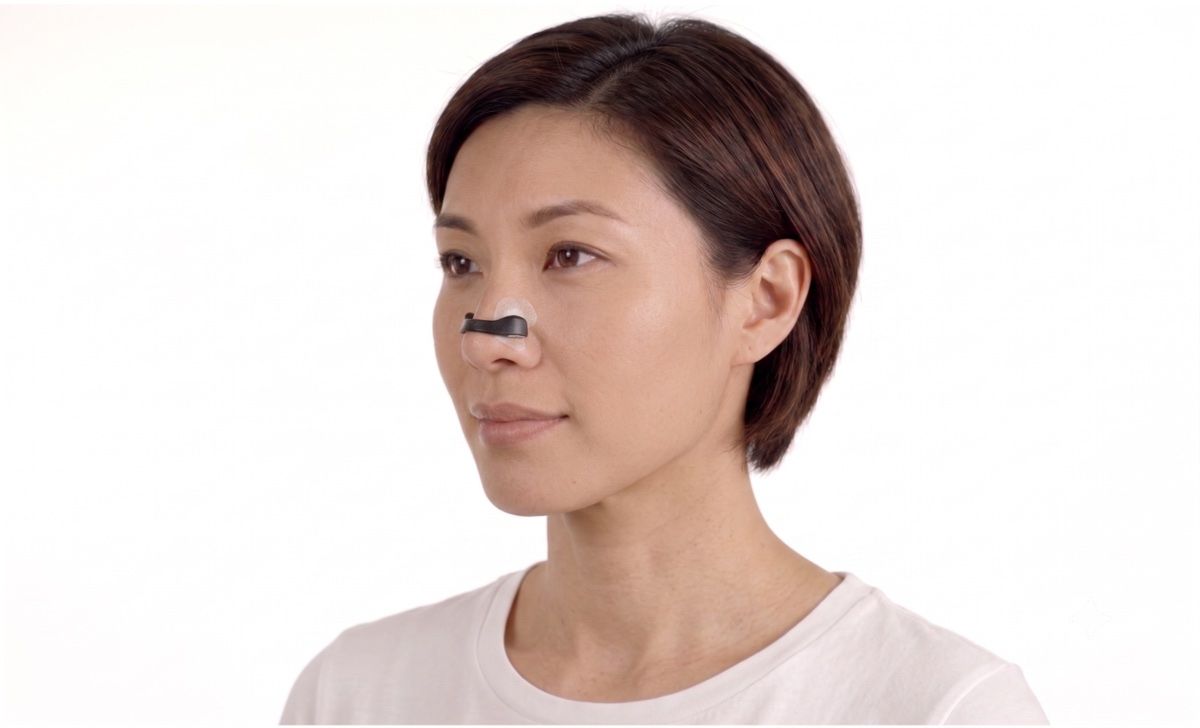
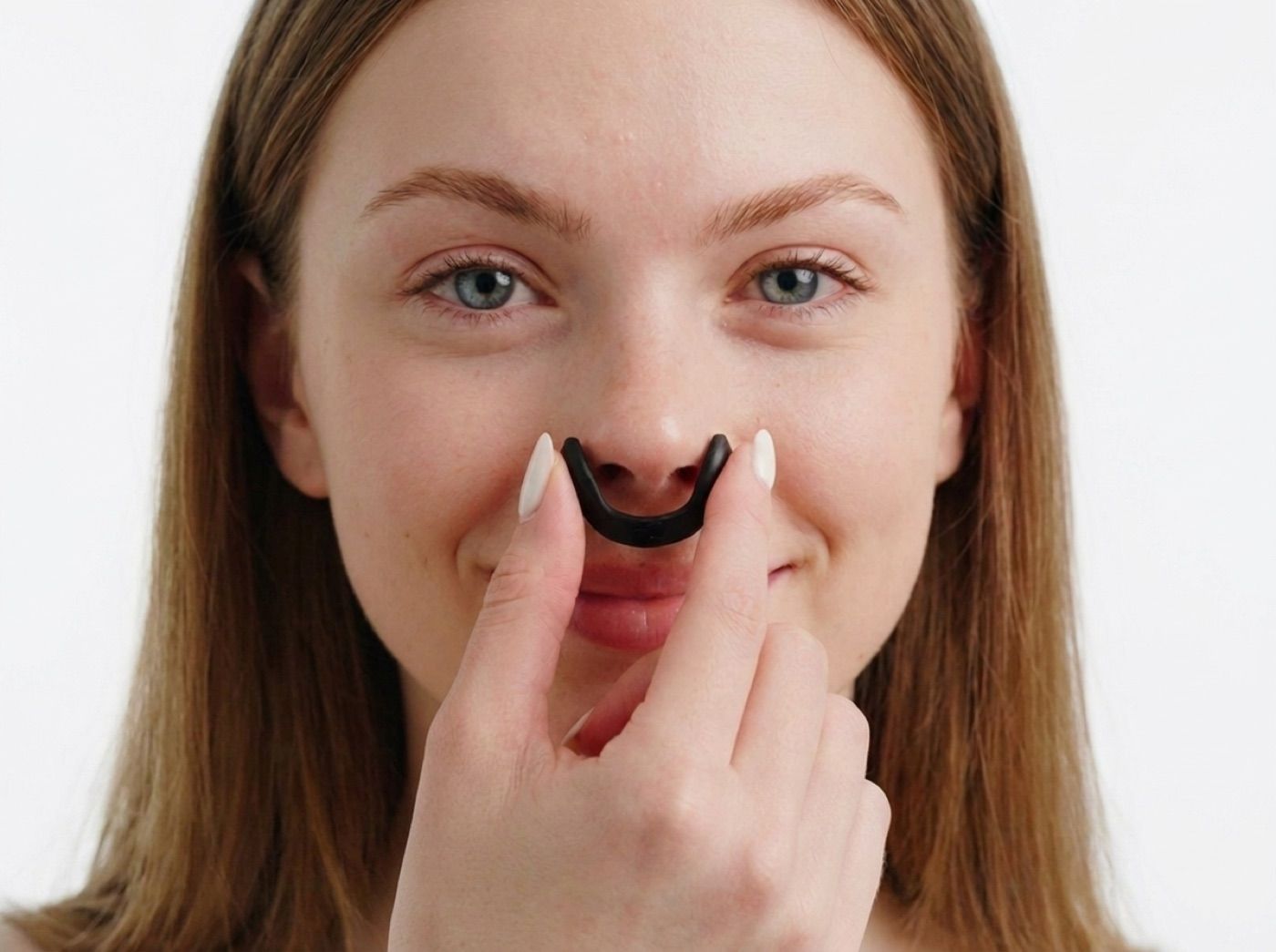
A strip puts one long piece of adhesive across the bridge of your nose. A magnetic system like Airlift puts a small sticker on the outside of each nostril instead, and the clip that holds the nostrils open never touches your skin.
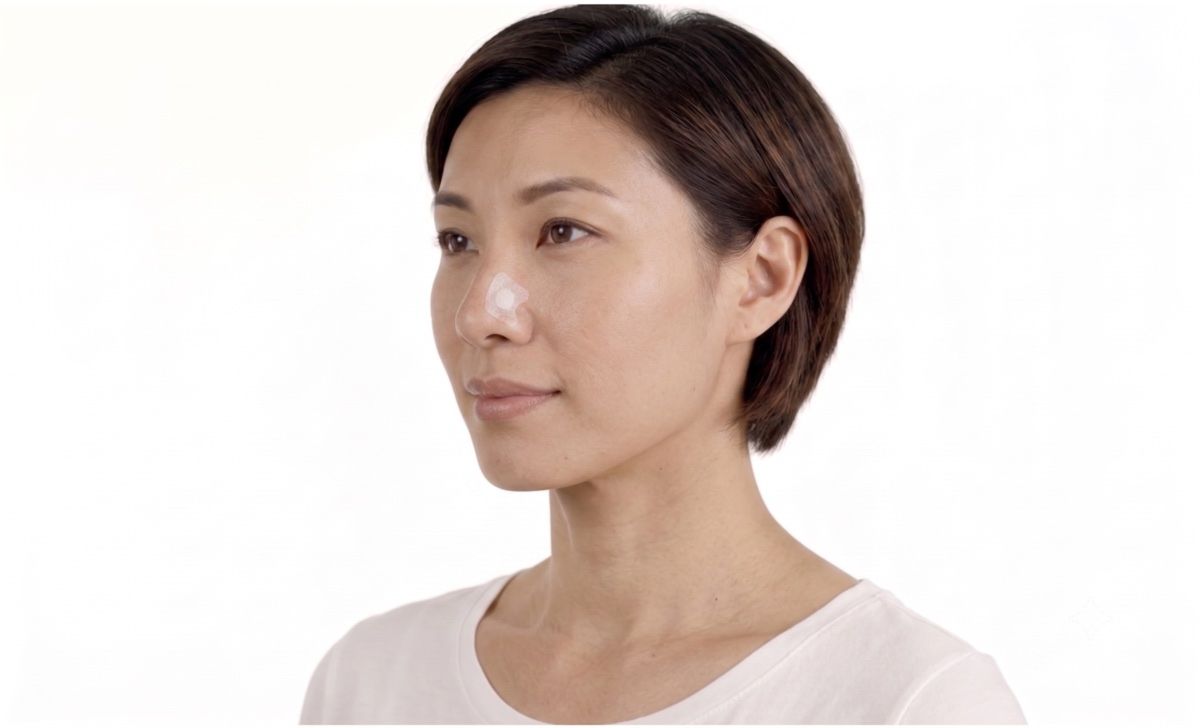
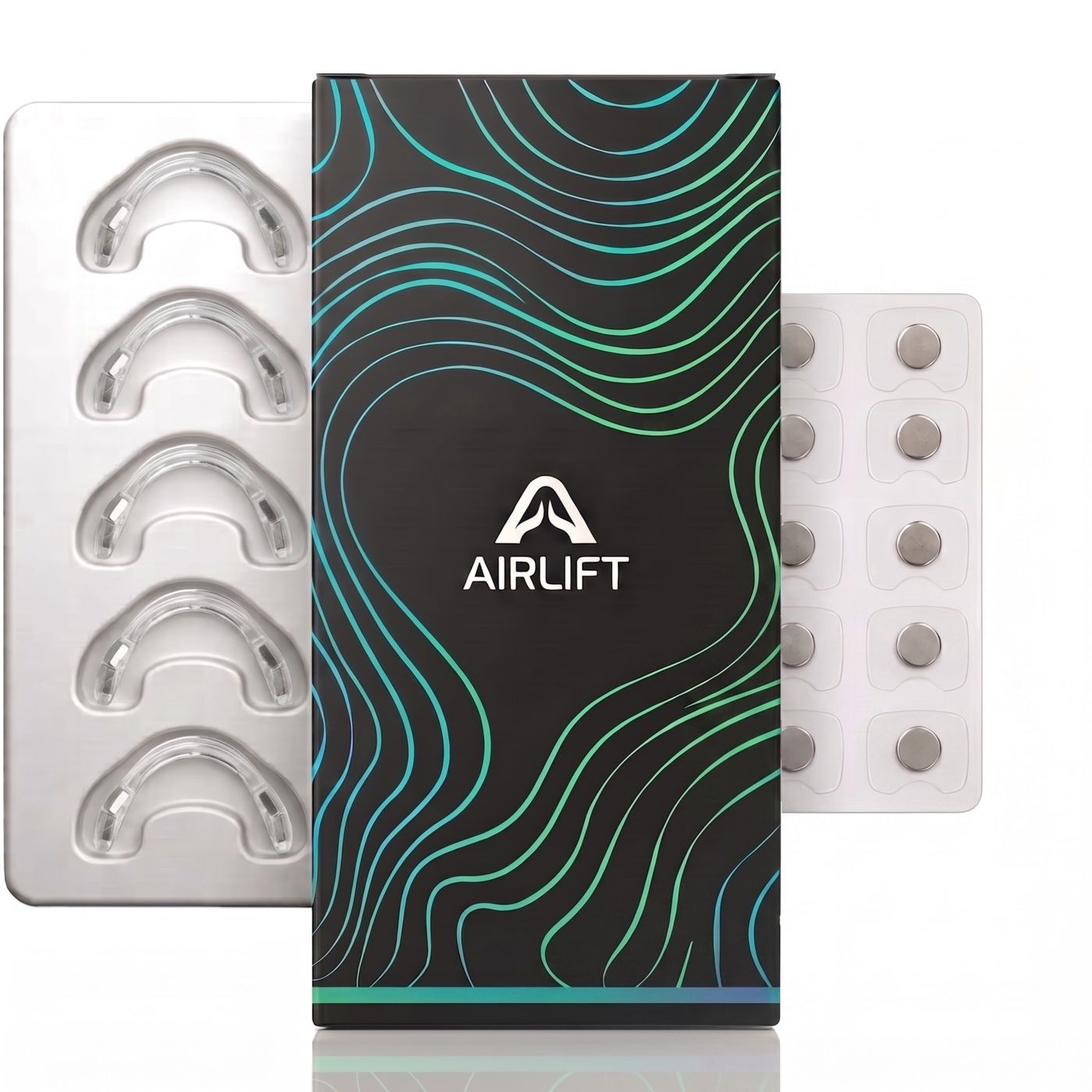
Each Airlift sticker uses a latex-free adhesive and holds a thin steel disc, which the sticker covers on the skin side, so the metal doesn't touch your skin. The magnets are in the clip, which grips the discs through the stickers. There's more on how the clip and discs work in do magnetic nasal strips work? and magnetic vs adhesive nasal strips.
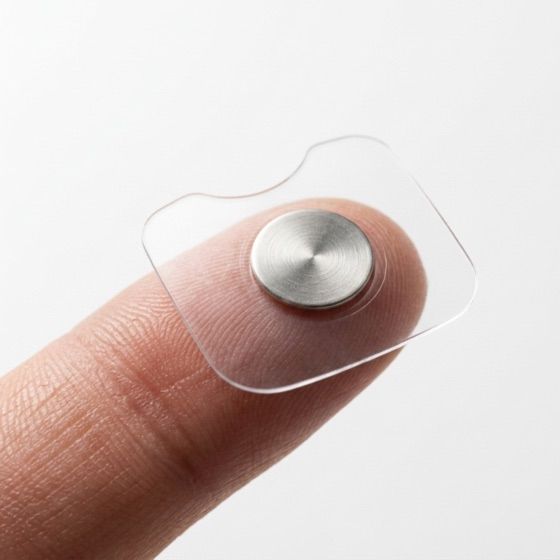
It still uses adhesive, so it isn't the answer for skin that reacts to every tape. That's what an internal dilator is for, and our Airlift vs Mute comparison covers that choice.
With no published skin test data from Airlift, Snoreeze, MaxFlow or Breathe Right, the sensible way to try is one where you can get your money back without sending anything back. Under the 90-Night Airlift Test terms, you email within 90 days of receiving your order for a full refund, delivery included. You keep the clip and send nothing back, and it's once per customer. Of the brands whose refund terms we checked, only Airlift publishes a full refund, including delivery, with nothing to send back and 90 days to claim. You can see every Airlift system in the shop.
If your skin is sensitive, how to try a new strip or sticker
Start small, and follow the instructions of the brand you're trying.
Airlift's instructions say to wear a single sticker on your inner forearm or behind your ear for a few hours before your first night. Don't put stickers on broken or irritated skin, and stop if irritation continues. It's a quick check you do at home. Formal patch testing for skin allergies is a specialist test, usually arranged through a dermatology clinic.[7]
Breathe Right's FAQ says to stop if a rash appears, and not to put strips on sores, sunburn or broken skin. MaxFlow suggests sensitive skin tries a strip on the inner arm for 30 minutes first.
How the strip comes off matters too. Nursing experts describe skin damage from medical adhesives as common but under-recognised, and say how an adhesive is put on and taken off makes a difference.[8][9] The brands' own removal steps:
- Breathe Right: wet it with warm water and lift slowly.
- Snoreeze: if removal is hard or painful, wash your nose with warm water first.
- Airlift: take the clip off first, then peel each sticker from its top edge, low and slow, supporting the skin with your other hand. It's easiest after washing your face or in the shower.

- Check the label for latexLook for the words "latex-free" on the pack or listing. "Hypoallergenic" or "for sensitive skin" isn't the same statement.
- Try one on your arm firstFollow the brand's own instructions, such as Airlift's single sticker on the inner forearm for a few hours, and never on broken or irritated skin.
- Take it off slowlyWarm water first, then peel low and slow while you support the skin. Give sore skin a night off.
If your problem is strips coming off rather than your skin reacting, see why nasal strips fall off and what helps.
Sources checked
- Breathe Right UK: FAQs, Original and Sensitive Clear: no latex statement, Clear material and skin warnings (28 October 2026).
- Boots, Breathe Right Original Small/Medium 30: price and latex warning (27 October 2026).
- Amazon UK, Breathe Right Original Large 10 and Clear Large 10: packaging latex warning (28 October 2026).
- Breathe Right US FAQ and Canadian FAQ: packaging latex wording (28 October 2026).
- Snoreeze Nasal Strips and shipping and returns, plus the Boots listing: latex statement, prices, delivery and removal advice (28 October 2026).
- MaxFlow (NasalStrip.uk): product page, FAQ and refund policy: latex statement, price, delivery and arm trial (27 October 2026).
- Mute: Starter Pack and FAQ: materials, price and delivery (27 October 2026).
- Intake Breathing refill packs: adhesive description (27 October 2026).
- Boots, Sleepeaze nasal strips 20: price and latex wording (28 October 2026).
- NHS, contact dermatitis: irritant and allergic types, and when to see a GP (28 October 2026).
- Airlift's shop, refills and refunds pages and its help page: Airlift's products, prices, instructions and policies (27 and 28 October 2026).
Questions people ask
References
- Merrett TG, Merrett J, Kekwick R (1999). The prevalence of immunoglobulin E antibodies to the proteins of rubber (Hevea brasiliensis) latex and grass (Phleum pratense) pollen in sera of British blood donors. Clinical and Experimental Allergy, 29(11), 1572-1578. doi.org/10.1046/j.1365-2222.1999.00696.x
- NHS (2023). Contact dermatitis. www.nhs.uk/conditions/contact-dermatitis/
- Alinaghi F, Bennike NH, Egeberg A, Thyssen JP, Johansen JD (2019). Prevalence of contact allergy in the general population: a systematic review and meta-analysis. Contact Dermatitis, 80(2), 77-85. doi.org/10.1111/cod.13119
- Hamnerius N, Dahlin J, Bruze M, Nilsson K, Sukakul T, Svedman C (2023). Colophonium-related allergic contact dermatitis caused by medical adhesive tape used to prevent skin lesions in soldiers. Acta Dermato-Venereologica, 103, adv18428. doi.org/10.2340/actadv.v103.18428
- Wheatley JR, Amis TC, Lee SA, Ciesla R, Shanga G (2019). Objective and subjective effects of a prototype nasal dilator strip on sleep in subjects with chronic nocturnal nasal congestion. Advances in Therapy, 36(7), 1657-1671. doi.org/10.1007/s12325-019-00980-z
- Ward J, Ciesla R, Becker W, Marava Shanga G (2018). Randomized trials of nasal patency and dermal tolerability with external nasal dilators in healthy volunteers. Allergy and Rhinology (Providence), 9, 2152656718796740. doi.org/10.1177/2152656718796740
- British Association of Dermatologists (2024). Patch testing (patient information leaflet). skinhealthinfo.org.uk/condition/patch-testing/
- McNichol L, Lund C, Rosen T, Gray M (2013). Medical adhesives and patient safety: state of the science. Journal of Wound, Ostomy and Continence Nursing, 40(4), 365-380. doi.org/10.1097/WON.0b013e3182995516
- Barton A, Broadhurst D, Hitchcock J, Lund C, McNichol L, Ratliff CR, Moraes JT, Yates S, Gray M (2024). Medical adhesive-related skin injury at 10 years: an updated consensus. Journal of Wound, Ostomy and Continence Nursing, 51(5S), S2-S8. doi.org/10.1097/WON.0000000000001116

Written by Nicholas Green
I've found it hard to breathe through my nose for as long as I can remember, and years of products and even surgery didn't fix it, so I built Airlift. I write about what I've learned along the way, as someone who lives with it rather than as a clinician.
How we research and check articles: our editorial standards.