Magnetic vs adhesive nasal strips: neither suits everyone. Adhesive strips cost less to start and have published, independent studies. We found none for magnetic ones. Most UK buyers who'd rather reuse a clip than bin a strip each night should start with Airlift: every size and prep pads included, and 90 nights to try with nothing to send back.
In short
- For most UK buyers who want something reusable, a magnetic system is the better fit, and Airlift is the one to start with. All five clip sizes and prep pads come in the box, and you get 90 nights to try it with nothing to send back.
- Both types stick to the skin. A magnetic system splits the job between a reusable clip and two small single-use stickers.
- Adhesive strips cost less to start, and Breathe Right is on the high street. Magnetic costs more up front, and only some refills come out cheaper per night than a branded strip.
- Adhesive strips have been studied. No independent study of any magnetic dilator has been published, so nothing about hold or airflow can be ranked.
Magnetic vs adhesive nasal strips: how each one works
An adhesive nasal strip is one piece. It sticks across the bridge of your nose and down both sides, and springy bands inside it lift the sides of your nostrils outwards. You wear it for one night and throw it away. Breathe Right, DreamFlow and MaxFlow all work like this.
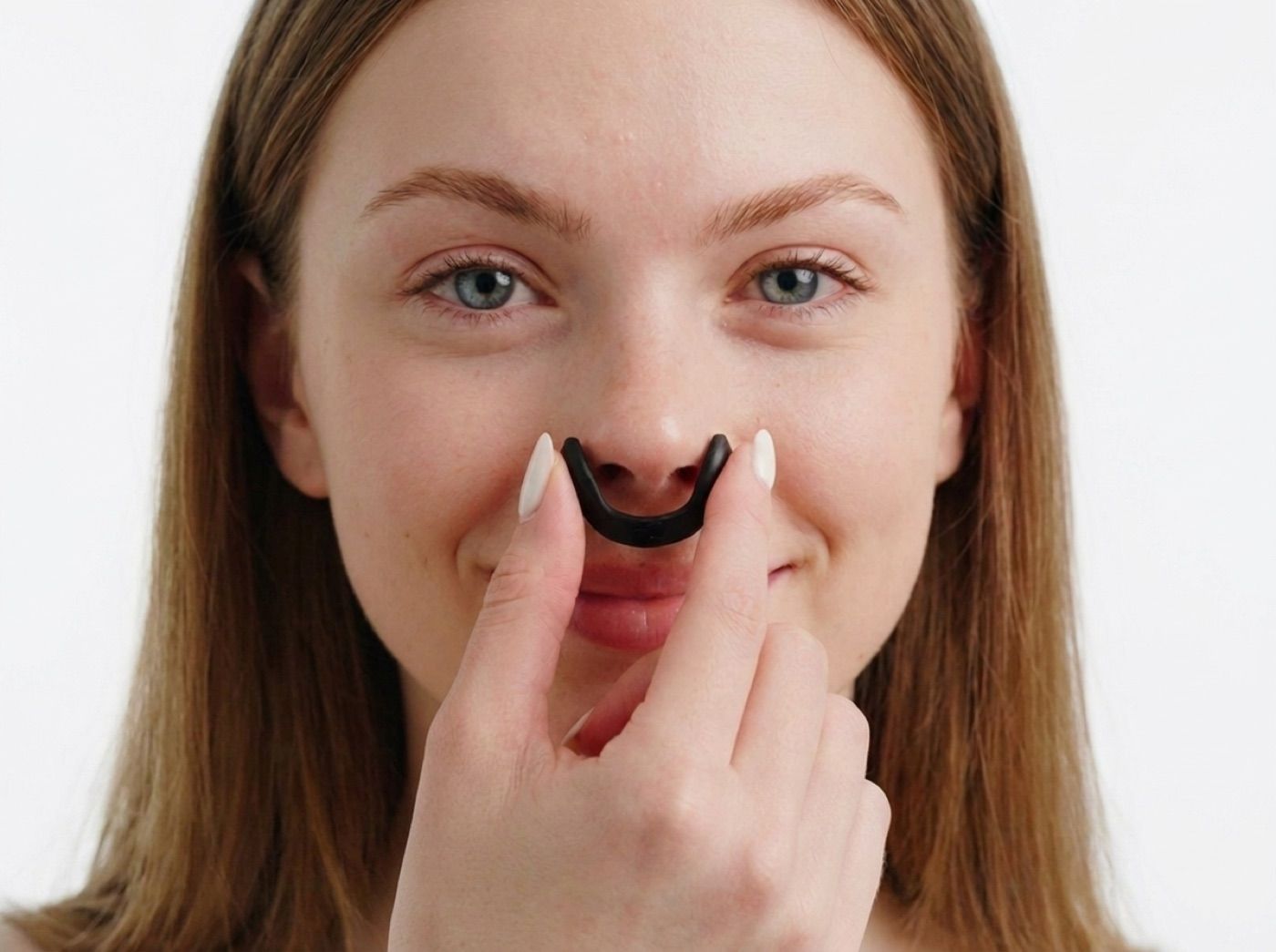
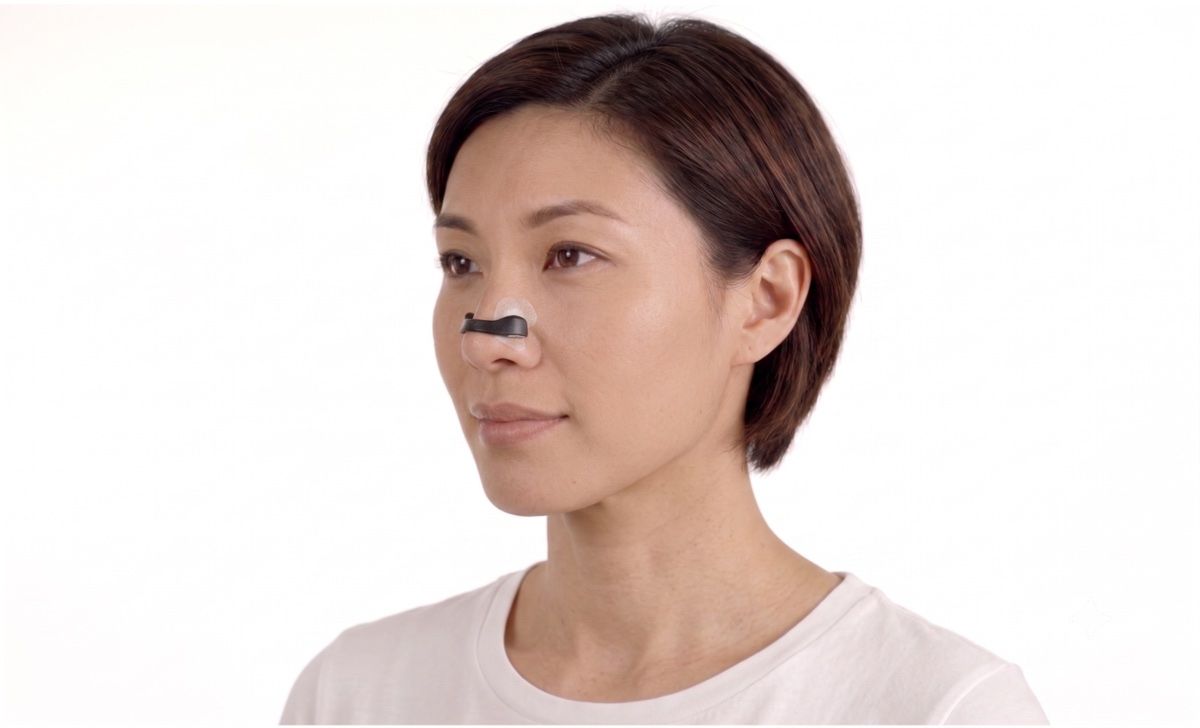
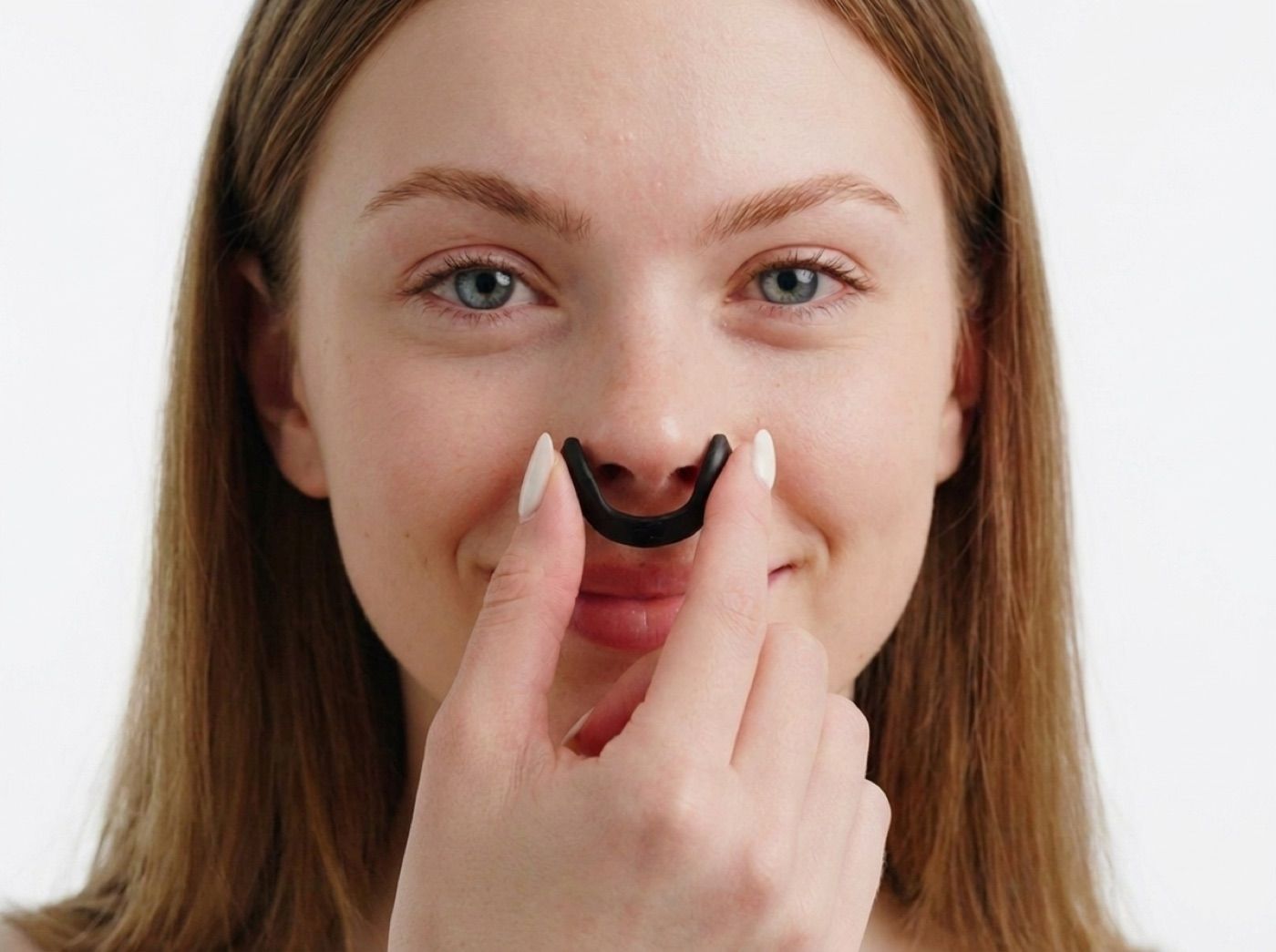
A magnetic system comes in two parts. You put a small single-use sticker on each side of your nose, each holding a small metal disc. A reusable clip or band with magnets in it sits across the front of your nose and snaps onto the two discs. Airlift, Intake Breathing and NoseStrip all use this design, and none of them goes inside the nose. Both types stick to your skin; they differ in where the adhesive goes and which part does the lifting. Internal dilators, which do sit inside the nostril, are covered in nasal strips vs nasal dilators.
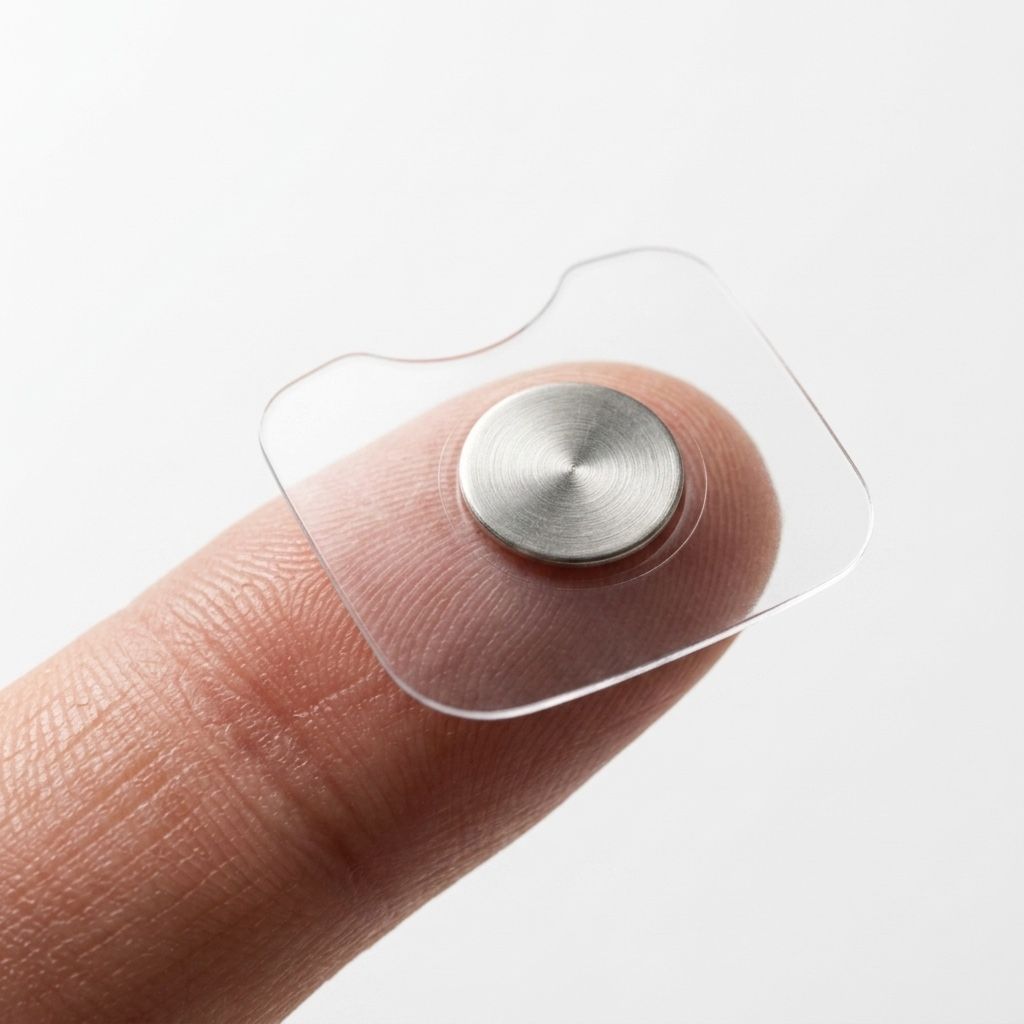
This isn't magnet therapy: the magnets only connect the parts. On Airlift, they sit in the clip and the applicator, and the disc on each sticker is steel, not a magnet. The clip does the lifting, and the magnets hold it in place.
If you want to know why people look for easier nose breathing at night in the first place, our piece on mouth breathing at night covers the common reasons.
How do they compare side by side?
Here are the two formats next to each other, using what each brand publishes. The cost rows cover the packs in the price table below, checked on 27 October 2026.
| Adhesive strip | Magnetic system | |
|---|---|---|
| What sticks to your skin | The whole strip, across the bridge and both sides | Two small stickers, one on each side |
| What does the lifting | Spring bands inside the strip | A reusable clip or band |
| What you reuse | Nothing | The clip (and the applicator, where one is included) |
| What you throw away each night | The strip | The two stickers |
| Set-up | Peel and press | Stick on both stickers, then snap the clip on |
| Sizes | Picked before you buy. Breathe Right Original and Clear come in Small/Medium or Large packs; Extra Strength and MaxFlow come in one size | Airlift: 5 in the box. Intake: 6 made, 4 in its starter. NoseStrip: 4 in the box |
| Skin prep | Brands say to wash and dry the skin first | The same. Airlift includes a prep pad for every night; Intake sells prep pads separately |
| Published studies | Yes, small, and mostly on Breathe Right | No published, independent study found |
| UK cost per night to start | £0.33 to £0.58 | £0.67 to £3.67 |
| UK cost per night ongoing | £0.17 to £0.58 | £0.27 to £1.07, depending on the pack |
Are magnetic nasal strips cheaper than regular strips?
Not to start with, and only sometimes after that. Of the packs we priced, every magnetic starter costs more per night than every adhesive pack. Once you're only buying refills, it depends on the brand and the pack size.
These are standard prices on each brand's or retailer's own site on 27 October 2026, for one strip or one pair of stickers a night, before delivery.
| Pack | Price | Nights | Per night |
|---|---|---|---|
| Adhesive strips | |||
| Breathe Right Original, Boots | £13.99 | 30 | £0.47 |
| Breathe Right Extra Strength, Boots | £14.99 | 26 | £0.58 |
| DreamFlow (sold by SleepyDeepy), one pack | £12.99 (on sale at £9.99 when checked) | 30 | £0.43 (£0.33 on sale) |
| DreamFlow, 12 packs on subscription (via its mixed subscription builder) | £72 | 360 | £0.20 |
| MaxFlow, one pack | £9.99 | 30 | £0.33 |
| MaxFlow, 12 packs | £59.94 | 360 | £0.17 |
| Magnetic starters | |||
| Airlift Complete, one-time | £33 | 30 | £1.10 |
| Airlift Complete, Annual plan (clip included) | £240 | 360 | £0.67 |
| NoseStrip 30 Day Supply | £26.99 | 30 | £0.90 |
| Intake Breathing starter (black), UK store | £54.99 or £64.99 | 15 or 30 | £3.67 or £2.17 |
| Magnetic refills | |||
| Airlift stickers only | £25 or £182 | 30 or 360 | £0.83 or £0.51 |
| Airlift stickers and prep pads | £32 | 30 | £1.07 |
| NoseStrip refills | £15.99 or £23.99 | 30 or 90 | £0.53 or £0.27 |
| Intake Breathing refills, UK store | £31 or £229 | 30 or 360 | £1.03 or £0.64 |
Delivery changes some of these. Breathe Right is on the shelf at Boots, so there's nothing to pay if you buy in store. MaxFlow charges £3.99 on orders under £25, which takes one pack to £0.47 a night, and DreamFlow charges £2.99 under £25. Airlift's one-time starter is £1.27 a night with its £5 delivery. Its Annual plan includes the clip and prep pads, and every subscription order ships free by next-day delivery, with no minimum spend. The 360-night stickers pack assumes you already have a clip. NoseStrip delivers free. Intake ships from the US and doesn't publish a UK delivery rate in pounds.
NoseStrip's figures use its own night counts. One of its pages suggests a pack may count single tabs, not pairs, and if so its cost per night doubles.
So with every magnetic system here, the first month costs more. After that, it depends on the brand. A budget magnetic refill, such as NoseStrip's 90-pack, can come in under a branded strip, on NoseStrip's own night counts. Airlift's and Intake's refills stay above Breathe Right's 30-pack. The cheapest bulk adhesive strips, MaxFlow at £0.17 and DreamFlow at £0.20, undercut every magnetic option here, NoseStrip's 90-pack (£0.27) included. Airlift isn't the cheap option, and you can see all its refill prices on the refills page.
If you go magnetic with Airlift, the cheapest first year is the Complete starter (£33) plus £5 delivery, then Airlift's 360-night stickers pack at £182. That's £220 for 390 nights, or £0.56 a night, though prep pads come with the first 30 nights only. Once you own a clip, stickers alone are £0.51 a night, against £0.47 for Breathe Right's 30-pack. Airlift's Annual plan is £240 for 390 nights, counting 30 bonus pairs (£0.62), with prep pads and delivery included.
Which stays on better?
No winner: there's no comparable test data. No brand of either type publishes hold, pull-force or overnight-wear test results. The stickers on a magnetic system are adhesive too, so they can lift in the same ways a strip can.
Breathe Right says its strips last up to 12 hours and won't hold on wet, oily or moisturised skin. MaxFlow also says up to 12 hours. Airlift's help page says a properly applied pair of stickers is made to last a full night's sleep. NoseStrip says its tabs were tested for all-night wear but doesn't publish the test. All of these are the brands' own statements, with no published results behind them.

What touches your skin with each type?
An adhesive strip sticks across the bridge of your nose and down both sides. A magnetic system sticks two small stickers to the sides of your nose, with the clip sitting across the front. No one has published a test of whether either is easier on skin.
Airlift's stickers use a latex-free adhesive. The sticker covers the steel disc on the skin side, so the metal doesn't touch your skin. Airlift suggests trying one sticker first if your skin is sensitive, and says not to use the stickers on broken skin. The details are on Airlift's help page.
Breathe Right sells a Clear version it describes as suited to sensitive or dry skin. Its FAQ warns that strips can cause redness or irritation, and says not to use them on broken skin. Boots' listing for the Original 30-pack, checked on 27 October 2026, says not to use the strips if you're allergic to latex. More on that in are Breathe Right strips latex-free?
DreamFlow, MaxFlow and Intake all describe their adhesive as latex-free. Intake warns against using its tabs on sunburned, irritated or broken skin. Whichever you pick, try one on your arm first if your skin is sensitive.
How do you pick the right size?
With adhesive strips, you choose a size before you buy. Breathe Right Original and Clear come in Small/Medium or Large packs, and Extra Strength comes in one size. MaxFlow makes one size, which it says suits most adult noses. Breathe Right says not to cut a strip to fit, and to buy the smaller size instead. Its own pages give different advice on which size suits most adults, so you may end up trying both packs.
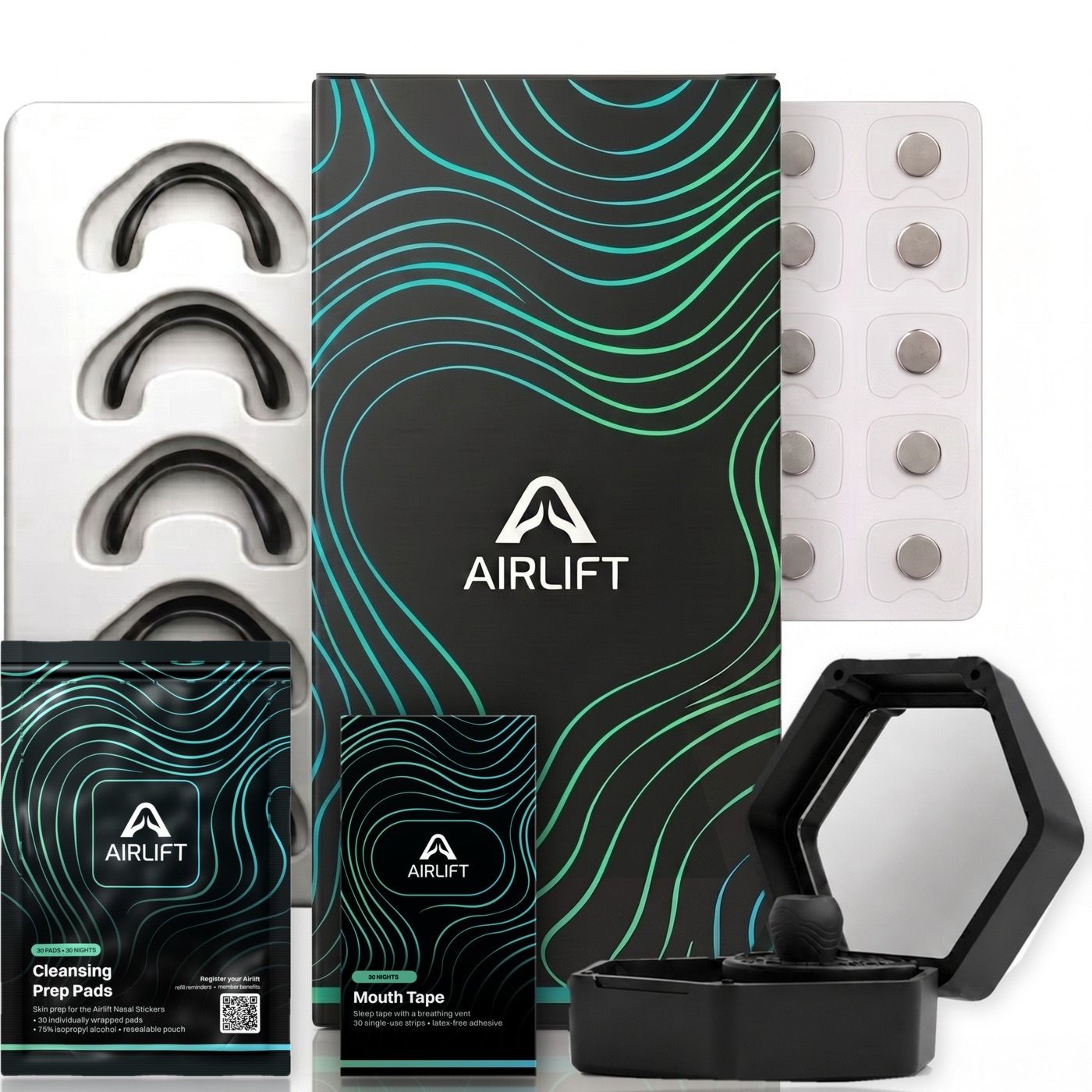
With a magnetic system, the clip or band has to fit your nose. Airlift puts all five sizes, XS to XL, in every box, including the £33 Complete starter, so you can try them at home. Intake makes six band sizes and puts four in its starter kit. It sends the smallest or largest free on request, though UK buyers pay the postage. NoseStrip includes four sizes, which it doesn't name or measure.
What does the research say?
Adhesive strips have been studied, mostly Breathe Right, in small trials. The results below are for strips only, and nobody has shown they carry over to magnetic systems.
In a 1999 lab study of 20 adults, a nasal strip raised peak airflow when breathing in hard through the nose by about 12%, by stopping the nostril walls being drawn inwards.[1] In a 2001 trial of 18 heavy snorers, strips widened the nose and made it feel clearer, but didn't change how long or how loudly people snored.[2]
We could find no published, independent study of any magnetic nasal dilator, including Airlift's. A 2026 review by UK surgeons reached the same conclusion.[3] The same review found most research is on adhesive strips such as Breathe Right, and that devices worn inside the nostril tended to perform better than external ones.[3] Magnetic systems and strips both sit outside the nose, so on the evidence so far that point goes to internal dilators. Our comparison of Airlift and Mute looks at that format, and our science page has more on how nasal dilators work.
What about sleep and snoring?
The strip evidence on sleep is mostly null. A 2016 review of 14 studies found strips made no significant difference to snoring measured in sleep labs.[4] In two GSK-funded trials involving 270 adults with night-time congestion, Breathe Right strips didn't improve sleep problems or morning tiredness compared with a dummy strip, though both groups felt better than before the trials began.[5]
No magnetic product has a published, independent sleep or snoring study, Airlift's included. Intake cites a home sleep study it commissioned from SleepScore Labs. The participant numbers, methods and full results haven't been published, so we can't assess it. If snoring is your main reason for looking, our guide to the best nasal strips for snoring in the UK goes through the options.
Magnet safety: what to check
Magnetic systems come with warnings that adhesive strips don't need, because of the magnets.
For the wider safety question, our guide to whether magnetic nasal strips work has the full answer.
Which should you choose?
Neither format is better for everyone, so choose by how often you'll wear one and what hasn't worked for you before. If you wear one most nights and want to stop buying a whole strip each time, we think a magnetic system is the better fit, and Airlift is the one to start with.
A magnetic system suits you if
- you wear one most nights and like keeping a reusable part
- strips haven't fitted you and you'd like to try several sizes at home
- you'd rather have the adhesive on two small patches than across the bridge of your nose
Where Airlift fits
Airlift's Complete starter is £33 one-time, with the clip in all five sizes, a magnetic applicator, 30 nights of latex-free stickers and 30 prep pads. With no published, independent study of any magnetic system to go on, pick one you can get a refund on without posting anything back. Under the 90-Night Airlift Test, you email within 90 days of receiving your order and get a full refund of what you paid, delivery included, and you keep the clip. It's once per customer. Of the brands in this article, only Airlift publishes a full refund, including delivery, with nothing to send back and 90 days to claim.
Against that, Airlift costs more per night than a high-street strip, and there's no published, independent study of it. It's also a new UK brand with no reviews yet, sold only on its own website and only to UK addresses. If it suits you, start with the Complete starter.
Adhesive strips suit you if
- you want the lowest cost to try
- you want to buy a pack in a shop today
- you only wear one now and then
- a strip size already fits you
- you don't want any set-up
If you're moving on from Breathe Right, see our guide to Breathe Right alternatives. We've also priced every magnetic brand sold in the UK, compared Breathe Right, Intake and Airlift side by side, and put Airlift and Intake Breathing head to head.
Sources checked
All checked on 27 October 2026.
- Breathe Right FAQs and how it works: how the strips work, single use, wear time, skin prep, sizing advice and warnings.
- Breathe Right product pages for Original, Clear and Extra Strength: sizes and the Clear version.
- Boots listings for Breathe Right Original 30 and Extra Strength 26: prices and the latex warning.
- DreamFlow product page and subscription builder: prices, delivery and the latex-free statement.
- MaxFlow product page: prices, delivery, size, wear time and skin prep.
- Intake's starter kit, refill packs and prep pads: UK prices, contents and prep pads.
- Intake help centre on why it uses magnets, sizes and replacement bands, warnings, warranty and international shipping: format, sizing, safety, warranty and delivery.
- Intake's post on its SleepScore Labs study: how Intake describes the study.
- NoseStrip's starter and refill stickers: format, sizes, prices, delivery and skin prep.
- Airlift's shop, refills, refunds, terms and help pages: Airlift's products, prices, materials, warnings and policies.
Questions people ask
References
- Di Somma EM, West SN, Wheatley JR, Amis TC (1999). Nasal dilator strips increase maximum inspiratory flow via nasal wall stabilization. Laryngoscope, 109(5), 780-784. doi.org/10.1097/00005537-199905000-00018
- Djupesland PG, Skatvedt O, Borgersen AK (2001). Dichotomous physiological effects of nocturnal external nasal dilation in heavy snorers: the answer to a rhinologic controversy?. American Journal of Rhinology, 15(2), 95-103. doi.org/10.2500/105065801781543745
- Ahmed A, Gakpetor C, Yang D, Oremule B, Ranganathan B, Jaiswal A, Bhalla RK (2026). The effectiveness of nonsurgical nasal devices in relieving nasal obstruction. Annals of the Royal College of Surgeons of England, 108(6), 476-483. doi.org/10.1308/rcsann.2025.0103
- Camacho M, Malu OO, Kram YA, Nigam G, Riaz M, Song SA, Tolisano AM, Kushida CA (2016). Nasal dilators (Breathe Right strips and NoZovent) for snoring and OSA: a systematic review and meta-analysis. Pulmonary Medicine, 4841310. doi.org/10.1155/2016/4841310
- Noss MJ, Ciesla R, Shanga G (2019). Sleep quality and congestion with Breathe Right nasal strips: two randomized controlled trials. Advances in Therapy, 36(8), 1975-1985. doi.org/10.1007/s12325-019-01005-5

Written by Nicholas Green
I've found it hard to breathe through my nose for as long as I can remember, and years of products and even surgery didn't fix it, so I built Airlift. I write about what I've learned along the way, as someone who lives with it rather than as a clinician.
How we research and check articles: our editorial standards.