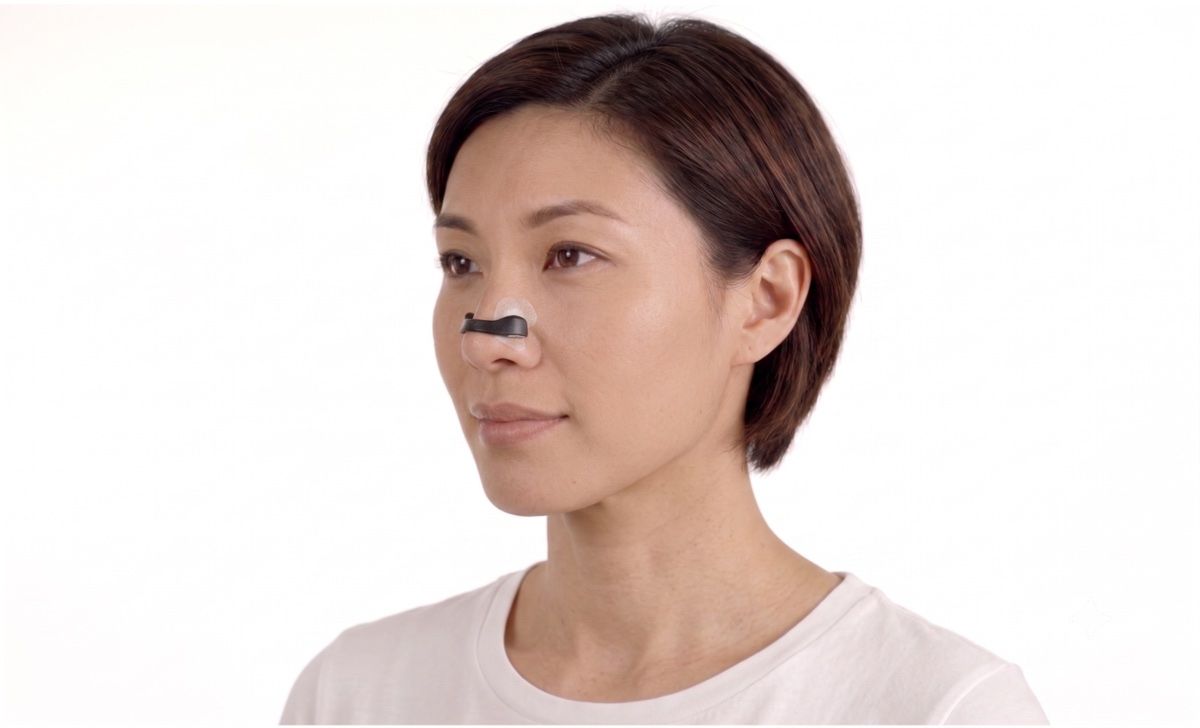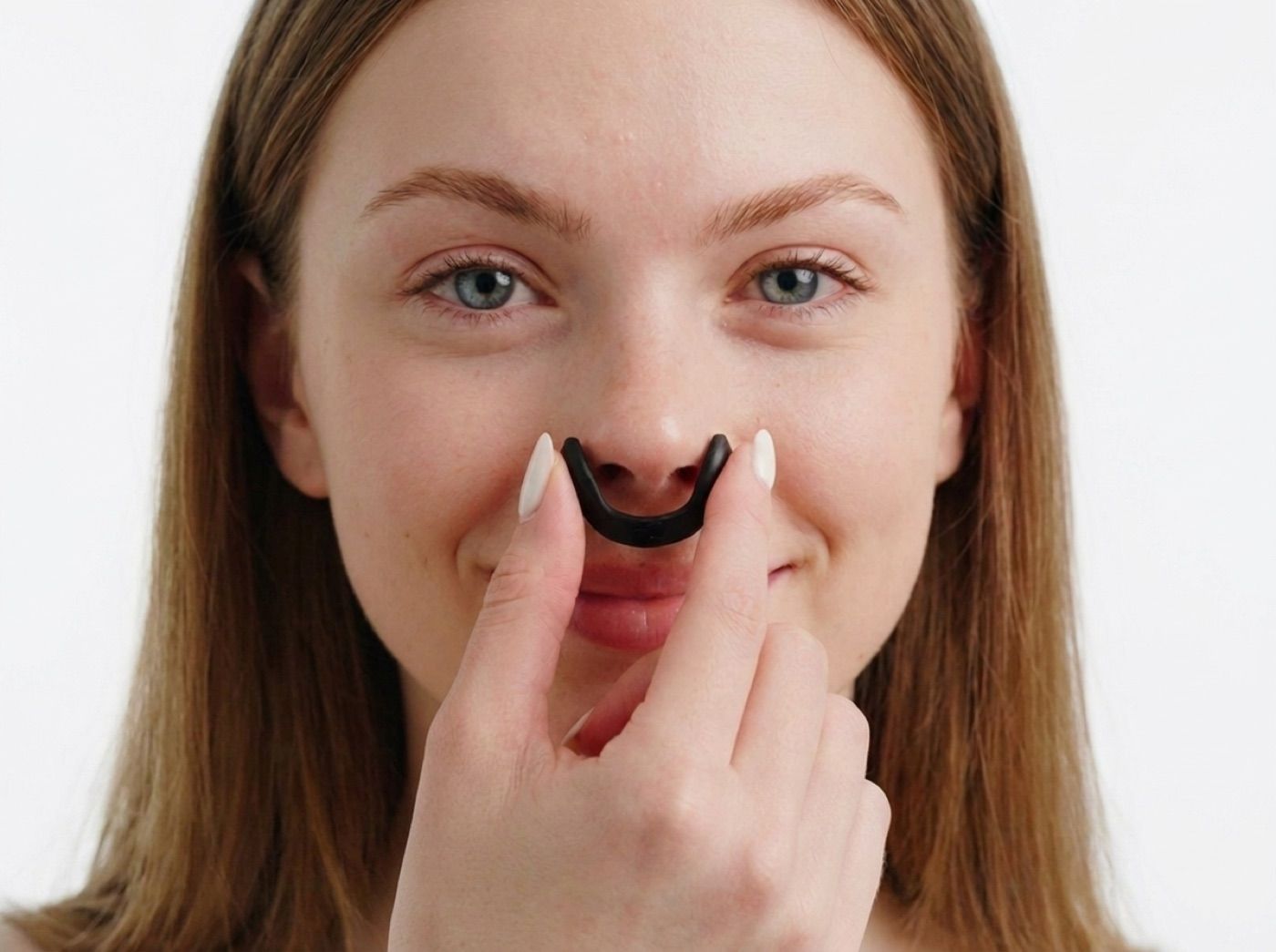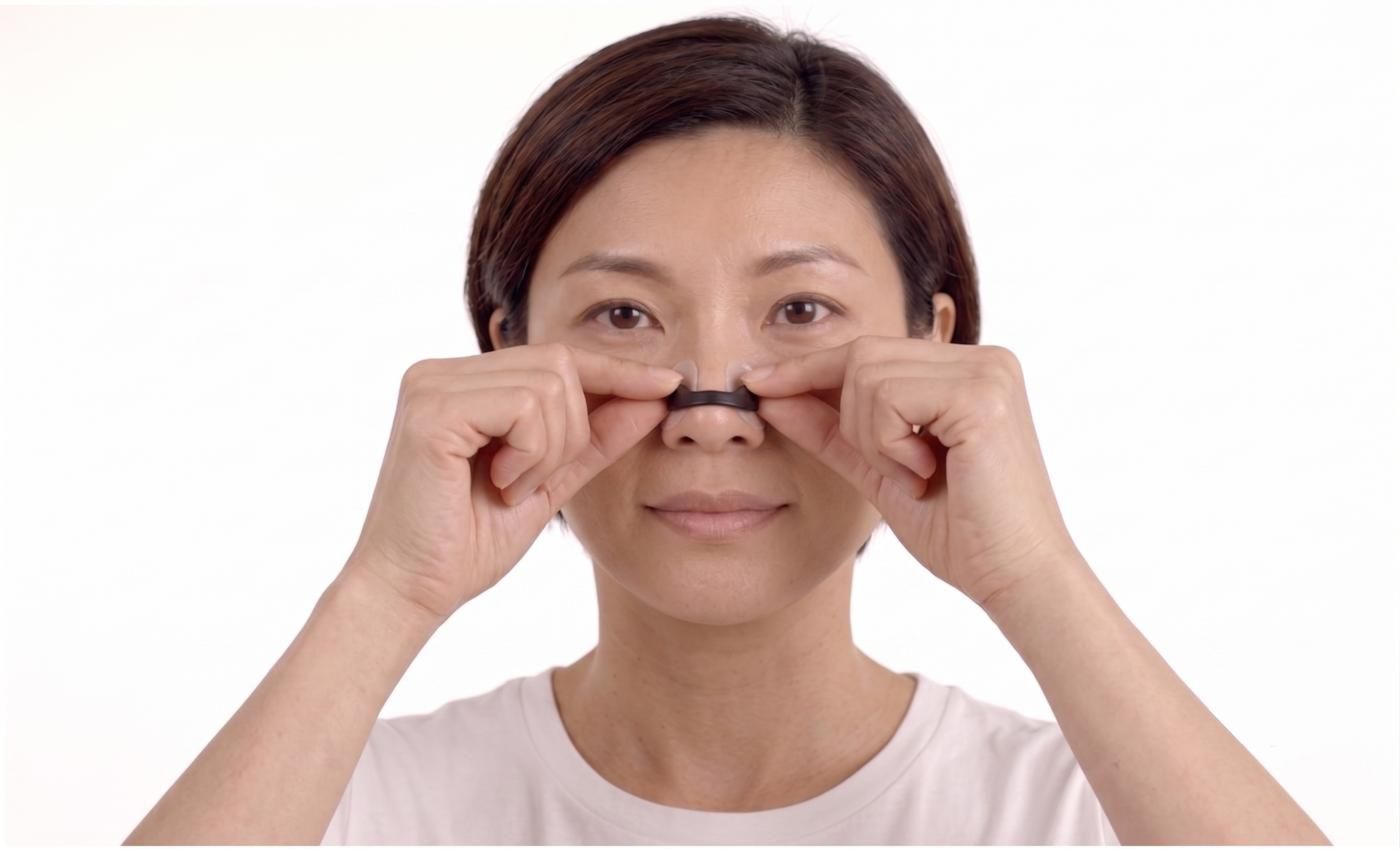
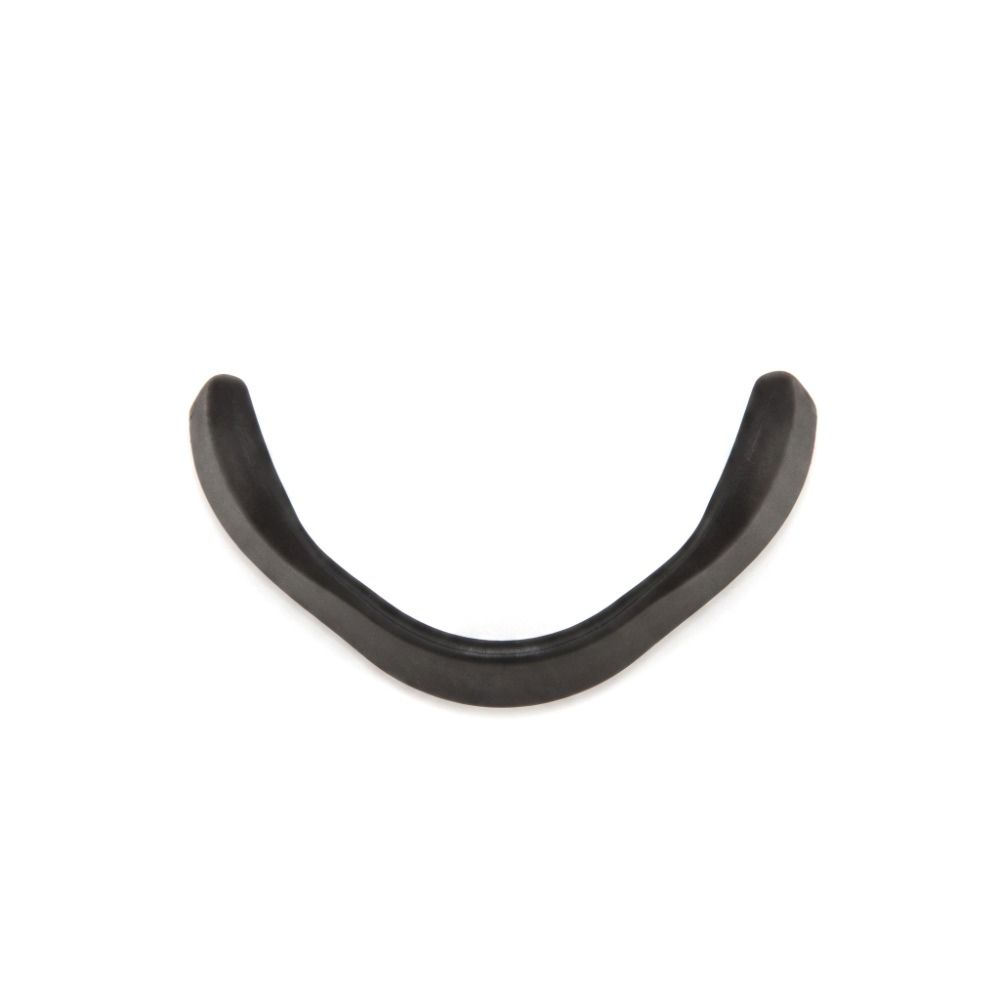
For most UK buyers comparing nasal strips vs nasal dilators, Airlift's magnetic clip is the pick if you want nothing inside the nose and no strip across the bridge, with 90 nights to try it, nothing sent back. Strips cost least to start. Internal dilators need no adhesive and tended to do better than external ones in a 2026 review.
In short
- For most UK buyers who want nothing inside the nose and no strip across the bridge, Airlift is the pick. It's an external magnetic clip with all five sizes in every box, and you can claim a full refund within 90 days of receiving your order with nothing to send back (once per customer).
- Strips cost least to start. A 30-pack of Breathe Right Original from Boots is £13.99 (£0.47 a night), and you can pick one up on the high street today.
- Internal dilators need no adhesive and cost least per night. AIRMAX's Trial Pack works out at £0.12 a night on its own 2-month replacement figure, and a 2026 review found devices worn inside the nostril tended to perform better than external ones.
- We found no published, independent study of any magnetic dilator, Airlift's included, and no brand has published a comparable comfort or hold test.
Nasal strips vs nasal dilators: what's the difference?
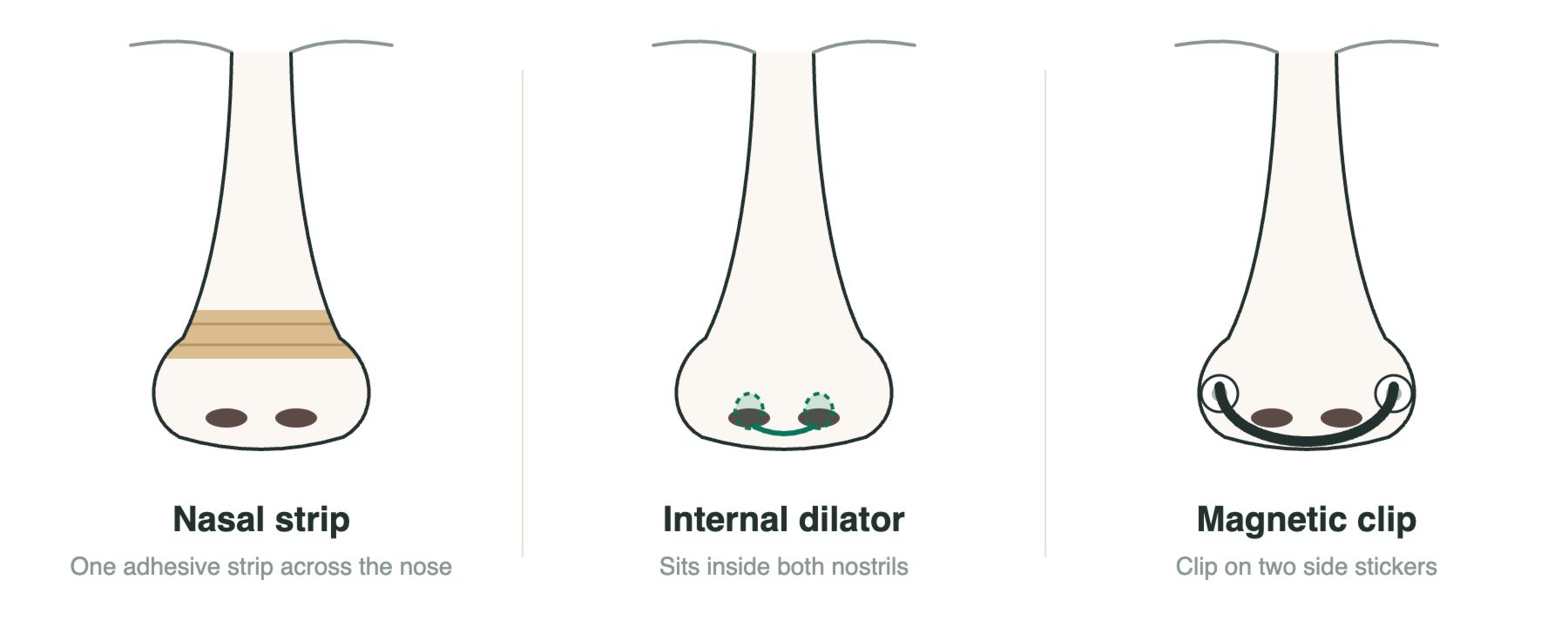
A nasal strip is one kind of external nasal dilator: you stick it across your nose and use it once. When people say "nasal dilator", they usually mean a device you reuse, either worn inside the nostrils (internal) or held on the outside of the nose (external).
They work on the same part of the nose. Reviews describe external nasal dilators as working by widening the narrowest part of the nose and lowering resistance to airflow, while noting that most studies are small.[1] Internal dilators hold the nostril open from the inside instead.
Nasal strips
A strip is a single-use adhesive band with springy stiffeners inside. You peel it, press it across the lower bridge of your nose and throw it away in the morning. Breathe Right is the best-known brand, and Snoreeze sells strips too.
Internal dilators
An internal dilator sits inside both nostrils and uses no adhesive. Mute and Turbine have two soft paddles joined by a bridge across the septum, AIRMAX is a soft one-piece device, and Silent Mammoth is a wire frame coated in silicone. You wash and reuse each one, for anything from 10 nights to about two months.
Magnetic clips
A magnetic clip is an external dilator in two parts: a reusable clip or band across the front of the nose, and two single-use stickers or tabs on the sides. The magnets only join the two parts (more in do magnetic nasal strips work?). Airlift and Intake Breathing both work this way. Nothing goes inside the nose and nothing crosses the bridge, but there's still adhesive on your skin. Magnetic vs adhesive nasal strips compares a clip with a one-piece strip in detail.
How do they compare side by side?
| Adhesive strips | Internal dilators | Magnetic clips | |
|---|---|---|---|
| Where it sits | Across the outside of the nose | Inside both nostrils | Outside: a clip across the front, on two stickers at the sides |
| What touches your skin | An adhesive strip across the bridge | A polymer or silicone device inside the nostril, with no adhesive | Two small adhesive stickers at the sides of the nose |
| Reusable part | None | The whole device, for 10 nights (Mute) or 10 uses (Turbine) up to about 2 months (AIRMAX, Silent Mammoth) | The clip. The stickers are single use |
| Sizes | Usually two (Breathe Right: Small/Medium or Large) | Two or three (AIRMAX S and M; Mute S, M and L; Silent Mammoth S and L) | Airlift: five, all in every box. Intake: six, four in its starter |
| Set-up each night | Peel and stick | Insert and adjust | Stickers on, then the clip |
| Sport version | No Breathe Right sport strip | Turbine; AIRMAX Sport | Intake Sport Tabs. None from Airlift |
| UK cost to start | From £8.95 for 20 (Snoreeze, plus delivery), or £13.99 for 30 at Boots (Breathe Right, £0.47 a night) | From £14.75 (AIRMAX Trial Pack, £0.12 a night on its 2-month figure) | From £33 (Airlift Complete, £1.10 a night) |
| Published evidence | Most of the research. Reviews found no significant change in snoring measured in sleep labs | Fewer studies, but ahead of external devices in a 2026 review | No published, independent study of any magnetic dilator |
Which costs less per night?
Internal dilators win on cost per night, and strips win on cost to start. Airlift isn't the cheapest on either. These figures are for one person, with one strip, one pair of stickers or one device-night a night, on prices checked on 27 and 28 October 2026.
| Format | Product (where to buy) | Price | Per night |
|---|---|---|---|
| Strip | Breathe Right Original Small/Medium, 30 (Boots) | £13.99 | £0.47 |
| Strip | Snoreeze Nasal Strips, 20 (snoreeze.com) | £8.95 | £0.45, or £0.65 with £3.95 delivery |
| Internal | AIRMAX Classic Trial Pack, Small and Medium (Amazon UK, sold by Airmax BV) | £14.75 | £0.12, or £0.25 if only one size fits; free delivery on a first Amazon order |
| Internal | Mute Starter Pack, S, M and L (Mute's UK store or Amazon UK) | £14.99 | £0.50, or £1.50 if only one size fits; £0.67 with £5 delivery on Mute's store, free on a first Amazon order |
| Internal | Mute sized 3-pack on subscription (Mute's UK store) | £17.99 | £0.60, before delivery |
| Internal | Silent Mammoth, one device (Breath and Balance) | £29.99 plus £3.75 delivery | £0.50 to £1.12 |
| Internal, sport | Turbine Starter Pack, S, M and L (Mute's UK store or Amazon UK) | £16.99 | £0.57 a use, or £1.70 if only one size fits; £0.73 with £5 delivery on Mute's store |
| Magnetic | Airlift Complete starter (airliftbreathing.co.uk) | £33 | £1.10, or £1.27 with £5 delivery |
| Magnetic | Airlift first year, one-time | £220 for 390 nights | £0.56 |
| Magnetic | Airlift Complete Annual plan | £240 | £0.67, delivery included |
| Magnetic | Intake Breathing starter, 15 nights (Intake's UK store) | £54.99 | £3.67, before US delivery (DHL, $18 to $25 per Intake's help centre) and any import charges |
Each brand's own lifespan sets the per-night figure. AIRMAX's leaflet says to replace it every 2 months, so we count 60 nights a device. Mute is rated for 10 nights and Turbine for 10 uses. Silent Mammoth's brand says 60 days, which gives £0.50 a night (£0.56 delivered), while its stockist says 30 uses or up to 60 days, which gives £1.00 (£1.12). Turbine is a sport product, and Rhinomed recommends Mute for sleep.
AIRMAX is the cheapest per night here. Snoreeze and Breathe Right are the cheapest to start. Airlift's starter costs more per night than any internal dilator's starter, as long as all of that starter's sizes fit you.
Bought one-time, Airlift's first year comes down to £0.56 a night. That's the Complete starter (£33) plus £5 delivery, then Airlift's 360-night stickers pack (£182), which covers 390 nights in all, though prep pads come with the first 30 nights only. It's still more than AIRMAX, Mute or Breathe Right. If you'd rather have prep pads in every box, the Annual plan (£240) works out at £0.67 a night. Every subscription order ships free by next-day delivery, with no minimum spend.
What does the research say?
We could find no published, independent study of any magnetic nasal dilator, including Airlift's. A 2026 review by UK surgeons reached the same conclusion.[3]
The same review found most research is on adhesive strips such as Breathe Right, and that devices worn inside the nostril tended to perform better than external ones.[3] So the evidence round goes to internal dilators. The review also noted that the studies it found didn't follow people up over time, so there's little evidence on longer-term use, and only four of its 13 studies reported on comfort or side effects.[3]
A 2016 review of 33 over-the-counter nasal dilators found published evidence of better airflow for external strips and nasal clips, a single study for nasal stents, and none for septal stimulators.[4] Its "nasal clips" aren't magnetic clips: it covered none, and its search ended in 2015.
In a 2016 study of 100 people with nasal valve problems, two in three wanted to keep using a nasal dilator after a month's trial, and dilators worn inside the nose improved airflow more than external ones. The others stopped because of irritation, poor fit or too little relief.[5]
| What's been studied | What it found | What it doesn't show | |
|---|---|---|---|
| Adhesive strips | Most of the research, much of it on Breathe Right | More airflow in lab tests; no significant change in snoring measured in sleep labs | Long-term use, or anything about magnetic clips |
| Internal dilators | Fewer studies, some paid for by makers | Ahead of external devices in a 2026 review and a 2016 study | Long-term use |
| Magnetic clips | No published, independent study found | Nothing yet | Whether they do better or worse than either |
The makers publish some evidence of their own. Rhinomed's airflow figure for Mute comes from its own sponsored 2003 test of a prototype in 20 healthy adults. AIRMAX links a peer-reviewed 2013 study of 30 people with nasal valve problems; it isn't in our evidence library, so we quote no figures from it. For Turbine, two cycling trials found nothing. In a 2017 trial part-funded by Rhinomed, neither an internal dilator nor a nasal strip changed 15 trained cyclists' power over a 20 km time trial.[6] An independent 2021 study of 8 adults found the Turbine internal dilator didn't change breathlessness or peak performance in a cycling test.[7] Our science page has more on how dilators are studied.

Snoring and a deviated septum
On snoring, the reviews don't find much for any format. A 2016 review of 14 studies found strips made no significant difference to snoring measured in sleep labs.[8] A 2026 review of 17 studies (496 people) found nasal dilators made no significant difference to snoring measured in sleep labs.[9] The Australasian Sleep Association's 2023 position statement on snoring doesn't advise over-the-counter remedies such as nasal dilators, because there's no evidence on long-term use, and names mandibular advancement devices as the first-line option.[10]
The NHS snoring page lists nasal dilators or strips that hold the nose open as one option when snoring is linked to a blocked or narrow nose. Airlift's help page says it doesn't claim to end snoring, and that it can't help snoring from the throat or blockage deeper in the nose.
A deviated septum is a different problem. The septum is inside the nose, and every format here works at the front of it. Airlift's help page says that if a blockage is mostly structural and deep inside, no external product can move it.
Where each one wins
Magnetic clips (Airlift)
- Nothing goes inside your nose, and nothing crosses the bridge.
- All five clip sizes come in every Airlift box, so trying sizes uses nothing up.
- Prep pads come in every delivery (30 per 30 nights) to clear skin oils before the stickers go on.
- Under the 90-Night Airlift Test, you can claim a full refund, including delivery, within 90 days of receiving your order. You keep the clip and send nothing back, and it's once per customer.
- A UK company, with UK delivery in pounds, no import charges and same-day dispatch on weekday orders before 3:30pm. Subscription orders ship free by next-day delivery.
Intake Breathing makes six band sizes and sells a separate sport tab. For the other magnetic options, see the best magnetic nasal strips in the UK.
Internal dilators
- No adhesive at all, which suits oily skin, facial hair or skin that reacts to tape.
- The lowest cost per night: AIRMAX at £0.12 on its 2-month figure, and Mute from £0.50.
- The evidence round, on the 2026 review's finding.[3]
- Long track records: AIRMAX has been on Amazon UK since at least 2012, and Mute since 2015.
- Mostly hidden inside the nose, with sport versions (Turbine and AIRMAX Sport).
Our Airlift vs Mute comparison looks at Mute in detail.
Nasal strips
- The cheapest way to start, and easy to find: Breathe Right lists Boots, Superdrug, Tesco and Sainsbury's among its stockists.
- The most studied format.
- Nothing to insert or assemble: you peel one off the backing and stick it on.
- Breathe Right makes a Clear strip that it describes as being for dry or sensitive skin.
For more on strips, see our Breathe Right alternatives guide and the best nasal strips for snoring in the UK.
Airflow, comfort and staying in place: no winner
No brand has published comparable test data on any of these, Airlift included, so nobody wins this round.
What touches your skin, and what goes in your nose?
Strips put adhesive across the bridge of your nose. Boots' listing for Breathe Right Original said not to use it if you're allergic to latex when we checked on 27 October 2026, while Snoreeze says its strips are latex-free. Skin reactions do happen with adhesive strips: in a GSK-funded 28-night study of a prototype strip, four people had mild skin reactions where the strip was applied.[11]
Internal dilators put a polymer or silicone device inside your nostril, with no adhesive. Mute and Turbine say their materials are latex-free. The most common complaint in Mute's own reviews is discomfort inside the nose: 45 of the 76 reviews rated one to three stars on its UK site mention it. Comfort is also the top theme in its four- and five-star reviews (107 of 338, by our keyword count), and that review pool isn't UK-only.
Magnetic clips put two small adhesive stickers or tabs on the sides of your nose. Airlift and Intake both say their adhesive is latex-free. On Airlift, each sticker holds a steel disc, and the sticker covers the disc on the skin side, so the metal doesn't touch your skin. The magnets are in the clip only.
Are nasal dilators safe?
No format has long-term safety data. The 2026 review found little evidence on longer-term use, and only four of its 13 studies reported on comfort or side effects.[3] What each maker publishes is its own set of limits:
- Breathe Right: not for children under 5, no more than 12 hours a day, and not on broken skin.
- Mute: not for children under 12 on its own site (Amazon UK says under 14), and ask your surgeon first if you've had nasal surgery.
- AIRMAX: not for children under 12. Its leaflet says it may fall out at night until you're used to it.
- Turbine: not for contact sports, water sports or swimming.
- Airlift: keep the clip and applicator away from children under 14 and pets, keep it at least 15 cm from pacemakers and other implanted devices, take it off before an MRI scan, and don't use it on broken or irritated skin.
How do you clean and look after a nasal dilator?
- Mute and Turbine: wash in warm soapy water after each use, and replace after 10 nights (Mute) or 10 uses (Turbine).
- AIRMAX: rinse before and after use, with no harsh cleaners, and keep it in its storage box. Its leaflet says to replace it every 2 months.
- Silent Mammoth: wash with soap and hot water after each use and let it dry. The brand says to replace it every 60 days.
- Airlift: wipe the clip with a prep pad, or mild soap and water, and let it dry fully before putting it away. Don't bend it: the help page says the clip is rigid by design, and changing sizes is how you change the fit.
- Strips: single use, so there's nothing to clean.

Which should you choose?
Choose a magnetic clip like Airlift if
- you don't want anything inside your nose, or a strip across the bridge
- you want every size in the box
- you want a refund with nothing to send back
Choose an internal dilator if
- you're fine with something in your nostrils
- you want the lowest cost per night, or no adhesive at all
Our guide to the best nasal dilators in the UK compares each one.
Choose a strip if
- you want to test the idea cheaply tonight
- you only need one now and then
If a strip does nothing for you, a dilator at the front of the nose may not either. With no comparable test data for any format, the sensible way to try is one where you can get your money back without sending anything back. You can start with the Complete starter (£33) and, if it isn't right for you, claim a full refund within 90 days of receiving your order.
Sources checked
Brand details were checked on 27 October 2026, and Snoreeze and Turbine on 28 October 2026.
- Breathe Right products and FAQs, plus Boots listings for Original Small/Medium 30 and Extra Strength 26: format, sizes, wear limits, latex wording and prices.
- Snoreeze Nasal Strips and shipping and returns: price, delivery and latex statement.
- Mute Starter Pack, Mute Medium 3-pack, Mute FAQ, research page and Mute on Amazon UK: format, lifespan, prices, materials, warnings, studies and reviews.
- Turbine Starter Pack and Turbine FAQ: design, prices, uses and limits.
- AIRMAX instruction leaflet, AIRMAX FAQ, research page and AIRMAX on Amazon UK, Trial Pack and Medium 2-pack: sizes, lifespan, care, warnings and prices.
- Silent Mammoth FAQ and Breath and Balance listing: design, lifespan, care and price.
- Intake starter kit, UK store: sizes and price.
- NHS: snoring: where dilators and strips fit among the options (read 28 October 2026).
- Airlift's shop, refills, refunds, shipping and help pages: Airlift's products, prices, policies, warnings and care.
Questions people ask
References
- Dinardi RR, de Andrade CR, Ibiapina CdC (2014). External nasal dilators: definition, background, and current uses. International Journal of General Medicine, 7, 491-504. doi.org/10.2147/IJGM.S67543
- Di Somma EM, West SN, Wheatley JR, Amis TC (1999). Nasal dilator strips increase maximum inspiratory flow via nasal wall stabilization. Laryngoscope, 109(5), 780-784. doi.org/10.1097/00005537-199905000-00018
- Ahmed A, Gakpetor C, Yang D, Oremule B, Ranganathan B, Jaiswal A, Bhalla RK (2026). The effectiveness of nonsurgical nasal devices in relieving nasal obstruction. Annals of the Royal College of Surgeons of England, 108(6), 476-483. doi.org/10.1308/rcsann.2025.0103
- Kiyohara N, Badger C, Tjoa T, Wong B (2016). A comparison of over-the-counter mechanical nasal dilators: a systematic review. JAMA Facial Plastic Surgery, 18(5), 385-389. doi.org/10.1001/jamafacial.2016.0291
- Lekakis G, Dekimpe E, Steelant B, Hellings PW (2016). Managing nasal valve compromise patients with nasal dilators: objective vs. subjective parameters. Rhinology, 54(4), 348-354. doi.org/10.4193/Rhin16.192
- Adams CM, Peiffer JJ (2017). Neither internal nor external nasal dilation improves cycling 20-km time trial performance. Journal of Science and Medicine in Sport, 20(4), 415-419. doi.org/10.1016/j.jsams.2016.08.018
- Schaeffer MR, McBride E, Mitchell RA, et al. (2021). Effects of the Turbine on ventilatory and sensory responses to incremental cycling. Medicine and Science in Sports and Exercise, 53(1), 192-199. doi.org/10.1249/MSS.0000000000002427
- Camacho M, Malu OO, Kram YA, Nigam G, Riaz M, Song SA, Tolisano AM, Kushida CA (2016). Nasal dilators (Breathe Right strips and NoZovent) for snoring and OSA: a systematic review and meta-analysis. Pulmonary Medicine, 2016, 4841310. doi.org/10.1155/2016/4841310
- Alotaibi S, Bin Saddiq BW, Alfarhoud RS, Alghamdi MTN, Alsaffar AJ, Alnabhan AM, Alkhateeb MA, Albahrani KH, Alowibidy SA, Almahdi ZI, Almaghrabi HA, Alnabulsi M (2026). Clinical effectiveness of nasal dilators in sleep-disordered breathing: a systematic review and meta-analysis. Cureus, 18(1), e100663. doi.org/10.7759/cureus.100663
- Sarkis LM, Jones AC, Ng A, Pantin C, Appleton SL, MacKay SG (2023). Australasian Sleep Association position statement on consensus and evidence based treatment for primary snoring. Respirology, 28(2), 110-119. doi.org/10.1111/resp.14443
- Wheatley JR, Amis TC, Lee SA, Ciesla R, Shanga G (2019). Objective and subjective effects of a prototype nasal dilator strip on sleep in subjects with chronic nocturnal nasal congestion. Advances in Therapy, 36(7), 1657-1671. doi.org/10.1007/s12325-019-00980-z

Written by Nicholas Green
I've found it hard to breathe through my nose for as long as I can remember, and years of products and even surgery didn't fix it, so I built Airlift. I write about what I've learned along the way, as someone who lives with it rather than as a clinician.
How we research and check articles: our editorial standards.