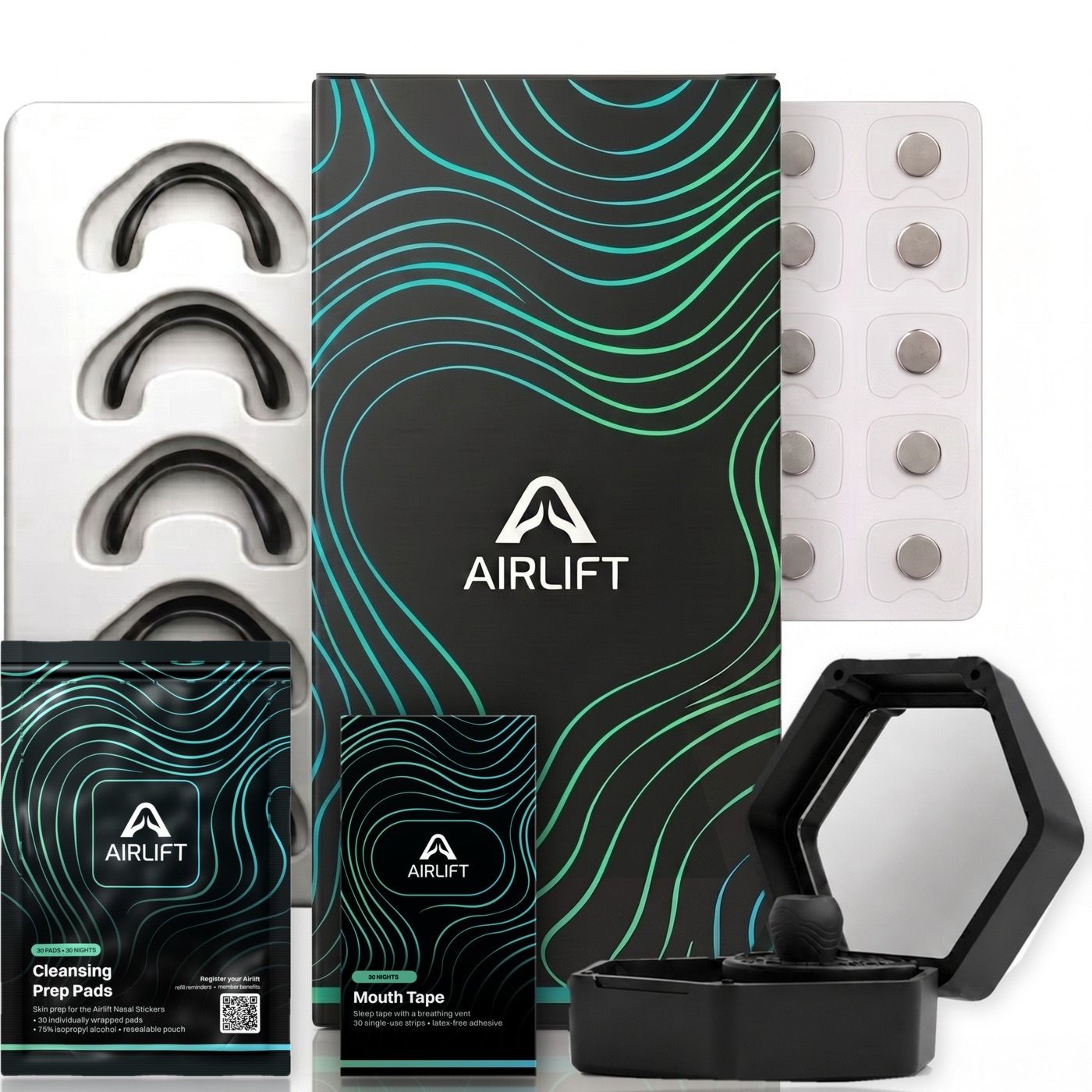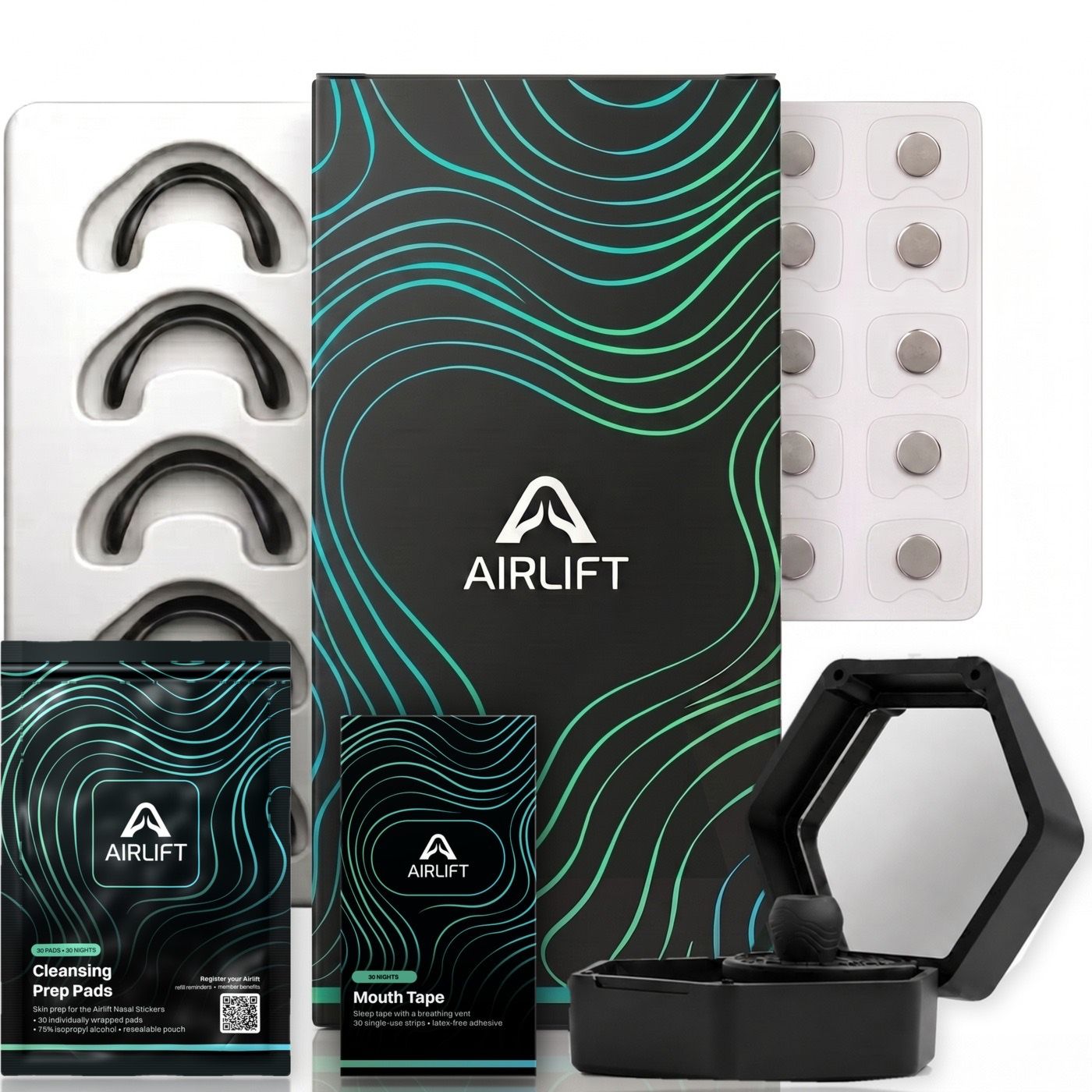
Do magnetic nasal strips work? They hold the nostrils open mechanically, and the magnets only join a reusable clip to stickers on the skin. We could find no published, independent study of any magnetic nasal dilator, including Airlift's, and adhesive strip studies mostly found no measured change in snoring. The main cautions are pacemakers, MRI scans, children and skin.
In short
- The magnets only join a reusable clip to stickers on your skin. The lift is mechanical, and nothing goes inside your nose.
- We could find no published, independent study of any magnetic nasal dilator, including Airlift's. Studies of adhesive strips found they widen the nose, but mostly made no measured difference to snoring.
- The main cautions are magnets near pacemakers and other implants, MRI scans, children and pets, and stickers on broken or sensitive skin.
- With no published, independent study to go on, trying one yourself is how you find out. Of the brands we checked, only Airlift publishes a full refund, including delivery, with nothing to send back and 90 days to claim.
Do magnetic nasal strips work?
We couldn't find a single published, independent study of one, so the honest answer is that the research can't tell you yet.
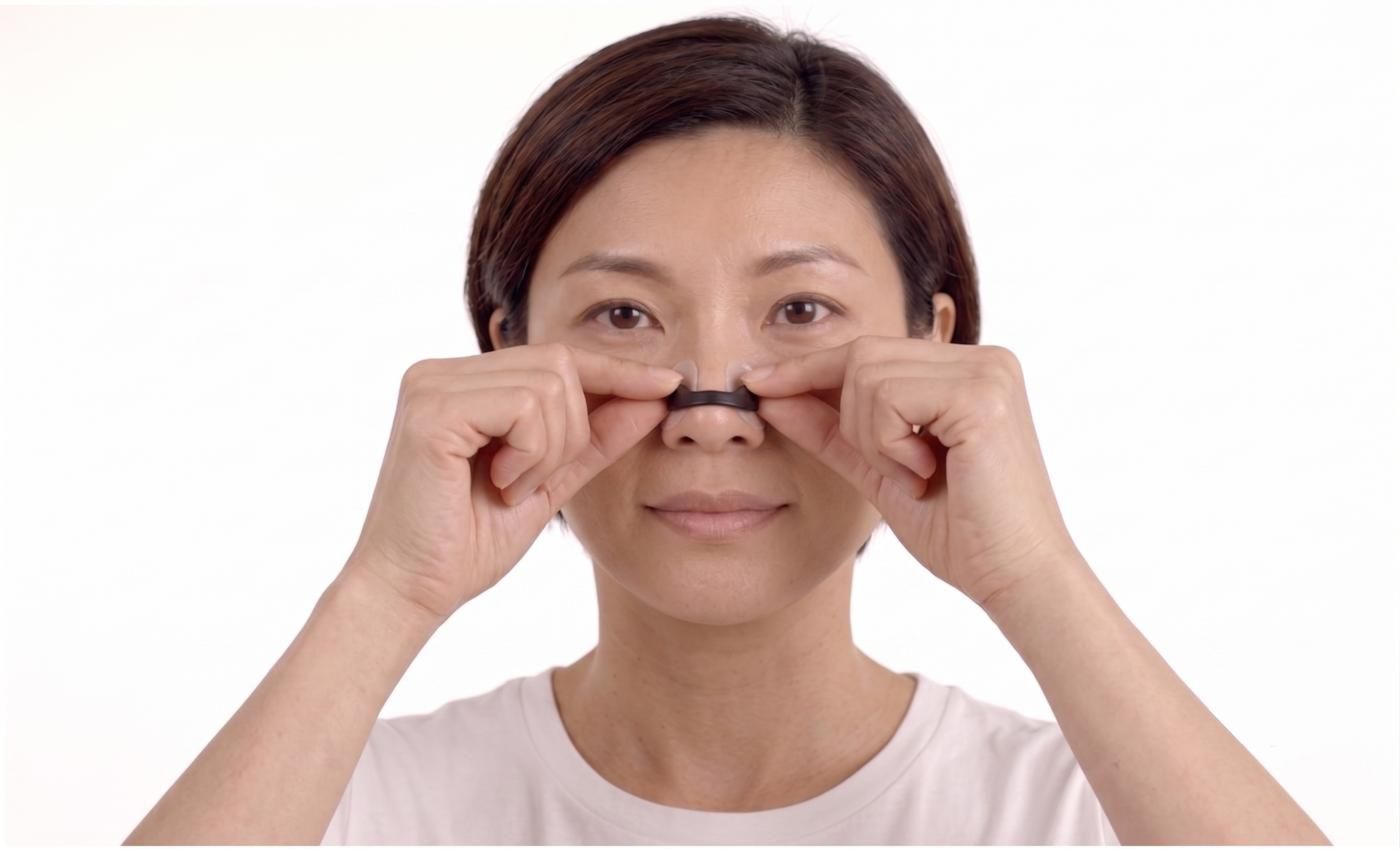
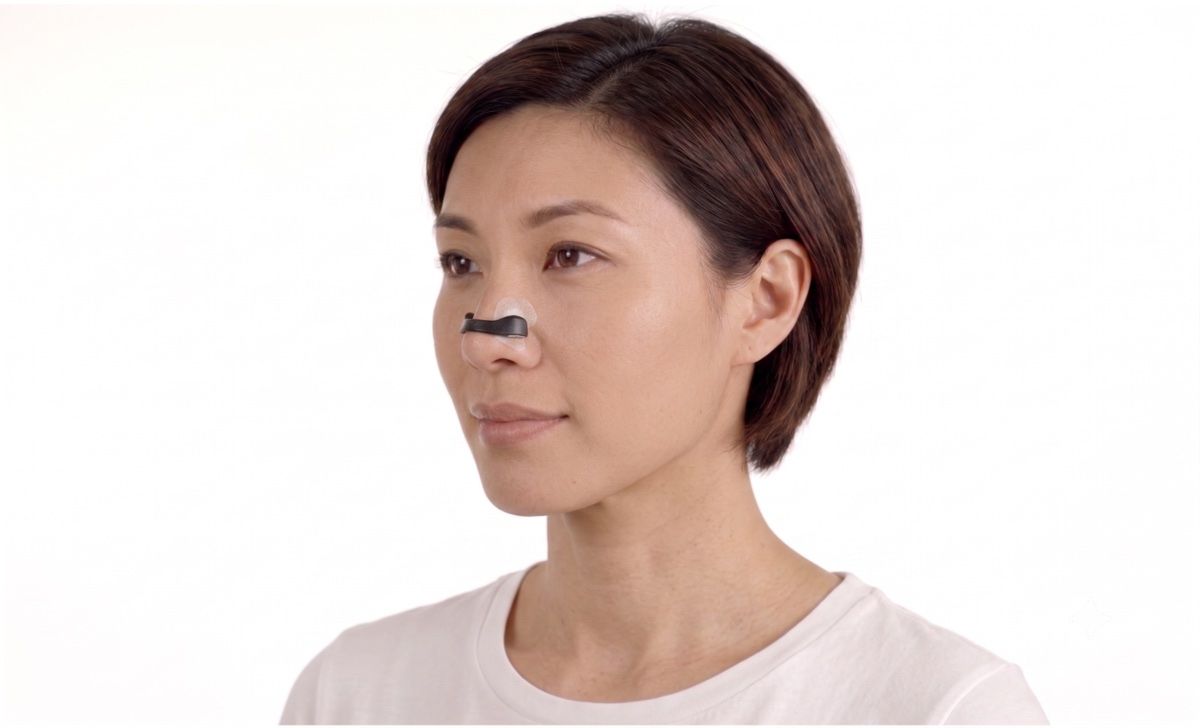
A magnetic nasal strip is an external nasal dilator: a reusable clip or band across the front of the nose that attaches magnetically to two single-use stickers.
"Work" could mean your nose feels clearer, the airflow through it measurably goes up, or your snoring measurably changes. The evidence differs for each, and so far all the published, independent evidence comes from other kinds of dilator, mostly adhesive strips.
If you want to know why the nose matters at night in the first place, start with why you mouth breathe at night. Whether a magnetic clip suits you better than an adhesive strip is a separate question, covered in magnetic vs adhesive nasal strips.
How do magnetic nasal strips work?
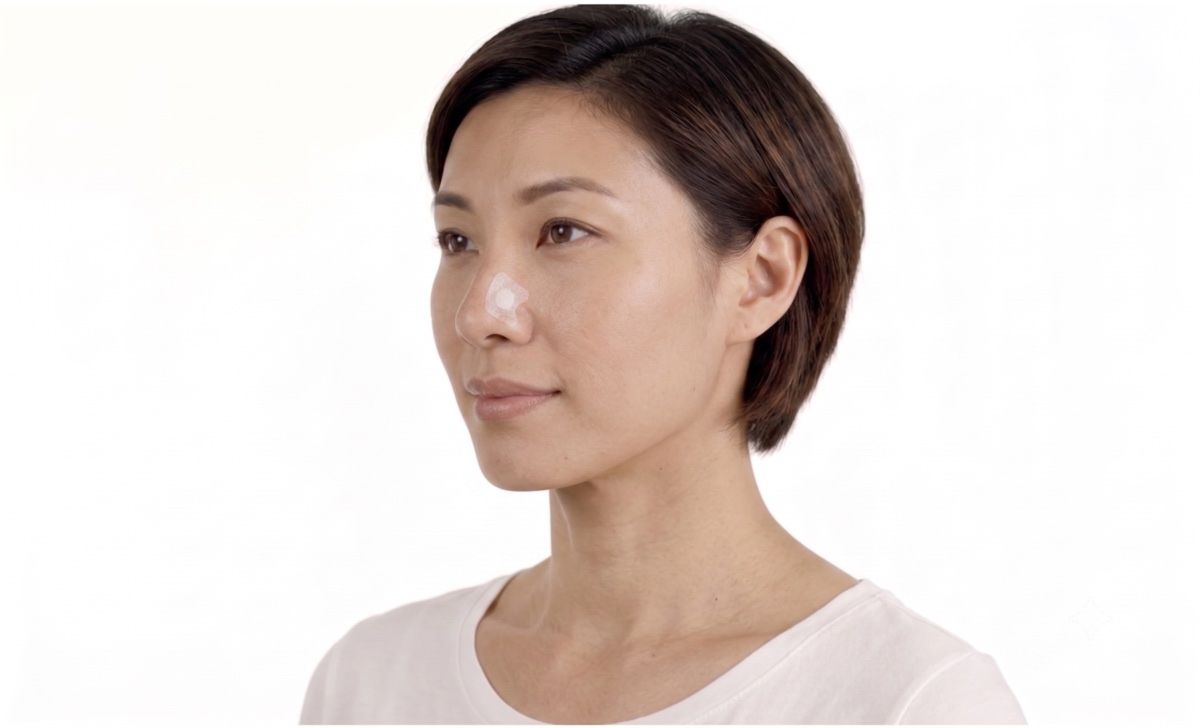
The magnets hold the clip in place, and the clip does the lifting. Taking Airlift as the example, one single-use sticker goes on the outside of each nostril, and each holds a thin steel disc. The clip rests across the front of your nose, grips the discs through the stickers and pulls them gently outward, which holds the nostrils open from the sides. Nothing goes inside your nose.
The disc is plain steel, not a magnet. The only magnets are in the clip and in Airlift's applicator. So the magnet is just a connector, and the lift is mechanical. It isn't magnet therapy. For how clips compare with strips and internal dilators, see nasal strips vs nasal dilators.
Reviews describe external nasal dilators as working by widening the narrowest part of the nose and lowering resistance to airflow, while noting that most studies are small.[2]
What does the research show?
We could find no published, independent study of any magnetic nasal dilator, including Airlift's. A 2026 review by UK surgeons reached the same conclusion.[1] The same review found most research is on adhesive strips such as Breathe Right, and that devices worn inside the nostril tended to perform better than external ones.[1] Intake cites a home sleep study it commissioned from SleepScore Labs. The participant numbers, methods and full results haven't been published, so we can't assess it.
Everything below comes from studies of nasal strips and other dilators, which are the nearest evidence there is. Our guide to whether nasal strips work covers that research in full.
Airflow
That was measured in healthy people who were awake and breathing in as hard as they could, not during sleep. We could find no published, independent airflow study of any magnetic dilator.
Snoring and sleep
The strip results are weakest here. A 2016 review of 14 studies found nasal dilators didn't improve sleep apnoea, and strips made no significant difference to snoring measured in sleep labs.[4] A 2026 review of 17 studies (496 people) found nasal dilators made no significant difference to snoring or sleep apnoea measured in sleep labs.[5]
The single trials mostly agree. In a 1998 sleep-lab study of 10 snorers, a nasal strip made no difference to snoring or sleep quality.[6] In a 2001 trial of 18 heavy snorers, strips widened the nose and made it feel clearer, but didn't change how long or how loudly people snored.[7]
One trial did find a benefit. In a small trial of 12 people with long-term rhinitis, a nasal strip cut how often they snored compared with a dummy strip, but didn't make the snoring quieter or improve sleep quality.[8]
Trials paid for by Breathe Right's then-maker didn't find a sleep benefit either. In two GSK-funded trials involving 270 adults with night-time congestion, Breathe Right strips didn't improve sleep problems or morning tiredness compared with a dummy strip, though both groups felt better than before the trials began.[9]
| Who took part | What changed | What didn't | |
|---|---|---|---|
| Camacho 2016 review | 14 studies | No significant change | Sleep apnoea, or snoring measured in sleep labs |
| Alotaibi 2026 review | 17 studies, 496 people | No significant change | Snoring or sleep apnoea measured in sleep labs |
| Liistro 1998 | 10 snorers | No difference found | Snoring or sleep quality |
| Djupesland 2001 | 18 heavy snorers | Nose wider, and felt clearer | How long or how loudly they snored |
| Pevernagie 2000 | 12 people with long-term rhinitis | How often they snored (against a dummy strip) | Loudness, sleep quality |
| Noss 2019 (GSK-funded) | 270 adults with night-time congestion | No difference from a dummy strip; both groups felt better than at the start | Sleep problems or morning tiredness |
If snoring is the reason you're looking, our guide to nasal strips for snoring goes into it further.
Feeling clearer isn't the same as a measured change
In the 2001 trial, the strips widened the nose and people felt it was clearer, yet their snoring didn't change.[7] In the GSK-funded trials, people wearing the dummy strip also felt better than before the trials began.[9]
If a dilator makes your nose feel more open, that's worth knowing, but on its own it isn't a measured change in your airflow or snoring. None of these strip results can be borrowed for magnetic dilators either, Airlift's included. There's more on how we use evidence on our science page.
With no published, independent study of any magnetic dilator, you can only find out by trying one, so pick one you can get a refund on without posting anything back. How to find out for yourself explains how that works with Airlift.
Are magnetic nasal strips safe?
We could find no long-term safety data for any magnetic dilator, so the best guide you have is each maker's published warnings. Even for strips and other dilators, the evidence is thin. The 2026 review by UK surgeons noted that the studies it found didn't follow people up over time, so there's little evidence on longer-term use, and only four of its 13 studies reported on comfort or side effects.[1]
These are Airlift's warnings.
Magnets: pacemakers, MRI, children and pets
- Keep the clip at least 15cm from pacemakers and other implanted medical devices.
- Take it off before an MRI scan, and tell the radiographer you use a magnetic product if asked.
- Keep the clip and the applicator away from children under 14 and from pets.
- If a magnet is swallowed, get medical help immediately.
Skin: the stickers
The stickers use a latex-free adhesive. The sticker covers the steel disc on the skin side, so the metal doesn't touch your skin. The magnets are in the clip, which grips the discs through the stickers and doesn't touch your skin either.
Put them on clean, dry skin. Airlift's Complete and Ultimate systems include an alcohol prep pad for each night, to clear skin oils first. Don't put the stickers on broken or irritated skin. If irritation or discomfort continues, stop using them.
Taking it off
Take the clip off first. Then peel each sticker slowly from its top edge, supporting the skin with a finger of your other hand. Warm water softens the adhesive, so just after washing your face is the easiest time. Skin that's pink for a few minutes afterwards is normal. If it's sore, broken or still red hours later, give that spot a night off.

Other makers publish similar warnings. Intake Breathing, for example, says not to use its product on sunburned, irritated or broken skin, to stop if a rash appears, and not to use it on children under 5 without a doctor's advice. It also flags small magnets as a swallowing hazard.
Airlift's full safety section is on our help page.
Sleep apnoea, CPAP and a deviated septum
Nasal dilators haven't been shown to help sleep apnoea. Both reviews above measured it in sleep labs, and neither found an improvement.[4][5] We found no published, independent study of magnetic dilators and sleep apnoea. Our article on nasal strips and sleep apnoea goes into the research.
If you use CPAP, keep using it exactly as prescribed. A dilator isn't a substitute for it. Whether a clip fits alongside your mask depends on the mask (see the questions below).
A deviated septum is a different problem. The septum is an internal structure, while an external dilator works on the outer part of the nose, at the nasal valve. If a blockage is mostly structural and deep inside, no external product can move it. More in nasal strips for a deviated septum.
How to find out for yourself
Airlift is a magnetic clip of this type, sold by a UK company. Like the others, it has no published, independent study, so we can't point you to evidence that it will work for you. What you can do is try it on your own face.
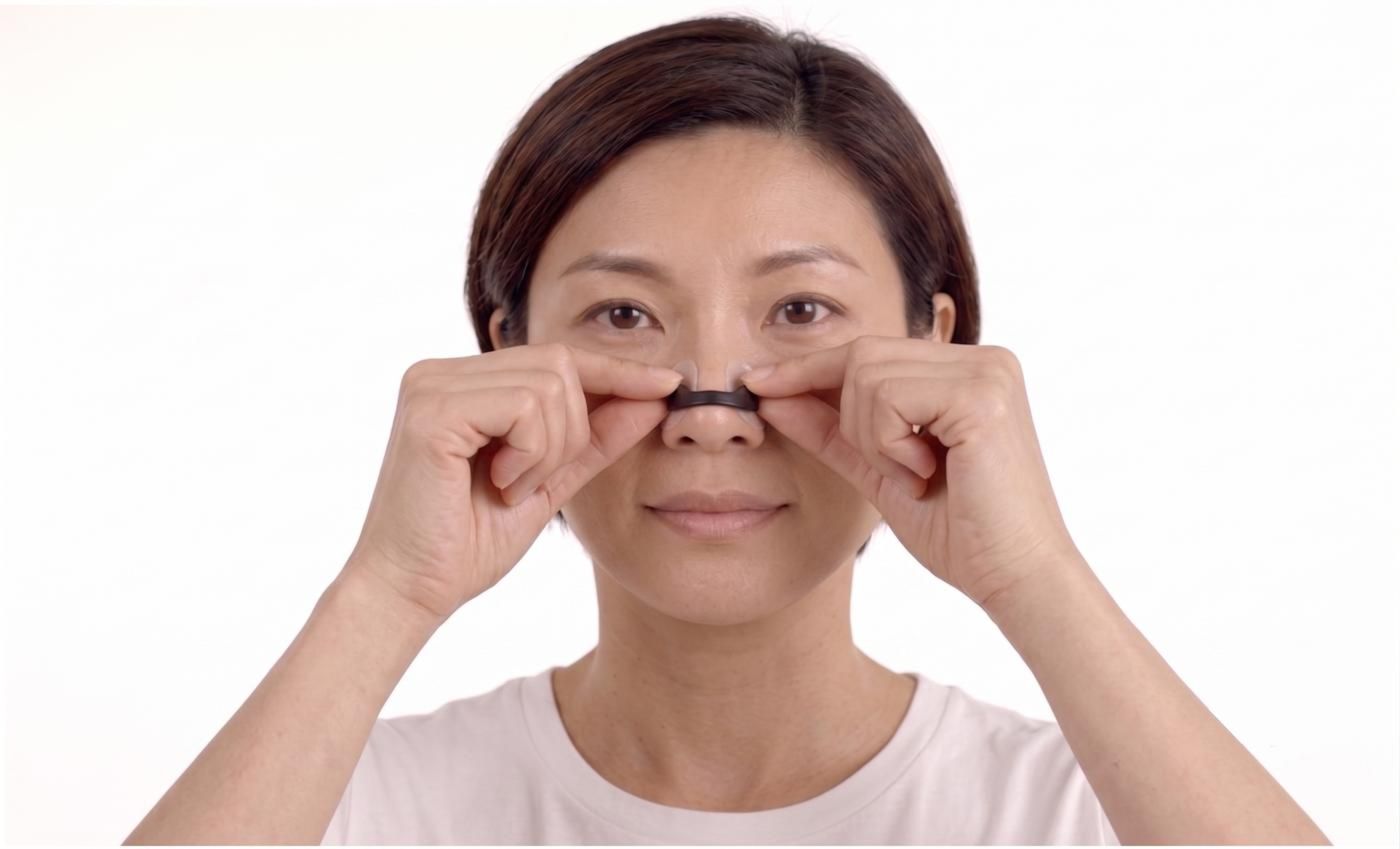
Under the 90-Night Airlift Test, you can wear it for up to 90 nights. If it isn't right for you, email within 90 days of receiving your order for a full refund of what you paid, including delivery. You keep the clip and send nothing back. It's once per customer.
All five clip sizes, XS to XL, come in every box, so you can try every size, and a poor fit is less likely to be why it doesn't suit you. The stickers use a latex-free adhesive, and Complete and Ultimate include 30 prep pads with every 30 nights.
The Complete starter is £33 for 30 nights, plus £5 delivery. If you'd rather go straight to a plan, the Complete Annual plan is £240 a year, which works out at 67p a night. Every subscription order ships free by next-day delivery, with no minimum spend.
If you're comparing brands, read Airlift vs Intake Breathing or our roundup of the best magnetic nasal strips in the UK.
Questions people ask
References
- Ahmed A, Gakpetor C, Yang D, Oremule B, Ranganathan B, Jaiswal A, Bhalla RK (2026). The effectiveness of nonsurgical nasal devices in relieving nasal obstruction. Annals of the Royal College of Surgeons of England, 108(6), 476-483. doi.org/10.1308/rcsann.2025.0103
- Dinardi RR, de Andrade CR, Ibiapina CdC (2014). External nasal dilators: definition, background, and current uses. International Journal of General Medicine, 7, 491-504. doi.org/10.2147/IJGM.S67543
- Di Somma EM, West SN, Wheatley JR, Amis TC (1999). Nasal dilator strips increase maximum inspiratory flow via nasal wall stabilization. Laryngoscope, 109(5), 780-784. doi.org/10.1097/00005537-199905000-00018
- Camacho M, Malu OO, Kram YA, Nigam G, Riaz M, Song SA, Tolisano AM, Kushida CA (2016). Nasal dilators (Breathe Right strips and NoZovent) for snoring and OSA: a systematic review and meta-analysis. Pulmonary Medicine, 2016, 4841310. doi.org/10.1155/2016/4841310
- Alotaibi S, Bin Saddiq BW, Alfarhoud RS, Alghamdi MTN, Alsaffar AJ, Alnabhan AM, Alkhateeb MA, Albahrani KH, Alowibidy SA, Almahdi ZI, Almaghrabi HA, Alnabulsi M (2026). Clinical effectiveness of nasal dilators in sleep-disordered breathing: a systematic review and meta-analysis. Cureus, 18(1), e100663. doi.org/10.7759/cureus.100663
- Liistro G, Rombaux P, Dury M, Pieters T, Aubert G, Rodenstein DO (1998). Effects of Breathe Right on snoring: a polysomnographic study. Respiratory Medicine, 92(8), 1076-1078. doi.org/10.1016/s0954-6111(98)90358-4
- Djupesland PG, Skatvedt O, Borgersen AK (2001). Dichotomous physiological effects of nocturnal external nasal dilation in heavy snorers: the answer to a rhinologic controversy?. American Journal of Rhinology, 15(2), 95-103. doi.org/10.2500/105065801781543745
- Pevernagie D, Hamans E, Van Cauwenberge P, Pauwels R (2000). External nasal dilation reduces snoring in chronic rhinitis patients: a randomized controlled trial. European Respiratory Journal, 15(6), 996-1000. doi.org/10.1034/j.1399-3003.2000.01504.x
- Noss MJ, Ciesla R, Shanga G (2019). Sleep quality and congestion with Breathe Right nasal strips: two randomized controlled trials. Advances in Therapy, 36(8), 1975-1985. doi.org/10.1007/s12325-019-01005-5

Written by Nicholas Green
I've found it hard to breathe through my nose for as long as I can remember, and years of products and even surgery didn't fix it, so I built Airlift. I write about what I've learned along the way, as someone who lives with it rather than as a clinician.
How we research and check articles: our editorial standards.