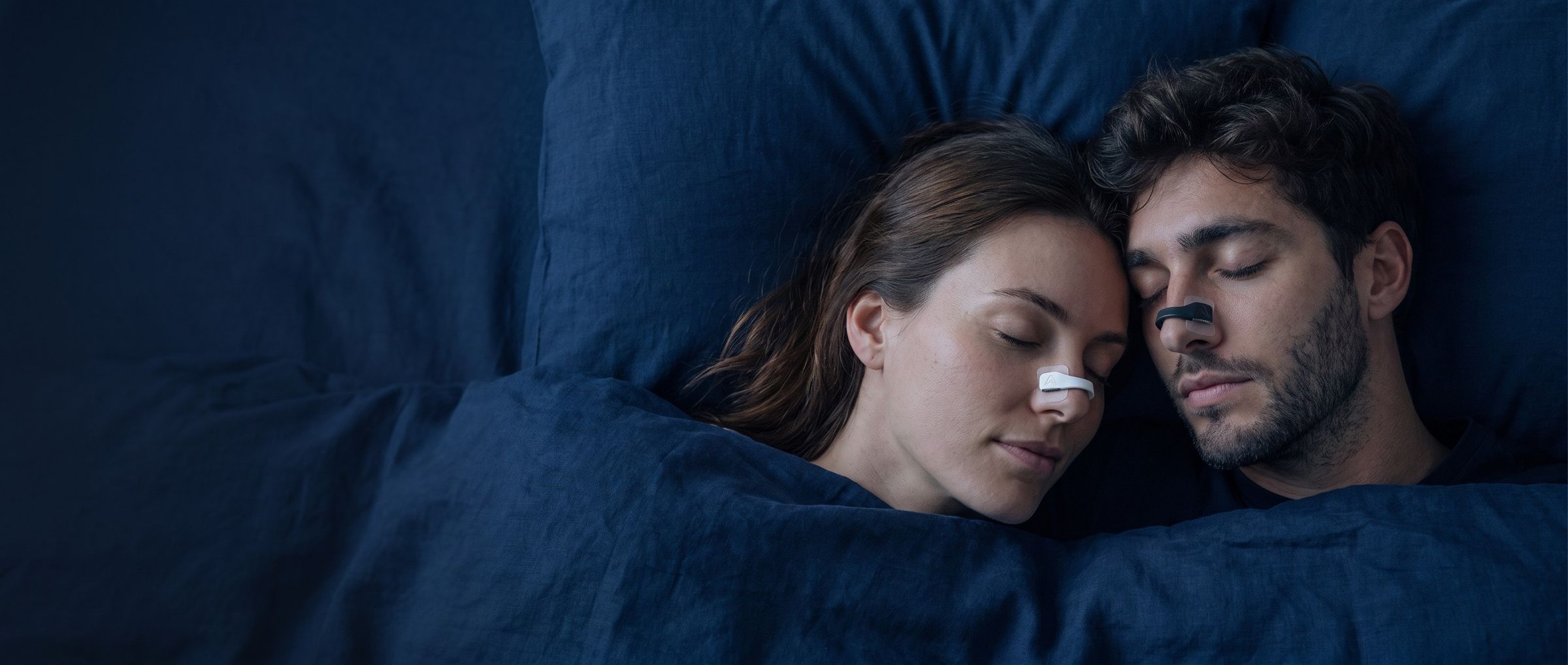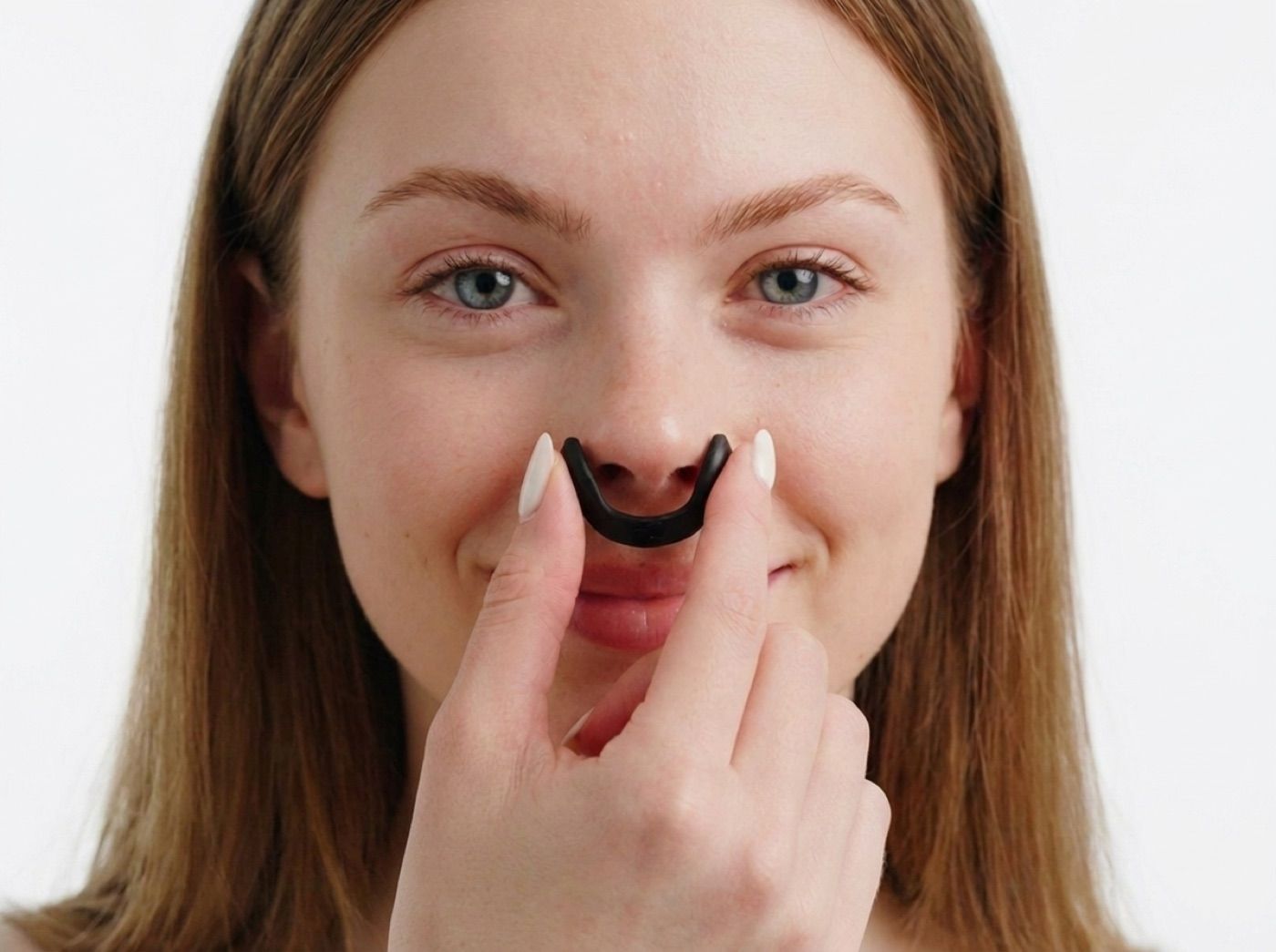
For most UK buyers who want to try a nose device, Airlift's magnetic clip is our pick of the best anti-snoring devices: five sizes, nothing inside the nose, 90 nights to try. Match the device to your snoring, though. A jaw-forward mouthguard has the best evidence for tongue snoring, and nose device studies found little measured effect.
In short
- For most UK buyers who want to try a nose device, Airlift is our pick: all five clip sizes in every box, nothing inside the nose, and 90 days to claim a full refund with nothing to send back (once per customer). It costs more per night than strips or Mute.
- Match the device to where your snoring starts: tongue and jaw, nose, an open mouth, or sleeping on your back.
- Mouthguards that hold the jaw forward have the best evidence. A sleep society rates nasal dilators "not advisable" for snoring, and strip studies mostly found no measured change.
- If someone hears you stop breathing, gasp or choke, or you're sleepy in the day, see a GP before buying anything.
The best anti-snoring devices, by where your snoring starts
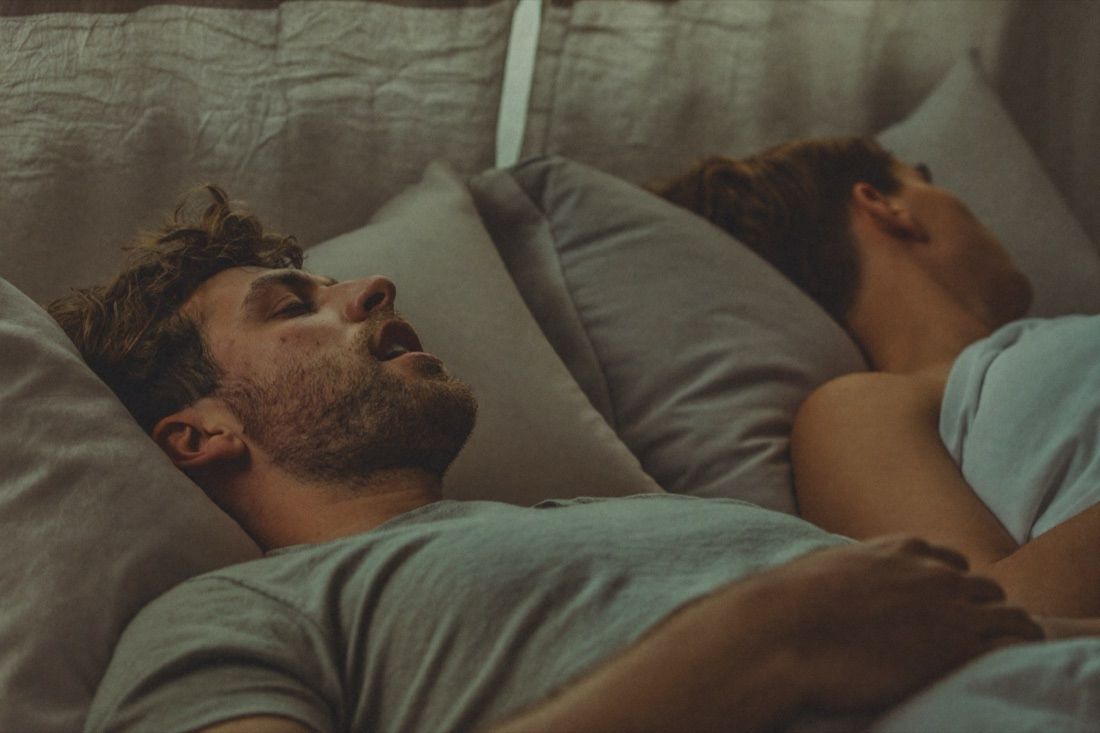
The best anti-snoring device is the one that matches where your snoring comes from. The NHS snoring page works the same way: it lists a different kind of device for snoring from the tongue, from a mouth that falls open, and from a blocked or narrow nose. Snoring is common. A 2019 survey of 1,239 UK adults found that 38% of men and 30% of women snore.[1]
| Device to look at | What the evidence says | UK example (checked 27 to 28 October 2026) | |
|---|---|---|---|
| Your tongue falls back | A mouthguard that holds the lower jaw forward | The best graded. A sleep society names it the first choice | Snoreeze Oral Device, £29.99 on snoreeze.com or £37.00 at Boots |
| Your nose is blocked or narrow | A nasal strip, internal dilator or magnetic clip | The NHS lists them, but sleep-lab studies mostly found no change in snoring, and a sleep society rates them "not advisable" | Breathe Right Original 30, £13.99 at Boots; Mute starter, £14.99; Airlift Complete, £33 |
| Your mouth falls open | A chin strap | Weak. One small study, in people with sleep apnoea, found no benefit | None picked |
| You snore mainly on your back | A positional aid | A sleep society calls it a reasonable, mostly low-risk option | None picked |
| You're not sure, or someone has heard your breathing stop | A GP first | The NHS lists the warning signs (see below) | Not applicable |
Quick picks, one per job:
- Our pick if you want to try a nose device: Airlift, a magnetic nasal clip, which we make. Every box has all five clip sizes, and you have 90 days to claim a full refund without sending anything back. The Complete starter is £33.
- A mouthguard to try from a UK shop: Snoreeze Oral Device. £29.99, boil-and-bite and adjustable.
- A nasal strip to try cheaply: Breathe Right or Snoreeze. Breathe Right is £13.99 for 30 at Boots (£0.47 a night). Snoreeze Nasal Strips are £8.95 for 20 on snoreeze.com (£0.45 a night before delivery), or £9.90 for 20 at Boots (£0.50).
- Nose-based, with no adhesive: Mute. An internal dilator, with a £14.99 starter in three sizes.
After our own pick, the mouthguard comes first because it has the best evidence, and the other nose picks run from cheapest up.
How we chose
We matched each device type to the causes on the NHS snoring page, then looked at the research for each type and at what's on sale in the UK.
The evidence comes from published studies and reviews, including what each one doesn't show. It's patchy. A 2024 review of 38 studies of options for snoring without sleep apnoea found most tested surgery, most had no comparison group, and many mixed simple snorers with people who had sleep apnoea.[2] Our science page lists the studies behind nasal dilators.
Prices come from each brand's own site, checked on 27 October 2026 (Mute and Airlift) and 28 October 2026 (Snoreeze). Breathe Right doesn't sell direct, so its price is Boots' standard price, checked in a browser on 27 October 2026. Boots prices for Snoreeze and Sleepeaze were checked in a browser on 28 October 2026. We left out retailer prices we couldn't confirm on the retailer's own page.
We didn't test any device ourselves, so nothing wins on comfort or on how well it works: there's no comparable test data.
Mouthguards (mandibular advancement devices)
A mandibular advancement device is a mouthguard that holds your lower jaw slightly forward while you sleep. It has the strongest evidence of any device here.
The strips in that trial were part of a package and weren't tested on their own, so it tells you nothing about strips by themselves, in either direction.
The Australasian Sleep Association's 2023 position statement on snoring recommends mandibular advancement devices as the first choice.[4] A 2021 review of 18 studies found mandibular advancement devices helped people who snore, with or without sleep apnoea. The most common side effects were jaw pain and extra saliva, which tended to ease over time.[5]
Three UK trials give a fuller picture:
- In a Belfast trial of 25 severe snorers, 84% of bed partners reported quieter snoring with a custom mandibular advancement device, which worked significantly better than a dummy appliance.[6]
- In a 2006 London trial of 23 snorers without sleep apnoea, a mouldable mandibular advancement device worked for about two in three, though 64% found it bulky.[7] The device tested was TheraSnore, so the result doesn't automatically carry over to other boil-and-bite brands.
- In a Newcastle trial of 52 snorers, a mandibular advancement splint reduced snoring symptoms, but so did a dummy splint that didn't move the jaw, and the difference between them wasn't significant.[8]
One older study looked only at people who had already settled in with a device. In a 1998 Oxford study of 15 people already used to a mandibular advancement device, snoring fell from a median of 193 to 20 snores an hour on the night they wore it.[9] People who couldn't get on with one weren't included.
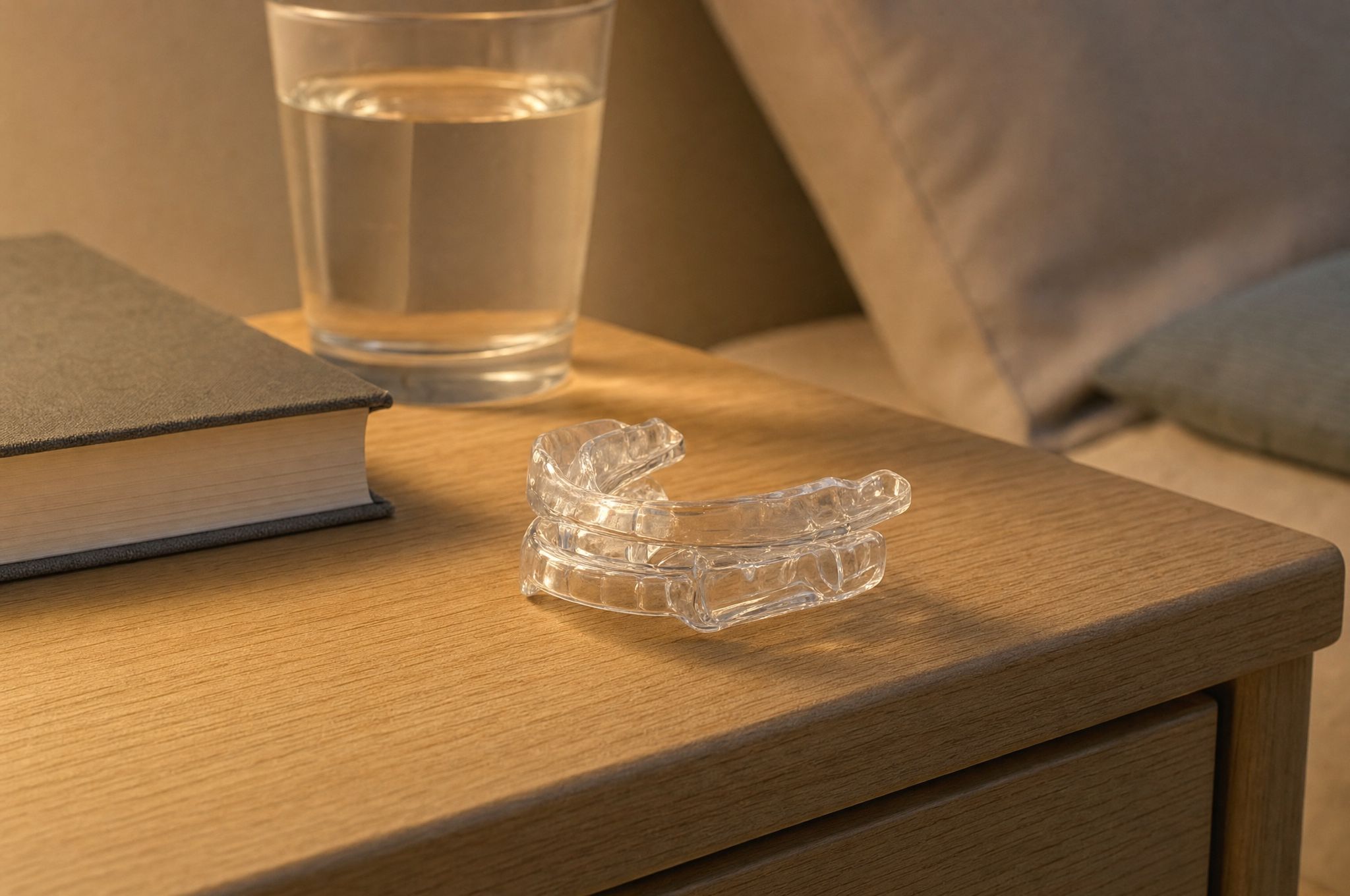
Snoreeze Oral Device
The Snoreeze Oral Device is a boil-and-bite mouthguard: you soften it in hot water, bite into it to shape it, and adjust how far it brings the jaw forward. It's £29.99 on snoreeze.com (two for £54), or £37.00 at Boots. Snoreeze says it lasts up to 180 nights, which would be £0.17 a night if it does.
Snoreeze offers a 30-day money-back guarantee on the Oral Device only, once you've used it for 7 nights. It doesn't publish whether you have to send it back or who pays the postage.
The drawbacks: it's prefabricated rather than made for your mouth, and its Amazon UK listing has 3.1 stars from 1,083 ratings. Snoreeze cites no published study of this device; its evidence page summarises reviews of oral devices in general.
For a dentist-made option, Snoreeze also lists a custom-made Panthera D-SAD at £595, plus £59 for a morning repositioner, with the dentist's fees on top.
Nasal strips and dilators
These only work on the nose, so they're for snoring linked to a blocked or narrow nose. If your nose is mostly blocked at night, why is my nose blocked at night? goes through the usual causes. We compare nasal strips in detail in our guide to the best nasal strips for snoring.
The NHS lists nasal dilators or strips that hold the nose open as one option when snoring is linked to a blocked or narrow nose. The research is less encouraging:
- The Australasian Sleep Association's statement doesn't advise over-the-counter remedies such as nasal dilators, because there's no evidence on long-term use. It rates them minimally harmful but "not advisable".[4]
- A 2016 review of 14 studies found nasal dilators didn't improve sleep apnoea, and strips made no significant difference to snoring measured in sleep labs.[10]
- A 2026 review of 17 studies (496 people) found nasal dilators made no significant difference to snoring or sleep apnoea measured in sleep labs.[11]
- NICE's sleep apnoea guideline (NG202) doesn't mention nasal dilators or strips.
- In a small trial of 12 people with long-term rhinitis, a nasal strip cut how often they snored compared with a dummy strip, but didn't make the snoring quieter or improve sleep quality.[12] It's the one positive snoring result.
- In two GSK-funded trials involving 270 adults with night-time congestion, Breathe Right strips didn't improve sleep problems or morning tiredness compared with a dummy strip, though both groups felt better than before the trials began.[13] GSK made Breathe Right at the time, and snoring wasn't measured.
A 2026 review by UK surgeons found most research is on adhesive strips such as Breathe Right, and that devices worn inside the nostril tended to perform better than external ones.[14] We could find no published, independent study of any magnetic nasal dilator, including Airlift's, and that review reached the same conclusion. Our guide to whether magnetic nasal strips work covers what is and isn't known.
| Breathe Right | Snoreeze Nasal Strips | Mute | Airlift Complete | |
|---|---|---|---|---|
| Format | Single-use adhesive strip | Single-use adhesive strip | Reusable dilator worn just inside the nostrils. No adhesive | Reusable magnetic clip on two single-use stickers |
| Sizes | Small/Medium or Large, in separate packs | Small/Medium or Large, in separate packs | Small, Medium and Large. The starter has one of each | All five clip sizes (XS to XL) in every box |
| First buy, per night | £13.99 for 30 at Boots: £0.47 | £8.95 for 20 on snoreeze.com: £0.45, or £0.65 with £3.95 delivery | £14.99 starter: £0.50, or £0.67 with £5 delivery direct. Only if all three sizes fit; 10 nights if one does | £33 for 30 nights: £1.10, or £1.27 with £5 delivery |
| Lowest ongoing, per night | £0.47 on the 30-pack. No brand subscription | £0.45 on five 20-packs (£44.75), free delivery. No subscription | £0.60 on a sized 3-pack subscription (£17.99) | £0.67 on the Annual plan (£240 for 360 nights), free next-day delivery included. Renews each year until you cancel |
| Money-back terms | No brand guarantee. Returns follow the shop's own policy | No guarantee published for the strips | 30 days on starter products bought direct | 90 nights. Full refund including delivery, nothing to send back, once per customer |
| Where to buy in the UK | Boots, Superdrug, Tesco, Sainsbury's and other shops, and Amazon UK | Its own site, and Boots at £9.90 for 20 (£0.50). Snoreeze's stockist list also includes Tesco, Superdrug and Well Pharmacy | Its own UK store and Amazon UK | airliftbreathing.co.uk, to UK addresses only |
| Published evidence | Published sleep-lab studies of strips, mostly finding no change in snoring. GSK-funded trials found no sleep benefit over a dummy strip | None published for the product | A sponsored 2003 airflow test of a prototype and a 2014 user survey. No peer-reviewed study of Mute found | No published, independent study and no test data |
Where Airlift wins
Airlift is our product, so here are its wins and its drawbacks.
- All five clip sizes come in every box, so there's no size to guess.
- The 90-Night Airlift Test: you have 90 days from receiving your order to claim a full refund, delivery included, with nothing to send back. With evidence this thin for every nasal product, the sensible way to try one is where you can get your money back without sending anything back.
- Nothing goes inside your nose, and there's no strip across the bridge: the clip sits on two small stickers.
- It's a UK company, with UK delivery. Every subscription order ships free by next-day delivery, with no minimum spend.
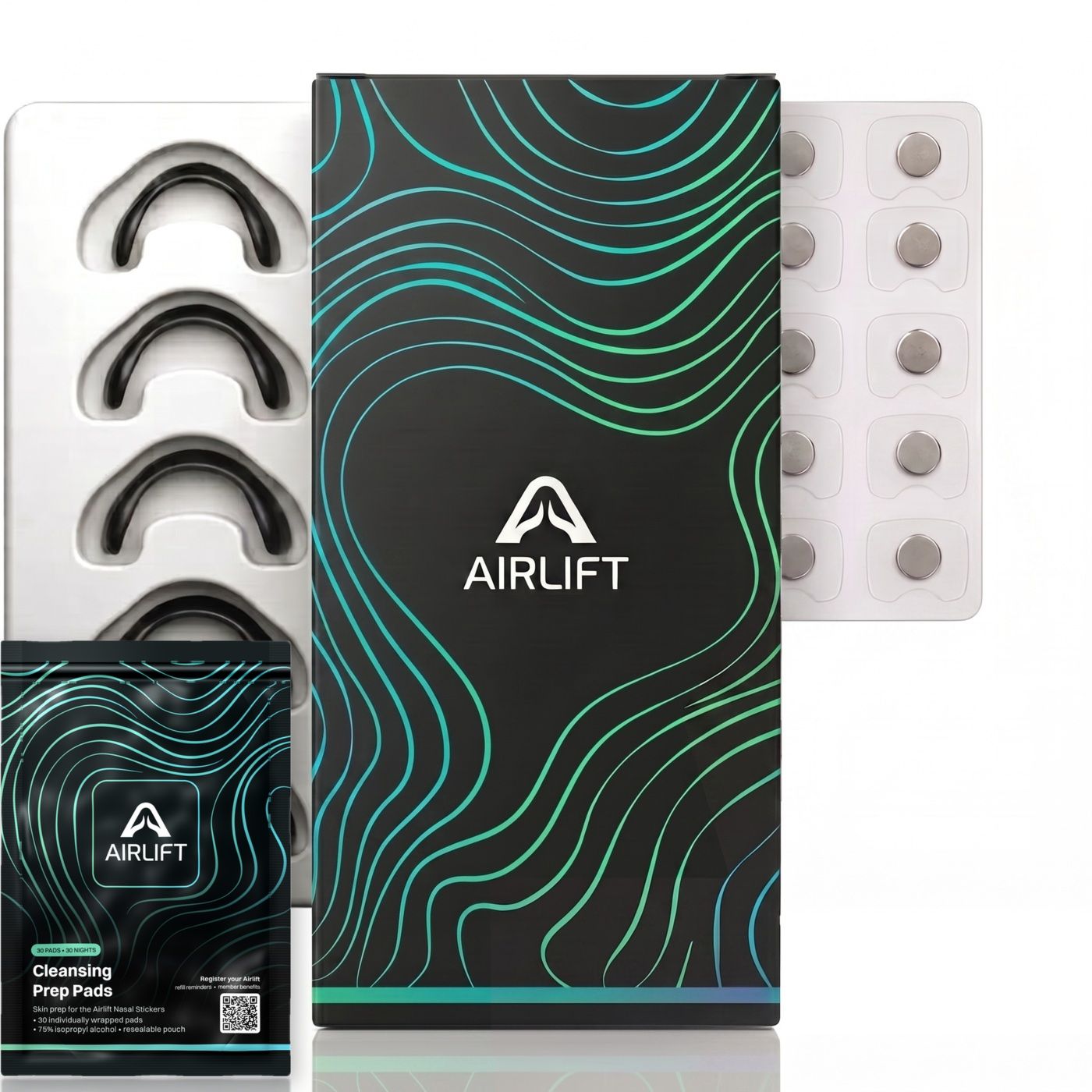
The Complete starter (£33) has the clip in all five sizes, a magnetic applicator, 30 nights of stickers and 30 prep pads. The Complete Annual plan (£240) works out at £0.67 a night, with prep pads in every box.
The drawbacks:
- It costs more per night than adhesive strips and Mute.
- No published, independent study, and no test data.
- It's a new brand: the company was set up in November 2024, and it has no Trustpilot reviews yet.
- It's sold only on our own website, to UK addresses.
We don't claim Airlift will end snoring, and it can't help snoring that comes from the throat. Our guide to the best magnetic nasal strips in the UK compares the magnetic options.
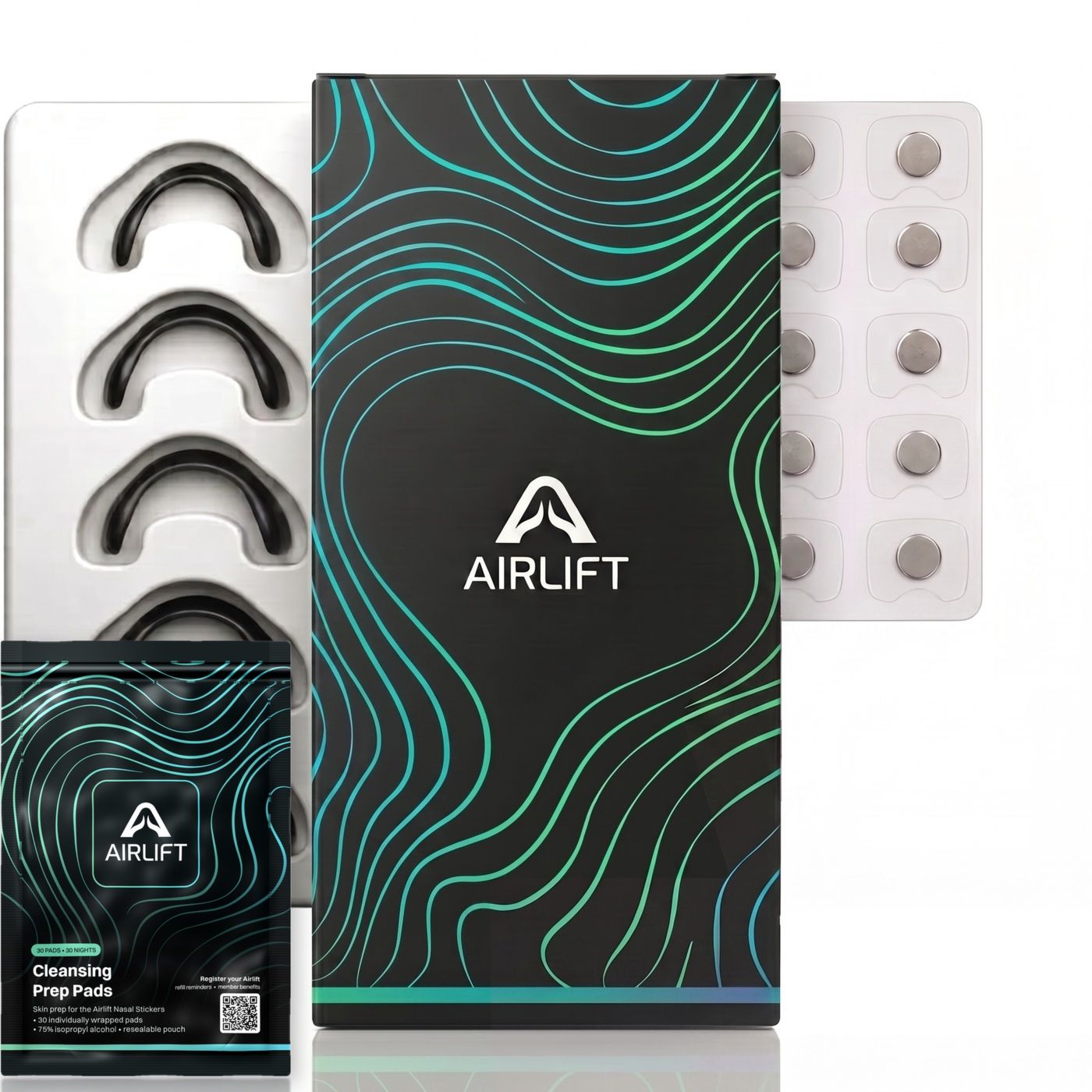
Where Breathe Right wins
- It's on the high street, at Boots, Superdrug, Tesco, Sainsbury's and more, so you can buy it today.
- It's cheap to try, with no kit to buy first.
- It has a long track record, and comes in several kinds: Original, Clear and Extra Strength.
Where Mute wins
- No adhesive at all, so nothing sticks to your skin.
- It's cheaper per night than Airlift: £0.50 on the starter and £0.60 on subscription, against £0.67 on Airlift's Annual plan.
- In the 2026 review, devices worn inside the nostril tended to perform better than external ones.[14]
- A long track record and a large review base: 18,659 ratings on Amazon UK, averaging 3.7 out of 5.
Our Airlift vs Mute comparison goes into the two side by side.
Chin straps and mouth shields
For a mouth that falls open in sleep, the NHS lists a chin strap to hold the mouth closed, or a vestibular shield, a device worn in the mouth to make you breathe through your nose. The evidence for either is thin:
- In a 2014 sleep-lab study of 26 people with sleep apnoea, a chin strap on its own didn't improve their breathing or their snoring.[15] We found no trial in people who only snore.
- When a 1991 study used a mouth device to make 14 snorers breathe through their nose, their snoring was no less frequent or loud.[16]
The Australasian Sleep Association's statement didn't assess chin straps. We haven't picked a product here. If you wake with a dry mouth, our guide to why you mouth breathe at night goes through the common reasons.
Positional aids for back-sleepers
If you snore mostly on your back, a positional aid tries to keep you on your side, for example a vibrating device that buzzes when you roll onto your back. The same statement calls positional devices a reasonable, mostly low-risk option for people who snore mainly on their back and don't have sleep apnoea.[4]

The catch is that it only helps if your snoring really is a back-sleeping problem. In a 2026 trial analysis of 56 people whose sleep apnoea was worse on their back, a vibrating alarm kept them off their back but didn't reduce their snoring overall; it helped only the 15 who snored mainly on their back.[17] We haven't picked a product here.
Throat sprays and tongue-retaining devices
Anti-snoring throat sprays are sold to lubricate the throat overnight. The one trial we found wasn't encouraging: in a 2004 placebo-controlled trial of 20 snorers, an oil-based anti-snoring throat spray worked no better than a water spray.[18] It tested one brand, so it doesn't tell you about every spray.
Snoreeze Throat Spray is £10 on snoreeze.com and lasts up to 50 nights by the brand's count, which would be £0.20 a night. Snoreeze publishes no study of it.
Tongue-retaining devices are worn in the mouth to hold the tongue forward. They have mostly been studied in people with sleep apnoea, not in people who only snore.
Nasal sprays are medicines or close to them, and this guide doesn't cover them.
Where Snoreeze wins
- A wide range of snoring products from one brand: nasal strips, an internal dilator, sprays, oral strips, a boil-and-bite mouthguard, a custom-made device and a home sleep test.
- It's on the high street, at Boots and Sainsbury's, and on Amazon UK.
- The Oral Device costs £0.17 a night if it lasts the stated 180 nights.
- It has a 30-day money-back guarantee on the Oral Device.
- It has been selling since 1998, from Chester.
Can you get an anti-snoring device on the NHS?
Start by asking a doctor. The NHS snoring page lists the device types in this guide for different causes of snoring, and says to talk to a doctor about which suits you.

The NHS says to see a GP if snoring is having a big impact on you or your partner, or if you're sleepy in the day, your breathing stops and starts, or you gasp or choke in your sleep.
When snoring needs more than a device
Sometimes snoring comes with sleep apnoea, where breathing stops and starts during sleep. The signs are the ones the NHS lists above.
The research on snoring devices doesn't always separate the two. The Australasian Sleep Association's definition of simple snoring includes mild sleep apnoea, so device studies in "snorers" don't rule out a condition. Nasal dilators in particular didn't improve sleep apnoea in the 2016 review of 14 studies.[10] Our guide to when snoring needs more than a strip covers this in more detail.
Sources checked
Prices and policies were checked on the dates shown.
- NHS: snoring: causes of snoring, the device types for each, and when to see a GP. Read 28 October 2026.
- Snoreeze: Oral Device, custom-made oral device, Nasal Strips, Throat Spray, shipping and returns, clinical evidence, where to buy and about us; the Oral Device on Amazon UK: prices, guarantee, evidence and ratings. Checked 28 October 2026.
- Boots: Breathe Right Original Small/Medium 30, price checked in a browser on 27 October 2026; Boots Sleepeaze strips and Snoreeze at Boots, checked in a browser on 28 October 2026. Breathe Right UK: products and FAQs.
- Mute UK: starter pack and returns policy; Mute on Amazon UK: prices, sizes, guarantee and ratings. Checked 27 October 2026.
- Airlift's shop, refunds and help pages, and Airlift on Trustpilot: Airlift's products, prices, policies and reviews. Checked 27 October 2026.
Questions people ask
References
- Lechner M, Breeze CE, Ohayon MM, Kotecha B (2019). Snoring and breathing pauses during sleep: interview survey of a United Kingdom population sample reveals a significant increase in the rates of sleep apnoea and obesity over the last 20 years - data from the UK sleep survey. Sleep Medicine, 54, 250-256. doi.org/10.1016/j.sleep.2018.08.029
- Changsiripun C, Chirakalwasan N, Dias S, McDaid C (2024). Management of primary snoring in adults: a scoping review examining interventions, outcomes and instruments used to assess clinical effects. Sleep Medicine Reviews, 77, 101963. doi.org/10.1016/j.smrv.2024.101963
- Ioerger P, Afshari A, Hentati F, Strober W, Kallogjeri D, Ju YE, Piccirillo JF (2024). Mandibular advancement vs combined airway and positional therapy for snoring: a randomized clinical trial. JAMA Otolaryngology Head and Neck Surgery, 150(7), 572-579. doi.org/10.1001/jamaoto.2024.1035
- Sarkis LM, Jones AC, Ng A, Pantin C, Appleton SL, MacKay SG (2023). Australasian Sleep Association position statement on consensus and evidence based treatment for primary snoring. Respirology, 28(2), 110-119. doi.org/10.1111/resp.14443
- De Meyer MMD, Vanderveken OM, De Weerdt S, Marks LAM, Cárcamo BA, Chavez AM, Matamoros FA, Jacquet W (2021). Use of mandibular advancement devices for the treatment of primary snoring with or without obstructive sleep apnea (OSA): a systematic review. Sleep Medicine Reviews, 56, 101407. doi.org/10.1016/j.smrv.2020.101407
- Johnston CD, Gleadhill IC, Cinnamond MJ, Peden WM (2001). Oral appliances for the management of severe snoring: a randomized controlled trial. European Journal of Orthodontics, 23(2), 127-134. doi.org/10.1093/ejo/23.2.127
- Cooke ME, Battagel JM (2006). A thermoplastic mandibular advancement device for the management of non-apnoeic snoring: a randomized controlled trial. European Journal of Orthodontics, 28(4), 327-338. doi.org/10.1093/ejo/cji122
- Maguire J, Steele JG, Gibson GJ, Wilson JA, Steen N, McCracken GI (2010). Randomised cross-over study of oral appliances for snoring. Clinical Otolaryngology, 35(3), 204-209. doi.org/10.1111/j.1749-4486.2010.02126.x
- Stradling JR, Negus TW, Smith D, Langford B (1998). Mandibular advancement devices for the control of snoring. European Respiratory Journal, 11(2), 447-450. doi.org/10.1183/09031936.98.11020447
- Camacho M, Malu OO, Kram YA, Nigam G, Riaz M, Song SA, Tolisano AM, Kushida CA (2016). Nasal dilators (Breathe Right strips and NoZovent) for snoring and OSA: a systematic review and meta-analysis. Pulmonary Medicine, 2016, 4841310. doi.org/10.1155/2016/4841310
- Alotaibi S, Bin Saddiq BW, Alfarhoud RS, Alghamdi MTN, Alsaffar AJ, Alnabhan AM, Alkhateeb MA, Albahrani KH, Alowibidy SA, Almahdi ZI, Almaghrabi HA, Alnabulsi M (2026). Clinical effectiveness of nasal dilators in sleep-disordered breathing: a systematic review and meta-analysis. Cureus, 18(1), e100663. doi.org/10.7759/cureus.100663
- Pevernagie D, Hamans E, Van Cauwenberge P, Pauwels R (2000). External nasal dilation reduces snoring in chronic rhinitis patients: a randomized controlled trial. European Respiratory Journal, 15(6), 996-1000. doi.org/10.1034/j.1399-3003.2000.01504.x
- Noss MJ, Ciesla R, Shanga G (2019). Sleep quality and congestion with Breathe Right nasal strips: two randomized controlled trials. Advances in Therapy, 36(8), 1975-1985. doi.org/10.1007/s12325-019-01005-5
- Ahmed A, Gakpetor C, Yang D, Oremule B, Ranganathan B, Jaiswal A, Bhalla RK (2026). The effectiveness of nonsurgical nasal devices in relieving nasal obstruction. Annals of the Royal College of Surgeons of England, 108(6), 476-483. doi.org/10.1308/rcsann.2025.0103
- Bhat S, Gushway-Henry N, Polos PG, DeBari VA, Riar S, Gupta D, Lysenko L, Patel D, Pi J, Chokroverty S (2014). The efficacy of a chinstrap in treating sleep disordered breathing and snoring. Journal of Clinical Sleep Medicine, 10(8), 887-892. doi.org/10.5664/jcsm.3962
- Bushell MK, Baldock PJ, Antic R, Thornton AT, McEvoy RD (1991). Obligatory nasal breathing: effects on snoring and sleep apnoea. Medical Journal of Australia, 155(2), 83-85. doi.org/10.5694/j.1326-5377.1991.tb142131.x
- Rahimi MM, Vakulin A, Stevens D, Catcheside PG (2026). A comparison of snoring changes with a supine-avoidance alarm device compared to constant positive airway pressure treatment in patients with supine-predominant OSA. Journal of Sleep Research, 35(1), e70128. doi.org/10.1111/jsr.70128
- Wijewickrama RC, Blalock D, Mims JW (2004). Study of lubricant-induced changes in chronic snorers (SLICCS). Otolaryngology Head and Neck Surgery, 131(5), 606-609. doi.org/10.1016/j.otohns.2004.05.024

Written by Nicholas Green
I've found it hard to breathe through my nose for as long as I can remember, and years of products and even surgery didn't fix it, so I built Airlift. I write about what I've learned along the way, as someone who lives with it rather than as a clinician.
How we research and check articles: our editorial standards.