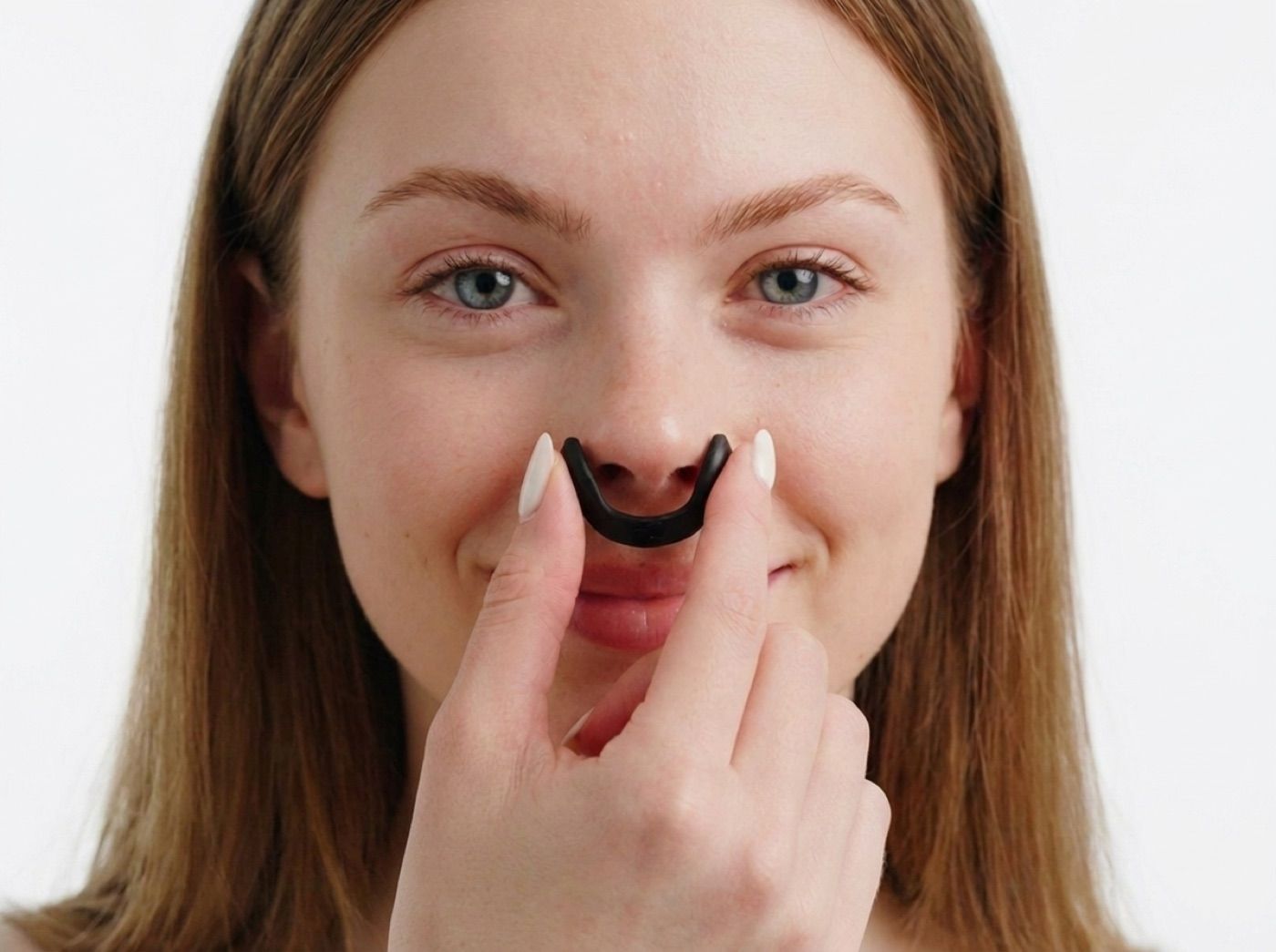

Mouth breathing at night usually happens because your nose has become harder to breathe through than your mouth. The common reasons are a narrow or easily collapsing nostril and congestion. Keeping the nostrils open and the bedroom air comfortable are simple things worth trying first.
In short
- Many people switch to mouth breathing for part of the night and never notice.
- The usual reasons are a narrow nostril or congestion.
- Small changes, such as keeping the nose open and the bedroom air comfortable, are worth trying first.
You fall asleep breathing through your nose. Somewhere in the night, without you ever knowing, your mouth drops open and takes over. By morning your mouth is dry, your partner mentions the snoring, and you feel like you slept lighter than you should have.
It's more common than most people think. The usual reasons are simple, and so are the first things worth trying.

How common is mouth breathing at night?
Most people assume they breathe through their nose all night. When one overnight sleep study measured it, most of the adults tested didn't, and because it happens while you're asleep, it's easy to miss.
Common reasons it happens
Night-time mouth breathing usually comes down to your nose being harder to breathe through than your mouth. A few everyday causes come up again and again.
A narrow or easily collapsing nostril
The soft sides of the nose can draw inwards on a deeper breath, especially when you're relaxed and asleep. Less space means more effort, so the mouth takes over.
Congestion
Colds, allergies and changes in temperature or humidity can all leave the nose feeling blocked.[2] Our guide to why your nose is blocked at night goes through the usual causes.
Your nose is built for breathing. Your mouth is the backup.
What to try tonight
None of these need a prescription. Try one at a time so you can tell what makes a difference for you.
- Keep your nostrils openA nasal dilator or strip holds the sides of the nose open so breathing in takes less effort.
- Make the air kinder to your noseA slightly cooler, less dry bedroom can help a nose that feels blocked overnight.
- Encourage your lips to stay closedIf your nose feels clear, gentle mouth tape can remind your mouth to stay closed. Only use it if you can breathe easily through your nose.
Strips, clips and tape compared
| Nasal strip | Magnetic clip | Mouth tape | |
|---|---|---|---|
| Reusable | No | Yes, for years | No |
| How it works | Lifts from outside | Holds nostrils open | Keeps lips closed |
| Waste | One strip a night | Small sticker only | One strip a night |
| Best for | Occasional use | Nightly nose breathing | Pairs with a clear nose |
For more on tape, see nasal strips vs mouth tape. If snoring is why you're looking, the best nasal strips for snoring in the UK compares the options, and do magnetic nasal strips work? covers what the research does and doesn't show.
What it's like in real life
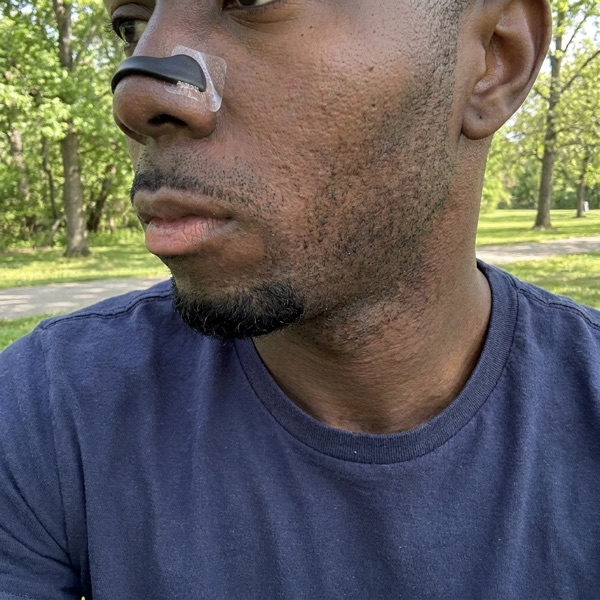
“Everything else I tried ended up in a drawer within a fortnight. This one stays put all night and the wife says the snoring’s a fraction of what it was.”
Individual experiences vary.
Questions people ask
References
- Madronio MR, Di Somma E, Stavrinou R, Kirkness JP, Goldfinch E, Wheatley JR, Amis TC (2004). Older individuals have increased oro-nasal breathing during sleep. European Respiratory Journal, 24(1), 71-77. doi.org/10.1183/09031936.04.00004303
- NHS (2026). Allergic rhinitis. www.nhs.uk/conditions/allergic-rhinitis/

Written by Nicholas Green
I've found it hard to breathe through my nose for as long as I can remember, and years of products and even surgery didn't fix it, so I built Airlift. I write about what I've learned along the way, as someone who lives with it rather than as a clinician.
How we research and check articles: our editorial standards.