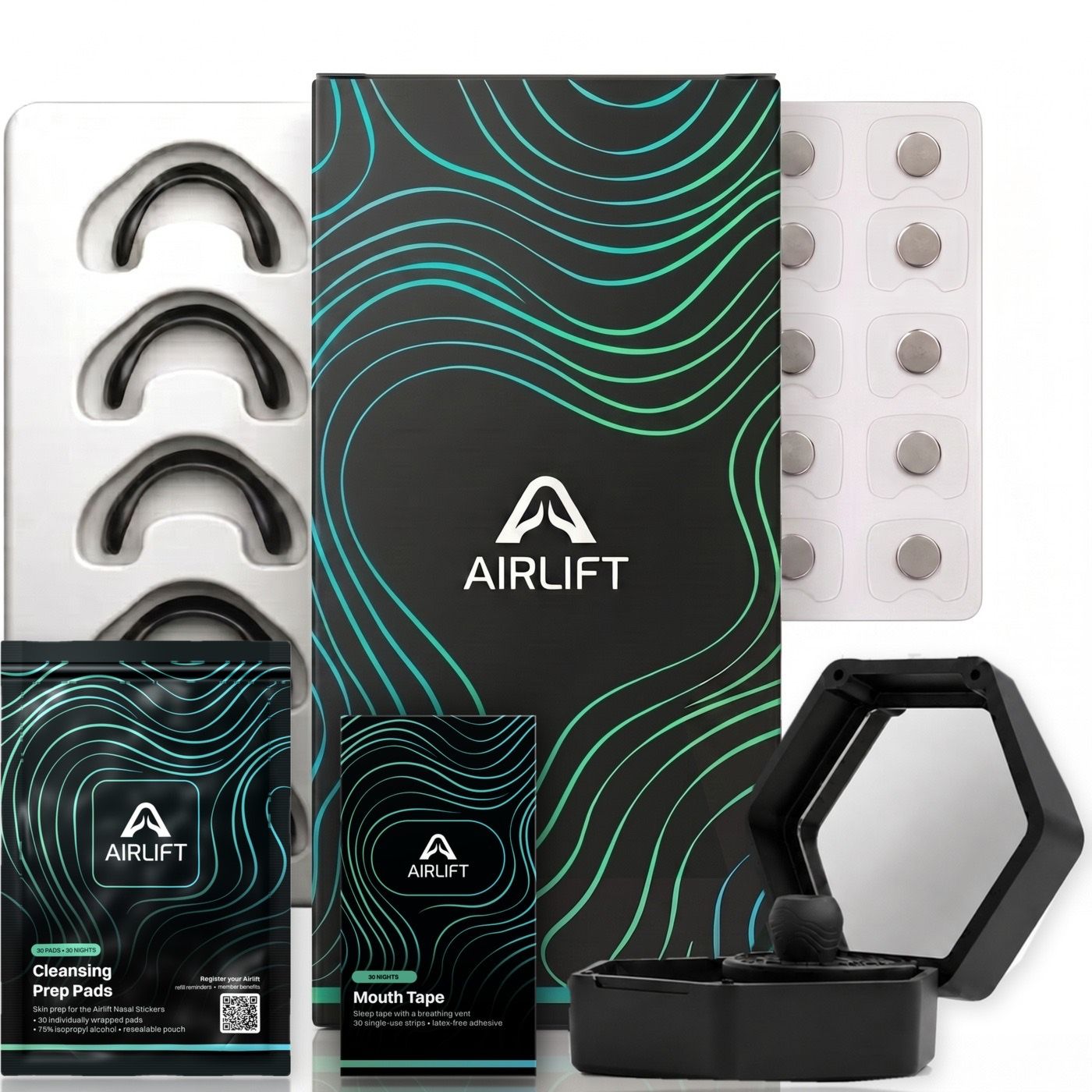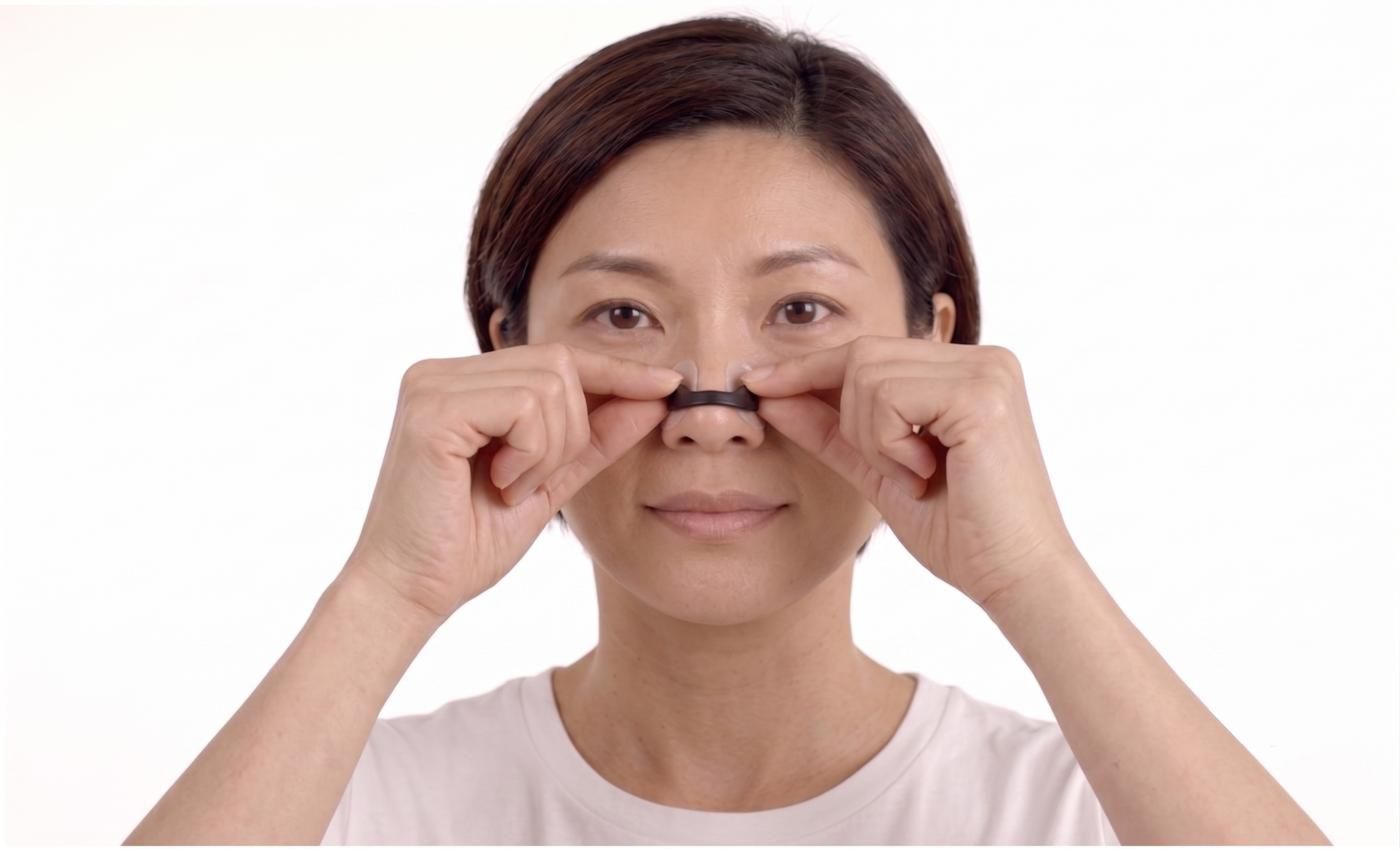

Nasal strips in pregnancy contain no medicine, but they're barely studied. The only trial we found for a blocked nose in pregnancy was in 1996: 24 women said breathing felt easier over three nights than with a dummy strip. A 2022 study of 54 pregnant snorers found strips made no difference to breathing during sleep.
In short
- A blocked nose in pregnancy is common. In one Swedish study about one in five women developed pregnancy rhinitis, which clears within two weeks of the birth.
- Nasal strips contain no medicine. The research on them in pregnancy is two small studies: one found breathing felt easier over three nights, the other found no change in breathing during sleep.
- UK pregnancy medicines guidance says to avoid decongestant sprays, drops and tablets. Snoring that starts in pregnancy is worth mentioning to your midwife or GP.
Can you use nasal strips in pregnancy?
Nasal strips contain no medicine: they work from the outside, by holding the nostrils open. But no study has set out to test their safety in pregnancy, and only two small studies have looked at them in pregnant women at all.
A nasal strip is an adhesive strip with springy bands that sits across the nose and lifts the sides of the nostrils outwards. Reviews describe external nasal dilators as working by widening the narrowest part of the nose and lowering resistance to airflow, while noting that most studies are small.[1]
None of the pregnancy research below is from the UK: the studies we found are from Sweden and the US.
Why is my nose blocked in pregnancy?
A blocked nose is common in pregnancy, and when there's no cold or allergy behind it, doctors call it pregnancy rhinitis. Doctors usually define pregnancy rhinitis as a blocked nose lasting six weeks or more in pregnancy, without an infection or allergy to explain it, that clears within two weeks of the birth.[2]
That's about one in five. The figures come from the late 1990s, and we found no UK figure.
A blocked nose can also feel worse in bed. That part isn't specific to pregnancy: a 2022 review of nine studies confirmed that the nose becomes more resistant to airflow when you lie down, and more so in people who snore.[4] Our guide to why your nose blocks at night covers the other common reasons.
If a blocked nose leaves you breathing through your mouth at night, our guide to why you mouth breathe at night goes through the common reasons.
What does the research say about nasal strips in pregnancy?
Very little. We found two small studies of nasal strips in pregnant women, and no review.
| Turnbull 1996 | Maxwell 2022 | |
|---|---|---|
| Who took part | 24 pregnant women with a blocked nose at night, US | 54 pregnant women who snored, with a BMI of 27 or more, US |
| How long | Three nights | One night with a strip, one without |
| Compared with | A dummy strip | No strip. The order wasn't randomised |
| What they found | Breathing felt easier with the real strip | No difference in breathing during sleep, snoring or how they felt they'd slept |
The only trial we found of a nasal strip for pregnancy congestion is small and old: in 1996, 24 pregnant women with a blocked nose at night said breathing was easier over three nights with a real strip than with a dummy one.[5] The published summary doesn't say which strip was used or who paid for the study.
The second study points the other way. In a 2022 study of 54 pregnant women who snored, nasal strips made no difference to their breathing during sleep or to how they felt they'd slept.[6] Each woman had one night without a strip and then one night with it, with no dummy strip. Two women reported side effects, including skin irritation. The researchers suggested strips could serve as a dummy comparison in pregnancy sleep studies.
Both studies have gaps. The 1996 trial asked women how their breathing felt; it didn't measure sleep or snoring, and only 24 of the 34 women who enrolled finished it.[5] The 2022 study tested one night with a strip and included no women in their second trimester. Because the strip night always came second, a second-night effect can't be ruled out.[6]
There's no Cochrane review of drug-free options for a blocked nose in pregnancy: one was planned in 2015 but withdrawn in 2017.[7]
We could find no published, independent study of any magnetic nasal dilator, including Airlift's. A 2026 review by UK surgeons reached the same conclusion.[8] That means nothing is known about them in pregnancy either. Our guide to whether magnetic nasal strips work covers the wider evidence.
Outside pregnancy, studies of strips have mostly found no measured change in snoring. Our guide to nasal strips for snoring sets that evidence out, and our science page lists the studies behind nasal dilators.
If you decide to try nasal strips
Follow the instructions that come with the strips. The instructions we checked for three strips sold in the UK include these points:
- Start with a clean, dry noseTwo of the three packs we checked say to wash and dry the skin on your nose before you put a strip on.
- Check your skinDon't put a strip over broken, sunburnt or irritated skin, and stop using it if a rash or irritation appears.
- Keep to the time limitThe packs we checked say to wear a strip for no more than 12 hours a day.
Some UK retailer listings for nasal strips carry a latex warning, so check the pack if you have a latex allergy.
Our comparison of magnetic and adhesive nasal strips shows what touches your skin with each type.
Medicines for a blocked nose in pregnancy
UK advice on medicines in pregnancy comes from BUMPS, the UK Teratology Information Service's site on medicines in pregnancy. Its leaflet on colds and flu says decongestant nasal sprays, drops and tablets should be avoided in pregnancy. It also says to ask a pharmacist, because some cold remedies sold over the counter contain a decongestant.

The BUMPS leaflet on colds and flu in pregnancy has the full advice.
Snoring in pregnancy: when to mention it
Snoring often starts or gets worse in pregnancy.
In a Swedish study of 502 women asked on the day they gave birth, 23% said they'd snored every night in the last week of pregnancy, compared with 4% before they were pregnant.[10] In a US study of 1,719 women late in pregnancy, about a third (34%) said they snored most nights.[11]
The NHS snoring page says to see a GP if snoring is having a big impact on you or your partner, or if you're sleepy in the day, your breathing stops and starts, or you gasp or choke in your sleep.
Some of these studies also looked at blood pressure. In the Swedish study of 502 women, high blood pressure was more common in the women who snored,[10] and the US study linked snoring that began in pregnancy with high blood pressure in pregnancy.[11] These are associations: they don't show that snoring causes high blood pressure. Snoring in pregnancy is worth mentioning to your midwife or GP.
Questions people ask
References
- Dinardi RR, de Andrade CR, Ibiapina CdC (2014). External nasal dilators: definition, background, and current uses. International Journal of General Medicine, 7, 491-504. doi.org/10.2147/IJGM.S67543
- Ellegård E, Karlsson G (1999). Nasal congestion during pregnancy. Clinical Otolaryngology and Allied Sciences, 24(4), 307-311. doi.org/10.1046/j.1365-2273.1999.00264.x
- Ellegård E, Hellgren M, Torén K, Karlsson G (2000). The incidence of pregnancy rhinitis. Gynecologic and Obstetric Investigation, 49(2), 98-101. doi.org/10.1159/000010223
- Calvo-Henríquez C, Chiesa-Estomba C, Lechien JR, Carrasco-Llatas M, Cammaroto G, Mayo-Yáñez M, Abelleira-Paris R, Gonzalez-Barcala FJ, Martinez-Capoccioni G, Martin-Martin C (2022). The recumbent position affects nasal resistance: a systematic review and meta-analysis. Laryngoscope, 132(1), 6-16. doi.org/10.1002/lary.29509
- Turnbull GL, Rundell OH, Rayburn WF, Jones RK, Pearman CS (1996). Managing pregnancy-related nocturnal nasal congestion. The external nasal dilator. Journal of Reproductive Medicine, 41(12), 897-902. pubmed.ncbi.nlm.nih.gov/8979203/
- Maxwell M, Sanapo L, Monteiro K, Bublitz M, Avalos A, Habr N, Bourjeily G (2022). Impact of nasal dilator strips on measures of sleep-disordered breathing in pregnancy. Journal of Clinical Sleep Medicine, 18(2), 477-483. doi.org/10.5664/jcsm.9624
- Wei W, Liu H, Kang D, Wang H, East C (protocol); withdrawn by Kellie FJ (2017). Non-surgical interventions for nasal congestion during pregnancy (protocol, withdrawn). Cochrane Database of Systematic Reviews, 2017(8), CD011653.pub2. doi.org/10.1002/14651858.CD011653.pub2
- Ahmed A, Gakpetor C, Yang D, Oremule B, Ranganathan B, Jaiswal A, Bhalla RK (2026). The effectiveness of nonsurgical nasal devices in relieving nasal obstruction. Annals of the Royal College of Surgeons of England, 108(6), 476-483. doi.org/10.1308/rcsann.2025.0103
- Sarberg M, Svanborg E, Wiréhn AB, Josefsson A (2014). Snoring during pregnancy and its relation to sleepiness and pregnancy outcome: a prospective study. BMC Pregnancy and Childbirth, 14, 15. doi.org/10.1186/1471-2393-14-15
- Franklin KA, Holmgren PA, Jönsson F, Poromaa N, Stenlund H, Svanborg E (2000). Snoring, pregnancy-induced hypertension, and growth retardation of the fetus. Chest, 117(1), 137-141. doi.org/10.1378/chest.117.1.137
- O'Brien LM, Bullough AS, Owusu JT, Tremblay KA, Brincat CA, Chames MC, Kalbfleisch JD, Chervin RD (2012). Pregnancy-onset habitual snoring, gestational hypertension, and preeclampsia: prospective cohort study. American Journal of Obstetrics and Gynecology, 207(6), 487.e1-9. doi.org/10.1016/j.ajog.2012.08.034

Written by Nicholas Green
I've found it hard to breathe through my nose for as long as I can remember, and years of products and even surgery didn't fix it, so I built Airlift. I write about what I've learned along the way, as someone who lives with it rather than as a clinician.
How we research and check articles: our editorial standards.