How to sleep with a snoring partner: tonight, block or mask the sound with earplugs or steady background noise and try to fall asleep first. Over the next few weeks, work out what kind of snorer they are, since nose, mouth and back-sleeping snoring call for different options, and book a GP visit if their breathing stops and starts.
What you'll need
- Earplugs, or a steady background sound such as a fan or a white-noise app
- A phone to record a night of their snoring (most phones have a free voice-recorder app)
- Ten calm minutes in the daytime to talk about it
- A GP appointment, if their breathing stops and starts or they're sleepy all day
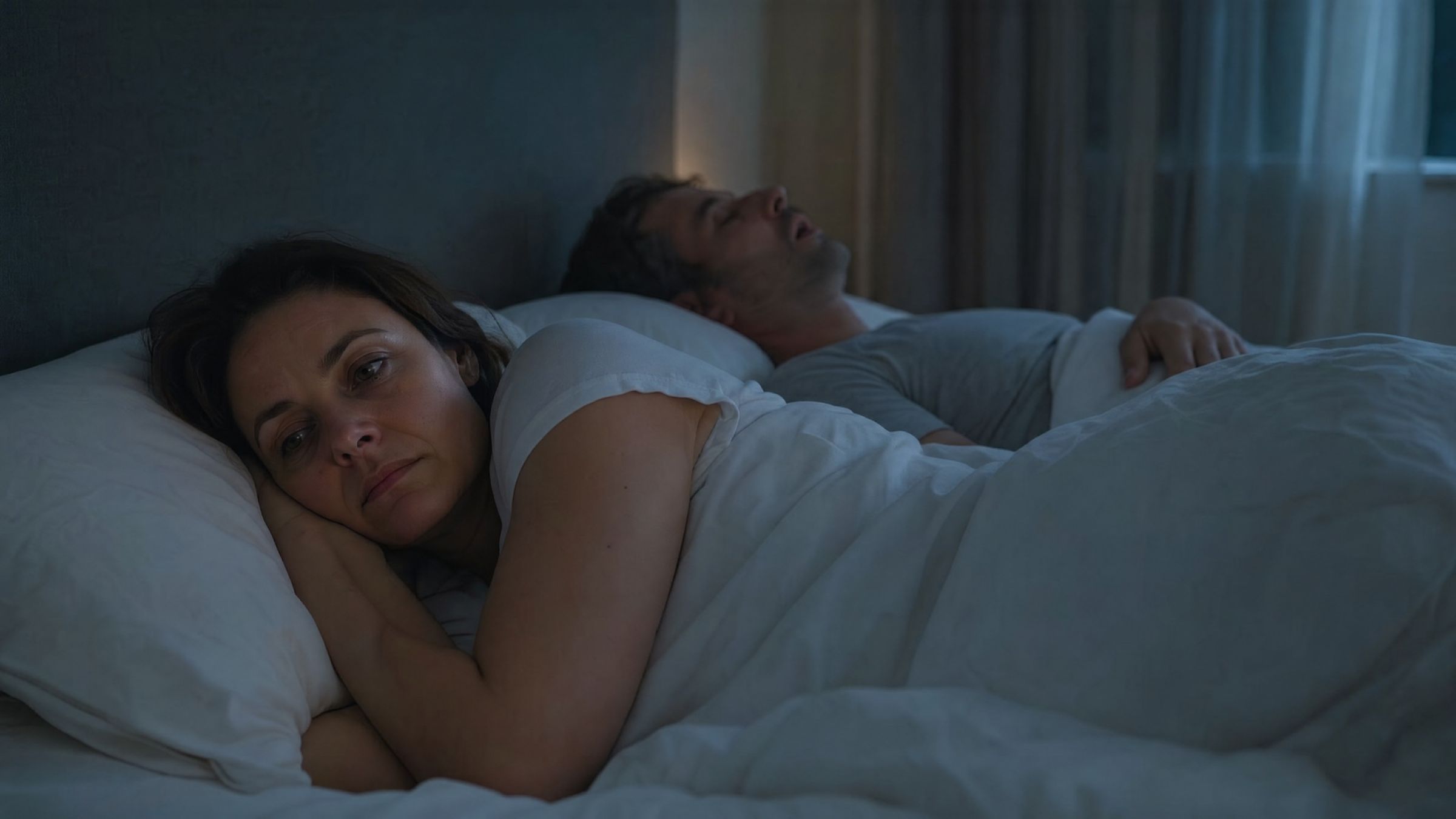
If you're lying awake next to someone who snores, it isn't just you. A Swedish survey of 1,032 women found those living with heavy snorers reported more insomnia, morning headaches and daytime tiredness.[1] And in a 1999 study of 10 couples, the partners of men being tested for sleep apnoea woke less and slept more efficiently once their partner's snoring was stopped with CPAP.[2]
The picture is a little more complicated than "the noise wakes you up", though. A small 2012 sleep-lab study suggests snoring may be less likely to wake a partner than to keep them awake once they've woken.[3] That's why the first step is about getting to sleep, and getting back to sleep, rather than lying there listening.
Step 1How to sleep with a snoring partner tonight
Block the sound, mask what gets through, and try to be asleep before the snoring starts. None of this needs your partner to change anything yet.
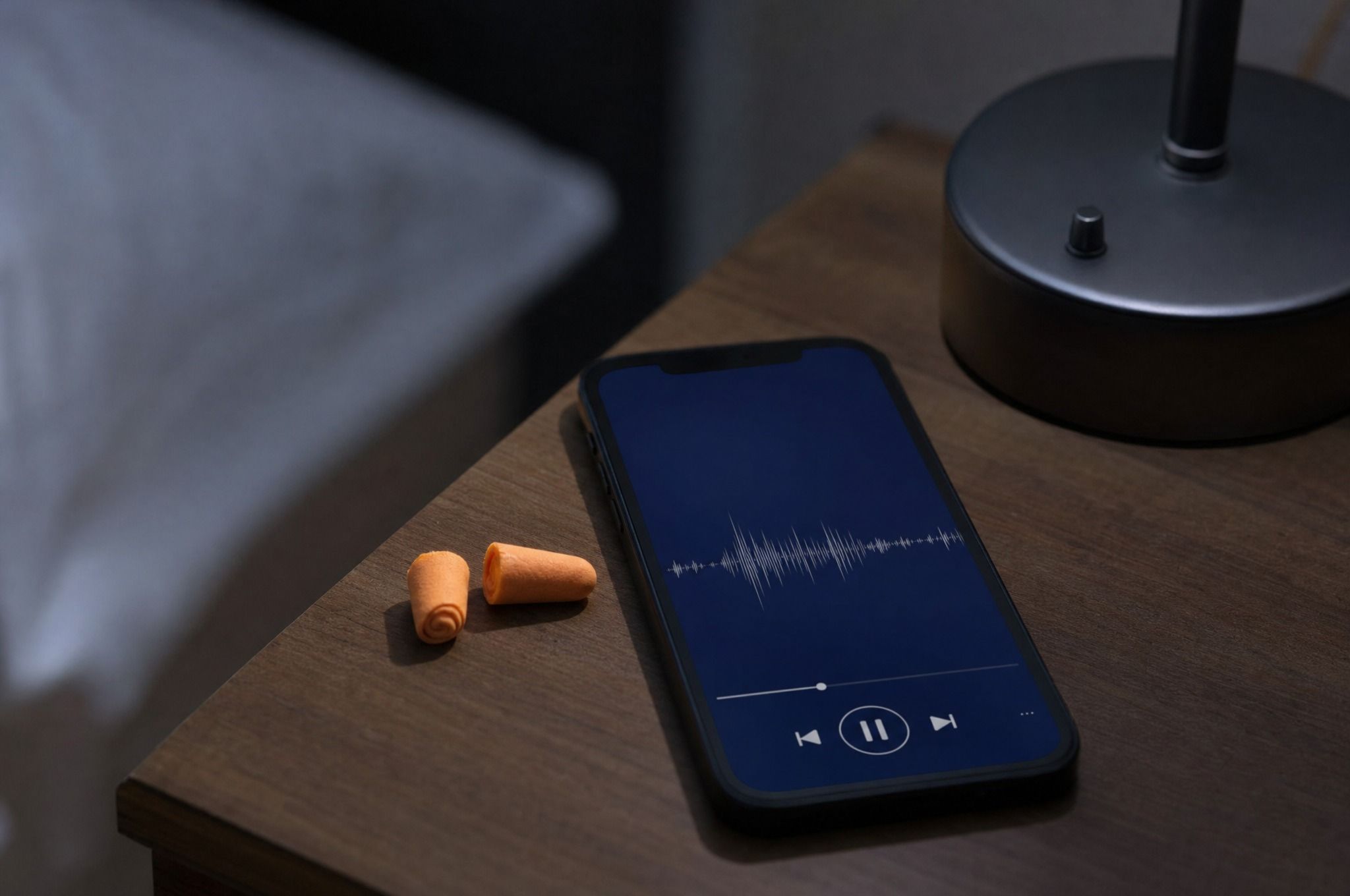
- Put earplugs in properlyRoll a foam earplug into a thin tube, ease it well into your ear and hold it there for a few seconds while it expands, so it sits snugly. The NHS snoring page suggests that someone who snores could ask their partner to use earplugs.
- Add a steady sound to mask the peaksA fan or a white-noise app gives a constant background sound, which some people find makes the snores easier to ignore.
- Go to sleep firstIf you can, go to bed a little before them, so you're asleep before the snoring begins.
- Nudge them onto their sideIf they're snoring on their back, a gentle nudge or a hand on the shoulder to roll them onto their side is worth a try. The NHS lists sleeping on your side as one of the things a snorer can do to help themselves.
If earplugs aren't for you, a steady background sound on its own, or headphones made for sleeping, can do some of the same job.
Step 2Should you sleep in separate rooms?
It's a fair choice for some nights, but don't expect it to fix everything. When 16 women whose partners snored spent a night sleeping alone in a lab, they woke a little less, but most measures of their sleep didn't change.[4] That was one night, in a lab, so it can't tell you what months of sleeping apart would do.
The spare room works best as a backstop you've agreed on together: somewhere either of you can go on a bad night, while you work on the snoring itself. Agree it in the daytime, so that moving rooms at 3am means "I need to sleep", not "I'm angry with you", and neither of you feels sent away.

Step 3Talk to your partner about their snoring
Raise it in the daytime, not at 3am, and lead with your sleep rather than their fault. If they've never heard themselves, they may not know how loud it gets.
It helps to know how common it is. A 2019 survey of 1,239 UK adults found that 38% of men and 30% of women snore.[5] So you're far from alone, and it's something you can work on together. It can matter for both of you: in the 1999 study above, partners slept more efficiently once the snoring was dealt with.[2]
A few things make the conversation easier:
- Record a night. Most phones have a free voice-recorder app. Hearing it is often more convincing than being told about it, and it helps if they later see a GP.
- Agree one thing to try for two weeks. One change at a time, so you can both tell whether it makes a difference.
- Check in afterwards, and ask how they're sleeping too, not just how you are.

Step 4Work out what kind of snorer they are
Snoring doesn't all start in the same place, so what helps one person may do nothing for another. The NHS snoring page sorts the options by cause:
| What you might notice | What the NHS lists | |
|---|---|---|
| Blocked or narrow nose | Snoring that's worse when their nose is stuffy, for example with a cold | Nasal dilators or strips that hold the nose open, or sprays to reduce swelling inside the nose |
| Tongue falling back | Not easy to tell from the outside | A mandibular advancement device, worn in the mouth to bring the tongue forward |
| Mouth falling open | Their mouth hangs open while they snore | A chin strap, or a vestibular shield worn in the mouth |
| Everyday factors | Can apply to any kind of snoring | Lose weight if overweight, sleep on your side, don't smoke, don't drink too much alcohol, avoid sleeping pills |
What you notice from the other side of the bed can't tell you what's going on in someone's airway. If you're unsure, a GP can look properly.
The nose often feels worse at night than in the day. A 2022 review of nine studies confirmed that the nose becomes more resistant to airflow when you lie down, and more so in people who snore.[6] And snoring isn't always a mouth-breathing problem: in one clinic series of 25 people with swollen nasal tissue, 17 snored while breathing through the nose and less or not at all through the mouth.[7]
If you think their nose is part of it, our guide to nasal strips for snoring has a check under "Is your snoring coming from your nose?". If their mouth falls open, why you mouth breathe at night goes through the common reasons, and nasal strips vs mouth tape explains what tape can and can't do.
Step 5Help them try what suits their kind of snoring
Each option has different evidence behind it, and some have very little. For the main devices compared, see the best anti-snoring devices in the UK.
Mouthguards
The Australasian Sleep Association's 2023 position statement on snoring recommends mandibular advancement devices as a first-line option, and doesn't advise over-the-counter remedies such as nasal dilators, because there's no evidence on long-term use.[8]
The trials that asked partners are encouraging. In a Belfast trial of 25 severe snorers, 84% of bed partners reported quieter snoring with a custom mandibular advancement device, which worked significantly better than a dummy appliance.[9] In a 2024 US pilot trial of 50 couples, partners rated snoring much improved for 91% of people given a custom mandibular advancement device, against 58% of those given a routine of nasal strips, a steroid nasal rinse, mouth tape and side-sleeping.[10] That routine was tested as a package, so no single part of it can be credited or blamed.
Not every result is clear-cut. In a Newcastle trial of 52 snorers, a mandibular advancement splint reduced snoring symptoms, but so did a dummy splint that didn't move the jaw, and the difference between them wasn't significant.[11] A dentist can advise on a fitted device.
The nose
The research on nasal strips is mostly disappointing for snoring. A 2016 review of 14 studies found that strips made no significant difference to snoring measured in sleep labs.[12] A 2026 review of 17 studies (496 people) found nasal dilators made no significant difference to snoring or sleep apnoea measured in sleep labs.[13] Do nasal strips work? goes through the rest of the research.
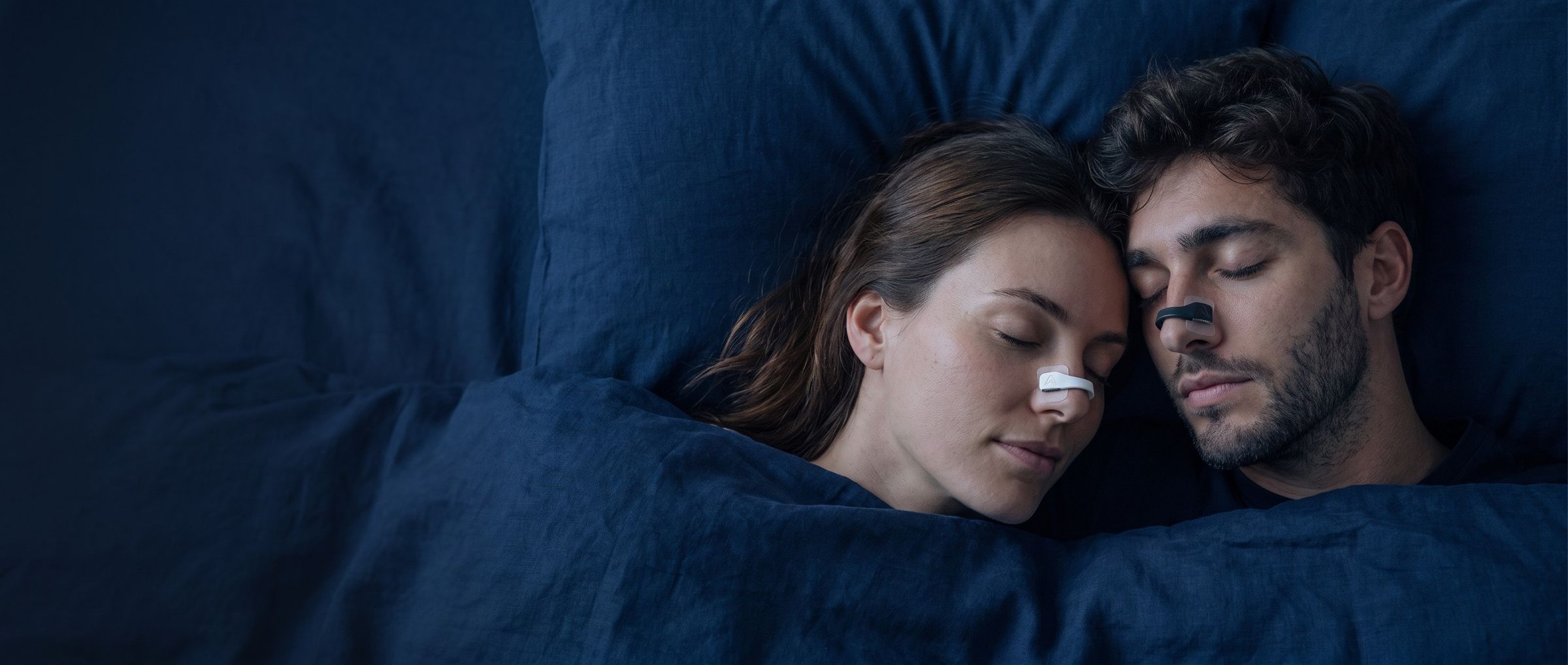
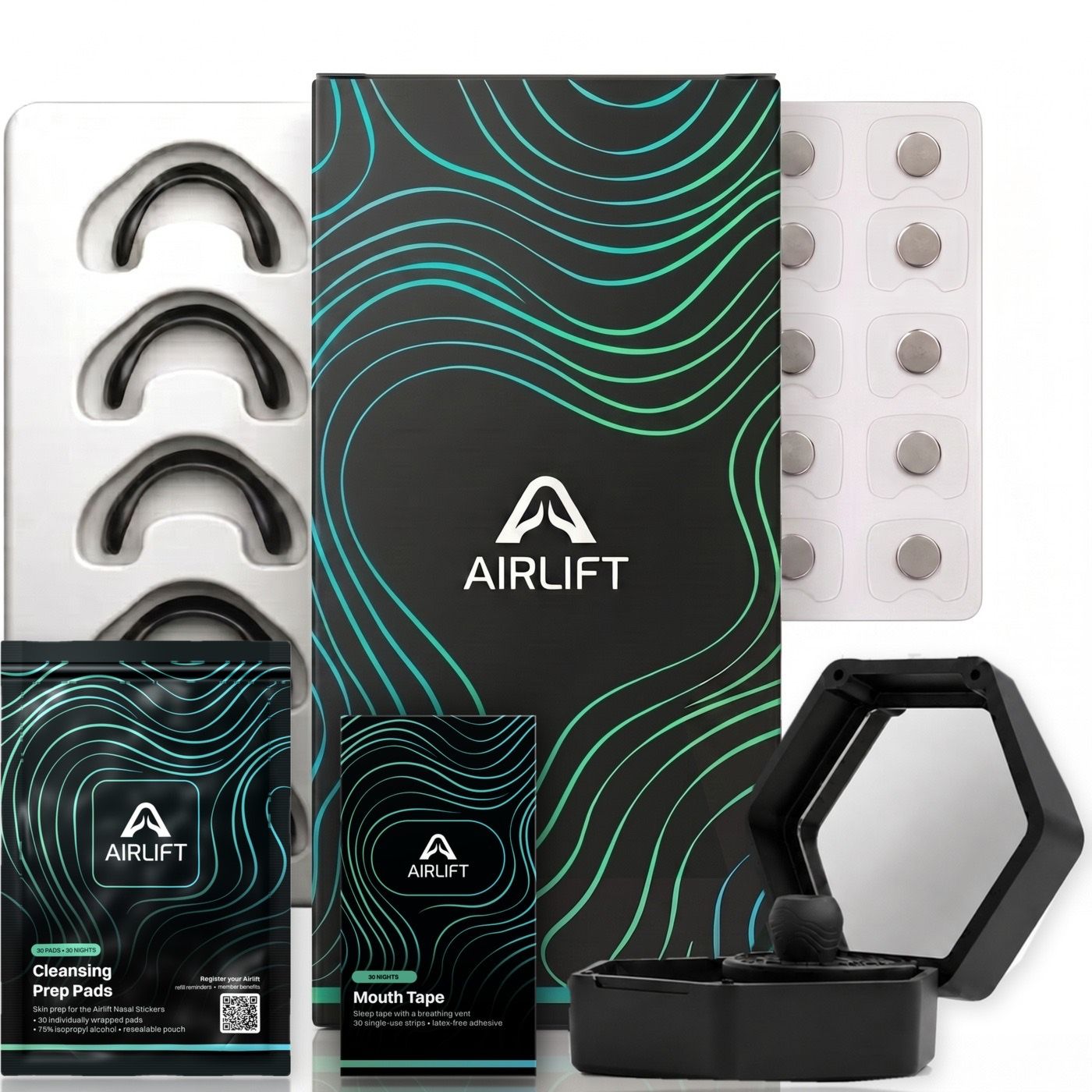
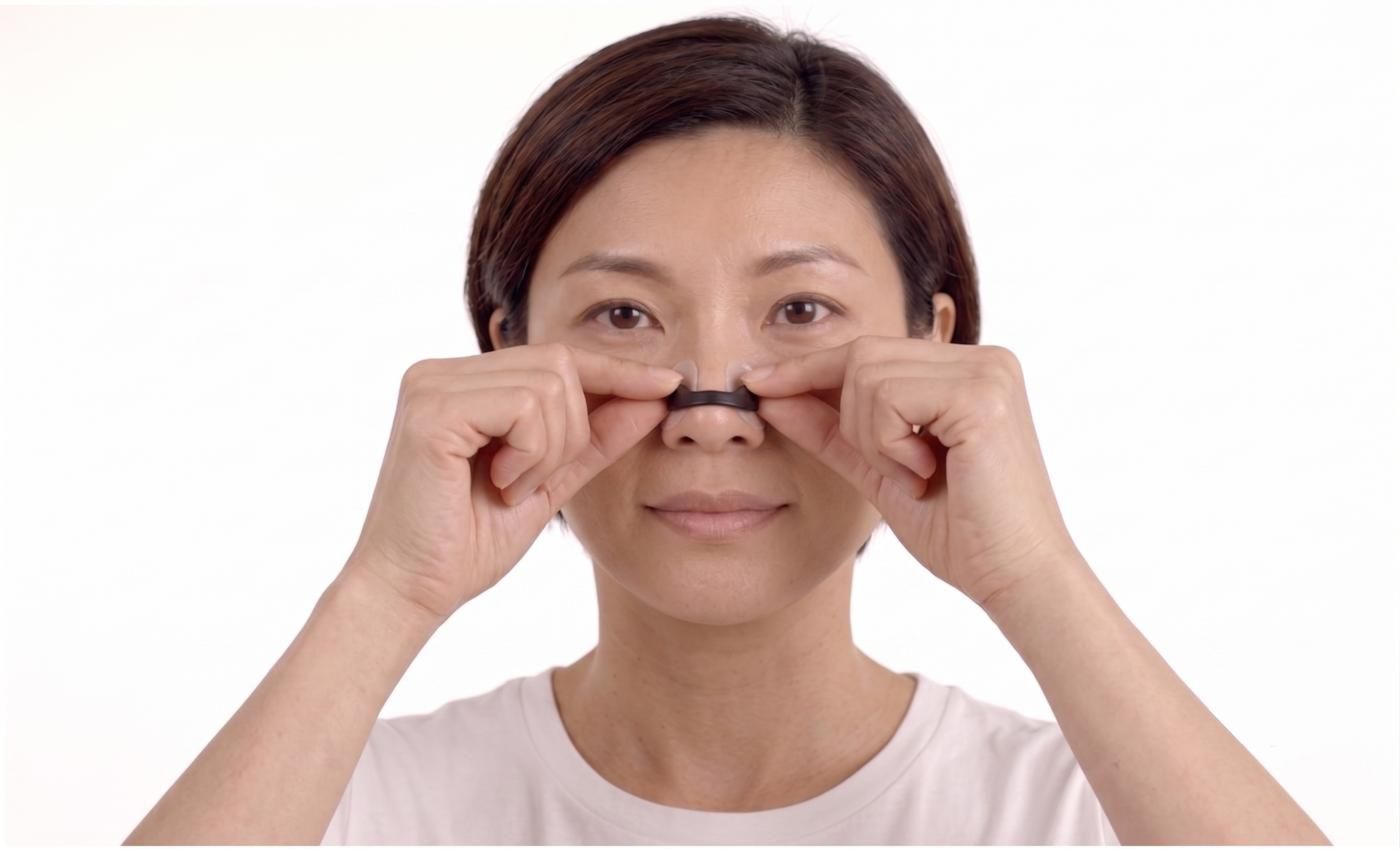
If their nose seems to be the problem, a nasal strip, or a magnetic clip such as Airlift, holds the nostrils open and makes nasal breathing easier while worn. Airlift's clip sits on two small stickers beside the nostrils, with nothing inside the nose and no strip across the bridge, and all five clip sizes come in every box, so neither of you has to guess a size. We could find no published, independent study of any magnetic nasal dilator, including Airlift's.[14] Our guide to whether magnetic nasal strips work covers what is and isn't known.
If you'd both like to try one, Airlift's Duo takes 33% off the second system: two Complete starters for £55, with free delivery, rather than the Complete starter (£33) twice. On the Complete Annual plan, the second system is 30% off (£168 rather than £240), and every subscription order ships free by next-day delivery, with no minimum spend.
With no published, independent study to go on, the sensible way to try is one where you can get your money back without sending anything back. Under the 90-Night Airlift Test, you email within 90 days of receiving your order for a full refund, including delivery. You keep the clip and send nothing back, and it's once per customer.
Sleeping position
The Australasian Sleep Association's statement also calls positional devices a reasonable, mostly low-risk option for people who snore mainly on their back and don't have sleep apnoea.[8] If your partner mostly snores on their back, helping them stay on their side is a sensible thing to try first.
Throat sprays
In a 2004 placebo-controlled trial of 20 snorers, an oil-based anti-snoring throat spray worked no better than a water spray.[15]
Step 6Know when their snoring needs a GP
If their breathing stops and starts in their sleep, don't wait. The NHS says to see a GP if snoring is having a big impact on you or your partner, or if you're sleepy in the day, your breathing stops and starts, or you gasp or choke in your sleep.
As the bed partner, you're often the one who notices. The NHS describes sleep apnoea as a condition in which the airways become temporarily blocked during sleep, and says it can sometimes be the cause of snoring. It needs a proper assessment, and a recording from your phone can help your partner explain what you've heard.
Nasal strips and dilators aren't the answer to it either. A 2016 review of 14 studies found nasal dilators didn't improve sleep apnoea.[12] If your partner has been given a CPAP machine, a strip or clip isn't a substitute for it.
Questions people ask
References
- Ulfberg J, Carter N, Talbäck M, Edling C (2000). Adverse health effects among women living with heavy snorers. Health Care for Women International, 21(2), 81-90. doi.org/10.1080/073993300245311
- Beninati W, Harris CD, Herold DL, Shepard JW Jr (1999). The effect of snoring and obstructive sleep apnea on the sleep quality of bed partners. Mayo Clinic Proceedings, 74(10), 955-958. doi.org/10.4065/74.10.955
- Blumen MB, Quera Salva MA, Vaugier I, Leroux K, d'Ortho MP, Barbot F, Chabolle F, Lofaso F (2012). Is snoring intensity responsible for the sleep partner's poor quality of sleep?. Sleep and Breathing, 16(3), 903-907. doi.org/10.1007/s11325-011-0554-5
- Blumen M, Quera Salva MA, d'Ortho MP, Leroux K, Audibert P, Fermanian C, Chabolle F, Lofaso F (2009). Effect of sleeping alone on sleep quality in female bed partners of snorers. European Respiratory Journal, 34(5), 1127-1131. doi.org/10.1183/09031936.00012209
- Lechner M, Breeze CE, Ohayon MM, Kotecha B (2019). Snoring and breathing pauses during sleep: interview survey of a United Kingdom population sample reveals a significant increase in the rates of sleep apnoea and obesity over the last 20 years - data from the UK sleep survey. Sleep Medicine, 54, 250-256. doi.org/10.1016/j.sleep.2018.08.029
- Calvo-Henríquez C, Chiesa-Estomba C, Lechien JR, Carrasco-Llatas M, Cammaroto G, Mayo-Yáñez M, Abelleira-Paris R, Gonzalez-Barcala FJ, Martinez-Capoccioni G, Martin-Martin C (2022). The recumbent position affects nasal resistance: a systematic review and meta-analysis. Laryngoscope, 132(1), 6-16. doi.org/10.1002/lary.29509
- Hsia JC, Camacho M, Capasso R (2014). Snoring exclusively during nasal breathing: a newly described respiratory pattern during sleep. Sleep and Breathing, 18(1), 159-164. doi.org/10.1007/s11325-013-0864-x
- Sarkis LM, Jones AC, Ng A, Pantin C, Appleton SL, MacKay SG (2023). Australasian Sleep Association position statement on consensus and evidence based treatment for primary snoring. Respirology, 28(2), 110-119. doi.org/10.1111/resp.14443
- Johnston CD, Gleadhill IC, Cinnamond MJ, Peden WM (2001). Oral appliances for the management of severe snoring: a randomized controlled trial. European Journal of Orthodontics, 23(2), 127-134. doi.org/10.1093/ejo/23.2.127
- Ioerger P, Afshari A, Hentati F, Strober W, Kallogjeri D, Ju YE, Piccirillo JF (2024). Mandibular advancement vs combined airway and positional therapy for snoring: a randomized clinical trial. JAMA Otolaryngology-Head & Neck Surgery, 150(7), 572-579. doi.org/10.1001/jamaoto.2024.1035
- Maguire J, Steele JG, Gibson GJ, Wilson JA, Steen N, McCracken GI (2010). Randomised cross-over study of oral appliances for snoring. Clinical Otolaryngology, 35(3), 204-209. doi.org/10.1111/j.1749-4486.2010.02126.x
- Camacho M, Malu OO, Kram YA, Nigam G, Riaz M, Song SA, Tolisano AM, Kushida CA (2016). Nasal dilators (Breathe Right strips and NoZovent) for snoring and OSA: a systematic review and meta-analysis. Pulmonary Medicine, 2016, 4841310. doi.org/10.1155/2016/4841310
- Alotaibi S, Bin Saddiq BW, Alfarhoud RS, Alghamdi MTN, Alsaffar AJ, Alnabhan AM, Alkhateeb MA, Albahrani KH, Alowibidy SA, Almahdi ZI, Almaghrabi HA, Alnabulsi M (2026). Clinical effectiveness of nasal dilators in sleep-disordered breathing: a systematic review and meta-analysis. Cureus, 18(1), e100663. doi.org/10.7759/cureus.100663
- Ahmed A, Gakpetor C, Yang D, Oremule B, Ranganathan B, Jaiswal A, Bhalla RK (2026). The effectiveness of nonsurgical nasal devices in relieving nasal obstruction. Annals of the Royal College of Surgeons of England, 108(6), 476-483. doi.org/10.1308/rcsann.2025.0103
- Wijewickrama RC, Blalock D, Mims JW (2004). Study of lubricant-induced changes in chronic snorers (SLICCS). Otolaryngology-Head and Neck Surgery, 131(5), 606-609. doi.org/10.1016/j.otohns.2004.05.024

Written by Nicholas Green
I've found it hard to breathe through my nose for as long as I can remember, and years of products and even surgery didn't fix it, so I built Airlift. I write about what I've learned along the way, as someone who lives with it rather than as a clinician.
How we research and check articles: our editorial standards.